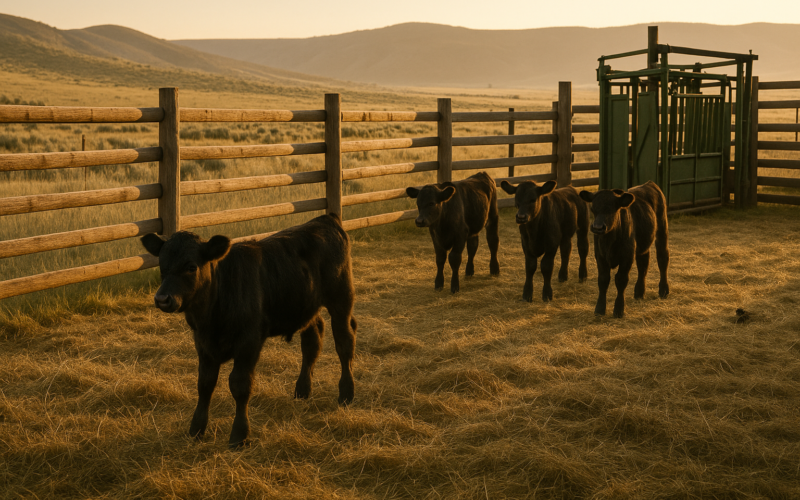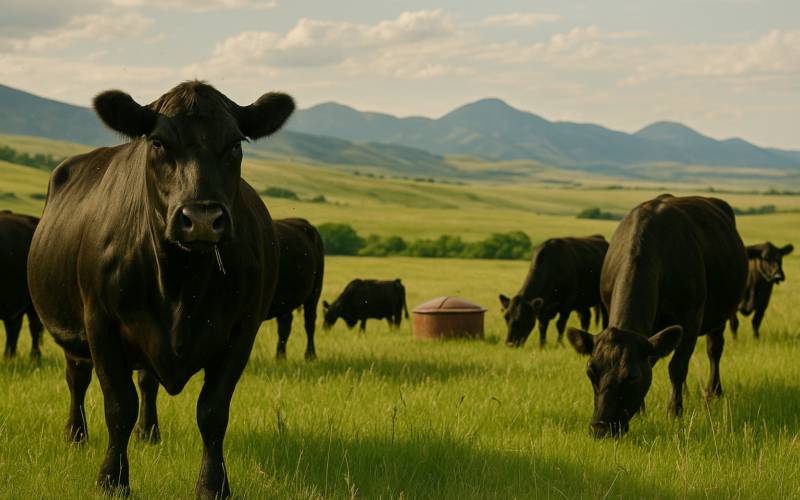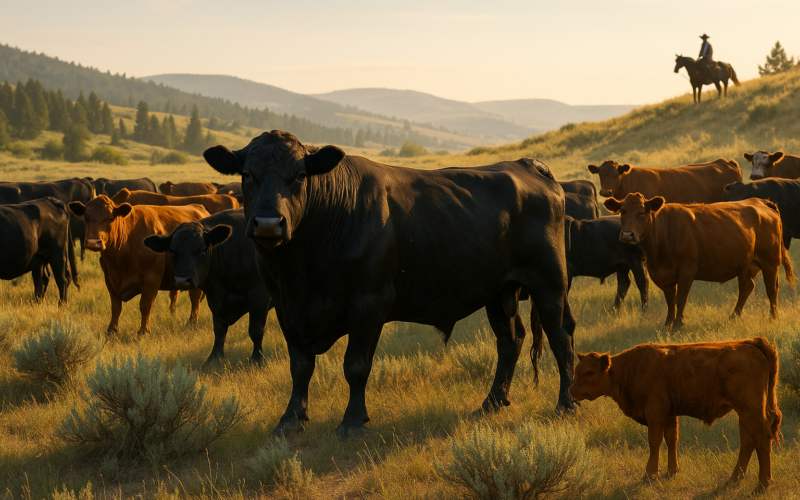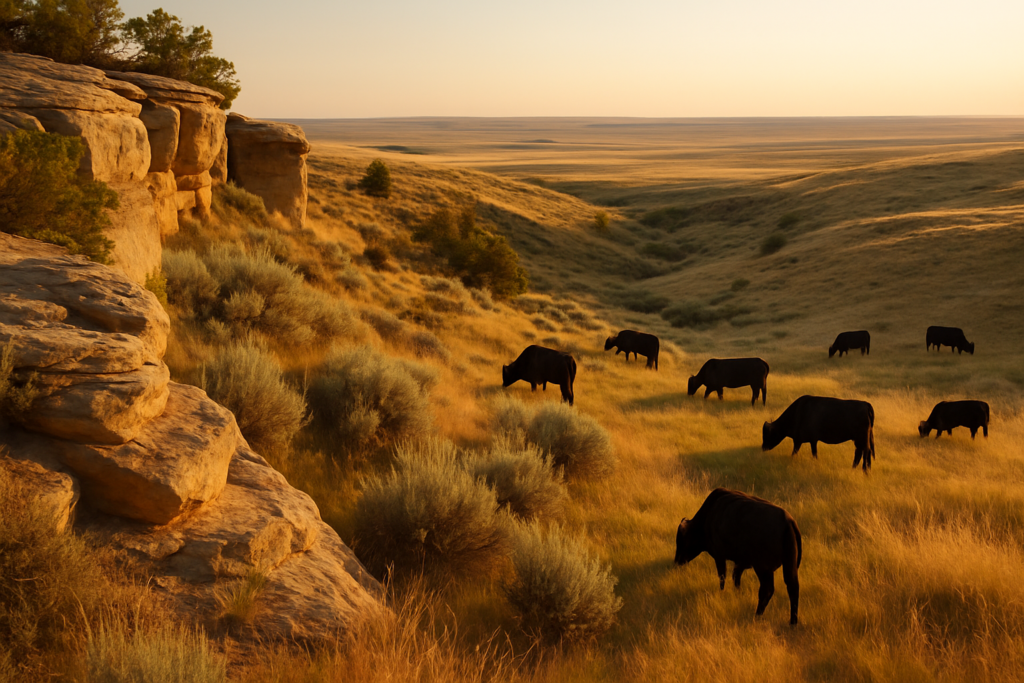
The prairie rattlesnake wakes up when the rocks and south slopes finally hold heat, and across a lot of Montana that lines up with the second half of June. Snakes den in rimrock, coulee breaks, prairie-dog towns, and the rubble around old homestead foundations. They come out to hunt and to catch sun on cool mornings and warm evenings. That’s the same country your cattle graze once you push them off the creek bottoms and up onto the summer range.
Cattle don’t usually get struck on the leg the way a person imagines. They get bit on the nose and face, because that’s what they lead with. A cow drops her head into a clump of grass or bunches up to sniff something coiled in the shade of a sagebrush, and the snake tags her muzzle. Horses do the same thing, and a green colt that walks up to investigate is a prime candidate. The bite itself is rarely the thing that kills. The swelling is.
Why the swelling is the real danger
Rattlesnake venom breaks down tissue and drives fluid into the area around the bite. On a nose or a face, that swelling closes off the nostrils. A cow or horse can’t breathe through its mouth well enough to get by, and an animal that can’t move air is in real trouble within hours. That’s why a bite to the muzzle is more dangerous than one to the leg or brisket, even though a leg bite looks nastier and lames them up.
What you’ll usually find: an animal standing off by itself, head swollen and drooping, two puncture marks that may be hard to see under the swelling, and drool or trouble breathing. Sometimes you’ll hear the labored breath before you see the swelling. On dark cattle the punctures disappear entirely and you’re going by the swelling and behavior.
If you catch it early and the swelling is climbing toward the nostrils, the trick that’s saved a lot of stock is keeping the airway open. Some folks carry short lengths of garden hose or a cut-down syringe case to slip up each nostril before the passages close. If you’re going to try it, do it while the animal will still tolerate you near its head, and grease the tubing. Once the nose is shut and the animal is panicking for air, you’ve missed the easy window.
What to do, and what to skip
Call your vet. Real antivenin exists for livestock, but it’s expensive and time-sensitive, and on a range cow the math often doesn’t pencil out the way it does on a good horse. Your vet can walk you through whether it’s worth hauling the animal in, and they’ll likely talk about anti-inflammatories to hold down the swelling and antibiotics for the tissue damage and infection that follow, since a snake’s mouth is filthy and the dead tissue around a bite gets infected as a rule.
Skip the cowboy first aid you’ve heard about. Cutting and sucking the wound does nothing but add a dirty knife wound. Tourniquets on a neck or face are useless and dangerous. Ice doesn’t help and can make the tissue damage worse. The two things that matter are keeping the airway open and getting the swelling under control, and both of those run through your vet.
Keep a bitten animal quiet and get it to water and shade if you can move it without a fight. Exertion pushes venom through the system faster. If it’s a horse you’re leading, walk slow. If it’s a cow way out on the flat, sometimes the kindest thing is to leave her be and bring help to her rather than run her a mile back to the corral.
Keep it from happening in the first place
You can’t snake-proof a summer pasture, but you can stack the odds. Turn the mineral tub and the salt away from rock piles and old foundations so cattle aren’t loitering in snake country. Same with a stock tank tucked against a rim. When you’re horseback checking the far end in the evening, that’s peak snake movement, so watch where your horse puts his nose at a gate or a downed log.
Dogs get bit more than cattle do, and a bitten dog goes downhill fast because of its size. If your heeler works out ahead of you in the rocks, that’s worth knowing.
Most snakebit cattle pull through if the airway stays open and the swelling gets managed. The ones you lose are usually the ones found too late, already down and unable to breathe. Riding your summer country with half an eye for it, and knowing what a swollen face means when you see it, is most of the battle.