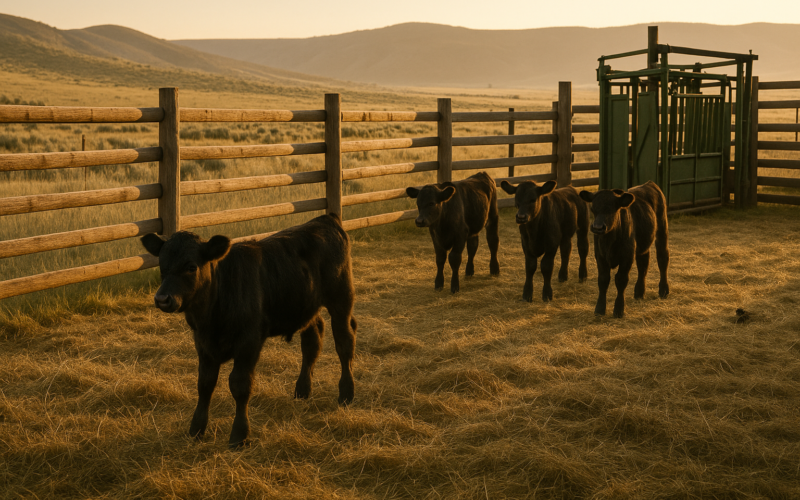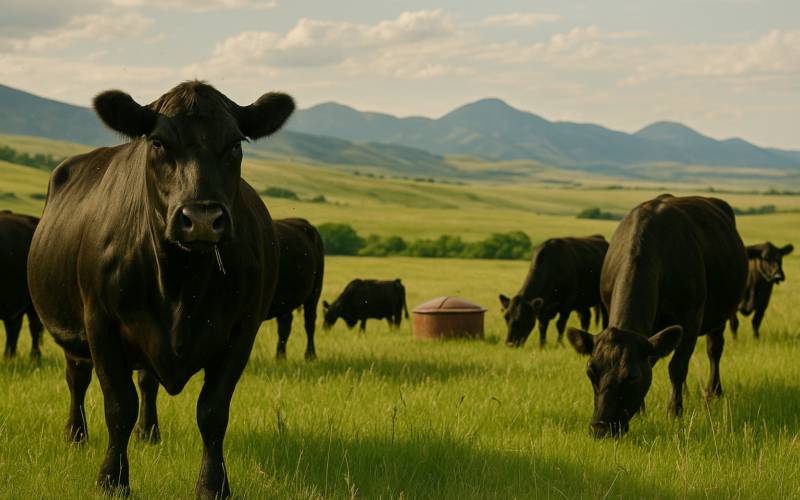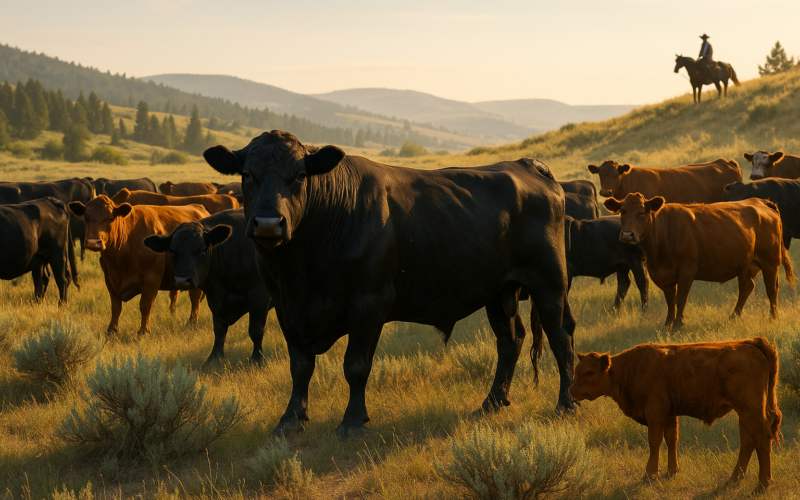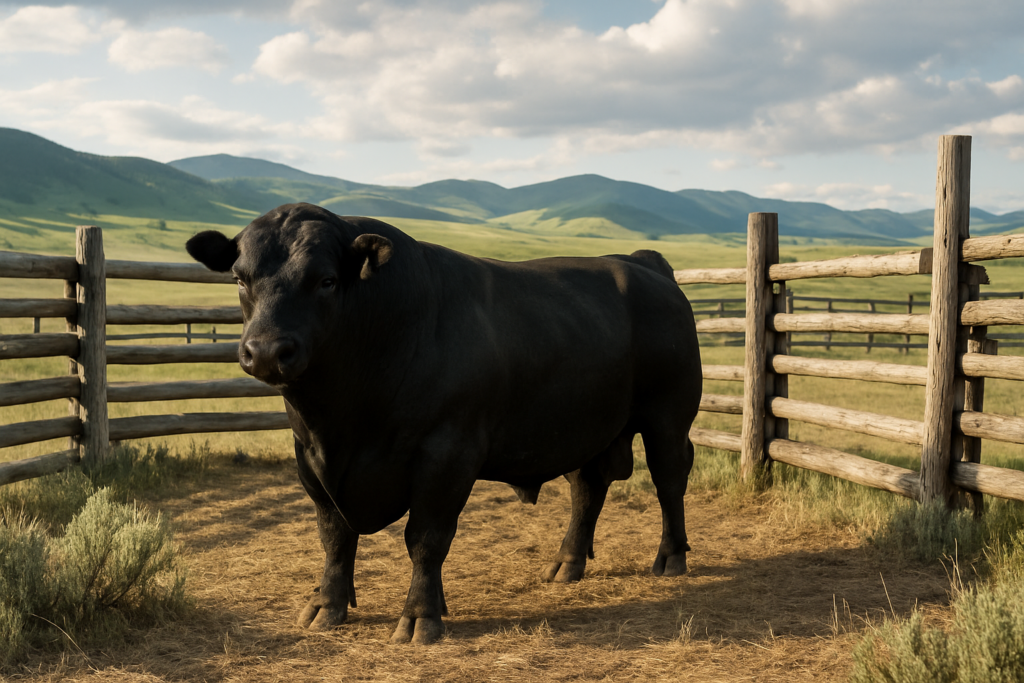
You can look at a bull all winter and never know whether he can settle a cow. He’ll eat, he’ll grow, he’ll fight the other bulls at the feed bunk, and none of that tells you what his semen looks like or whether he’ll cover country on a bad foot in July. The only way to know is to run him through a breeding soundness exam before he goes out with the cows.
For a lot of Montana outfits calving in March, bulls go out right about now — mid-to-late June for calves the following spring. That makes the next couple of weeks the last honest chance to catch a problem before it costs you a whole calf crop’s worth of open and late cows.
What a real exam actually checks
A breeding soundness exam is more than a semen sample, though that’s the part everybody thinks of. Your vet is looking at three things together, and a bull has to clear all of them.
First is the physical. Feet and legs carry a bull over rough ground for two months, and a sore-footed bull quits working before he quits eating. The vet checks eyes, teeth, body condition, and any old injury that might’ve left him stiff. A bull that can’t travel on foothill or breaks country won’t breed the cows that drifted to the far end of the pasture, no matter how good his numbers are.
Second is the reproductive tract itself — testicle size and tone, the epididymis, and a check for anything abnormal like adhesions or an old injury. Scrotal circumference matters because it ties directly to sperm-producing capacity, and it’s an easy, repeatable number to compare against a minimum for the bull’s age.
Third is the semen sample, evaluated right there for motility and for the percentage of normal-shaped sperm. This is where the surprises show up. A bull can look like a herd sire and still throw a sample full of defects — sometimes from a fever, a foot infection, or heat stress earlier in the year that knocked him back temporarily. That’s why the timing matters: sperm takes weeks to develop, so a bull that got sick in spring may just now be showing the damage, or just now be recovering from it.
The two-year-old and the old warrior
Young bulls and older bulls fail for different reasons, and both are worth watching.
A yearling or coming-two-year-old may simply not be there yet. His numbers can come up over a few weeks, so a bull that’s marginal now might pass on a recheck. Turn a not-quite-ready young bull out with a big group of cows and you’re betting the season on immature equipment. Give him fewer cows, or give him time.
The older bull is the one that quietly slides. He passed last year, so it’s tempting to skip him. But he’s a year older on the same feet, he might’ve dropped condition over winter, and fertility doesn’t hold forever. The bull that settled every cow in his first three seasons is exactly the one you’ll be sorriest to find shooting blanks in his fifth.
Trich, condition, and enough bull for the cows
If you run bulls on shared range, lease ground, or anywhere fence-line contact with neighboring cattle happens, trichomoniasis is worth a conversation with your vet. It’s a venereal disease that causes early abortion and open cows, older bulls carry it without showing anything, and Montana has testing requirements tied to selling and moving bulls. It doesn’t show up on a standard semen check — it takes a separate test.
Condition matters too. A bull works hard the first few weeks and can drop a lot of weight fast, especially a young one chasing cows in heat. A bull that goes out thin has no cushion. You want him carrying enough flesh that he can afford to lose some and keep working.
And no exam replaces having enough bull power out there. A passing exam tells you a bull works; it doesn’t tell you he can cover fifty cows spread across a section of rough country. Match your numbers to the ground and the terrain, and lean toward more bulls on big, broken pastures where cows scatter.
The exam costs money and a morning in the corral. Weigh that against sixty days of turnout on a bull that can’t get the job done, and a string of cows that come up open next fall or calve so late they never catch back up. One failed bull, caught in June, pays for testing the whole battery.