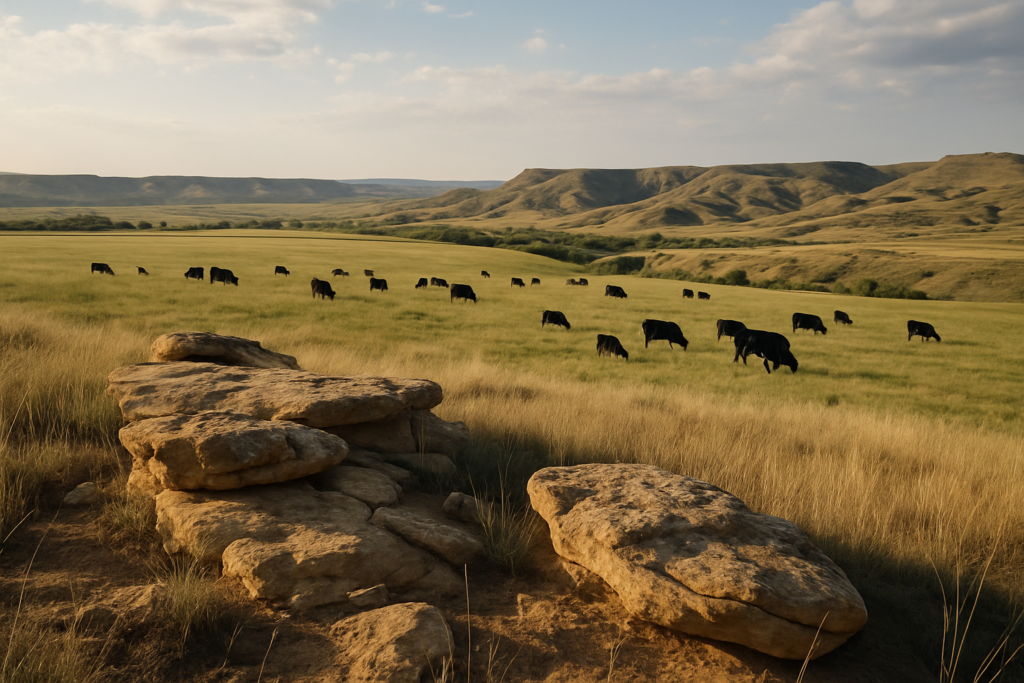
Prairie rattlesnakes wake up when the ground warms, and by mid-June they’re out along the rimrock, the coulee breaks, the rock piles at the edge of a hayfield, and the south-facing slopes where the grass greens first. Those are the same places cattle and horses put their noses down to graze. Most livestock don’t get struck on the leg the way a person imagines. They get it on the muzzle, because they walk up to investigate something buzzing in the grass and the snake does what it does.
A grown cow or a saddle horse isn’t likely to die from the venom itself. There’s a lot of animal for that dose to spread through. The real danger, especially in a horse, is the swelling. A horse breathes only through its nose. Let both nostrils swell shut and you can lose an animal that would have shrugged off the venom, purely from suffocation.
What a bite looks like a few hours in
You usually don’t see it happen. You find a horse or cow with a badly swollen nose and lips, sometimes with two puncture marks you can’t spot under the swelling. The muzzle gets tight and shiny, the animal drools, and it may stand off from the others acting dull. In the hours after, the swelling gets worse before it gets better, and that’s the part that catches people. The animal looked manageable at noon and can’t move air by dark.
Bites on a leg swell too, but the leg has room to swell without killing anything. The nose doesn’t. Watch the breathing above everything else.
What to do, and what to skip
Keep the animal calm and moving as little as possible. A worked-up horse pumps venom around faster and stresses an already compromised airway. If you can walk it slowly to a corral where the vet can get to it, do that; don’t run it or trailer it hard.
Call your vet early, not after the swelling is bad. There’s real treatment available — anti-inflammatories, antibiotics for the infection that follows tissue damage, tetanus coverage, and fluids in a bad case. Antivenin exists but it’s expensive and often skipped in livestock; that’s a call for the vet based on the animal and the situation, not something you’ll have in the barn.
The old tricks are worse than useless. Don’t cut the bite open. Don’t try to suck venom out. Don’t put on a tourniquet. All of that does more damage and wastes the time you should be spending getting an airway plan and a vet.
The one field trick worth knowing is keeping a nostril open on a horse whose nose is swelling shut. A short length of clean hose or a syringe case, taped in place in each nostril, can hold enough airway to keep a horse alive until help comes. Talk it over with your vet ahead of time so you’re not figuring it out in the dark with a panicking horse. It buys time; it isn’t the treatment.
Cut the odds before it happens
You can’t snake-proof a Montana pasture, but you can know where the trouble lives. Rock outcrops, old rodent burrows, riprap along creeks, and abandoned buildings hold snakes and often hold dens. If you’ve got a den going on a place, everybody on the outfit knows where it is after a while. Move mineral and water away from those spots so you’re not parking cattle on top of the worst ground.
Snakes work the cool ends of the day the same as everything else — out on the warm rocks in the morning and evening, tucked into shade at midday. That’s worth remembering when you’re horseback checking cows through the breaks. Your horse will usually spot one before you do; pay attention when he stops and stares.
Dogs get bitten more than any livestock, and they get it on the face, and they don’t have the body mass to ride it out the way a cow does. A stock dog nosing around a rock pile is exactly the wrong animal in the wrong place. If your dog gets tagged, that’s a straight-to-the-vet situation, not a wait-and-see.
Most bitten cattle and horses pull through with treatment and time. The ones you lose are usually the ones nobody found until the nose had already closed up. Check your animals through snake country the same as you check for anything else that can go wrong in June, and treat a swollen muzzle as the emergency it is.
