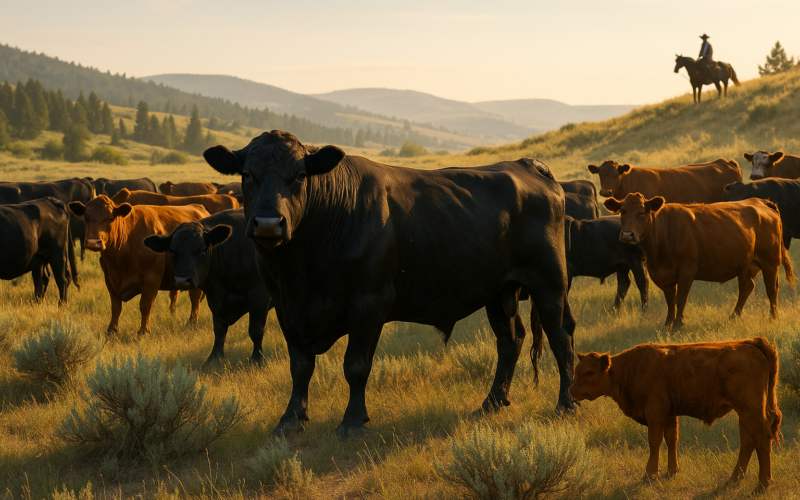
Cattle in Montana spend most of the year built for cold. That winter coat and the heavy hair on an older cow or a bull is an asset in January and a liability the first time the mercury sits in the 90s with no wind. And it always seems to come early — a stretch of hot, muggy days in mid-June before anything has hardened off to the heat. Nights are what save you here most of the time, since our air cools off after dark. But when a warm front parks over the country and the low temperature never drops below the mid-60s, cattle can’t dump the heat they took on all day, and it starts to pile up.
The animals most likely to get in trouble are the ones you’d least want to lose. Heavy bulls, fat cows carrying condition, dark-hided cattle, and anything fighting foot rot or pneumonia already. A finished-looking two-year-old bull with a thick spring coat has a lot of insulation and a lot of body mass to cool, and he doesn’t sweat his way out of it the way a horse does. Cattle mostly cool by breathing, which is why the first thing you’ll notice is the panting.
Read the animal before you read the thermometer
Air temperature alone doesn’t tell you much. It’s the combination of heat, humidity, and dead-still air that does the damage, and cattle standing on bare corral dirt with the sun coming off the panels feel it worse than cattle out on grass. Watch the breathing. An animal breathing hard with its mouth closed is working but coping. Once you see open-mouthed panting, a dropped head, and drool hanging, that animal is behind and can’t catch up standing still. Cattle in real trouble will bunch — crowd together instead of spreading out — which is exactly backward from what helps them, because they’re trapping heat in the group and stirring up dust.
Heat is also a lagging problem. The worst of it isn’t at 3 in the afternoon when it’s hottest. It’s later, into the evening and overnight, because the heat load an animal took on during the day peaks a few hours after the temperature does. A cow that looked fine when you left at supper can be down by dark. If a hot day is coming, the trouble often shows up the second or third day of the stretch, not the first, once they’ve had no cool night to recover.
Work them early or don’t work them
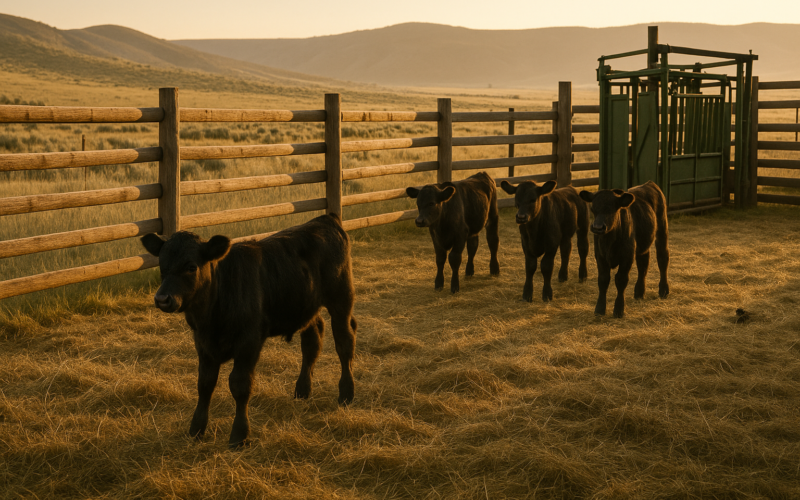
The single biggest thing you control is timing. Any handling — sorting, hauling, running them through the chute for a late branding or a fly treatment — adds a big heat load on top of what the weather is already putting on. That’s why you get in early and get out early. Have the work done by mid-morning. Processing cattle in the afternoon of a hot day is asking for a wreck, and cattle worked hard in the heat can go down hours later, back out on pasture where you won’t find them until it’s too late.
If you’re hauling, load early and keep moving. A stopped stock trailer with no air moving through it turns into an oven fast, and the cattle packed in the front get the worst of it. Don’t park it in the sun waiting on a scale or a gate.
Water and shade do the quiet work
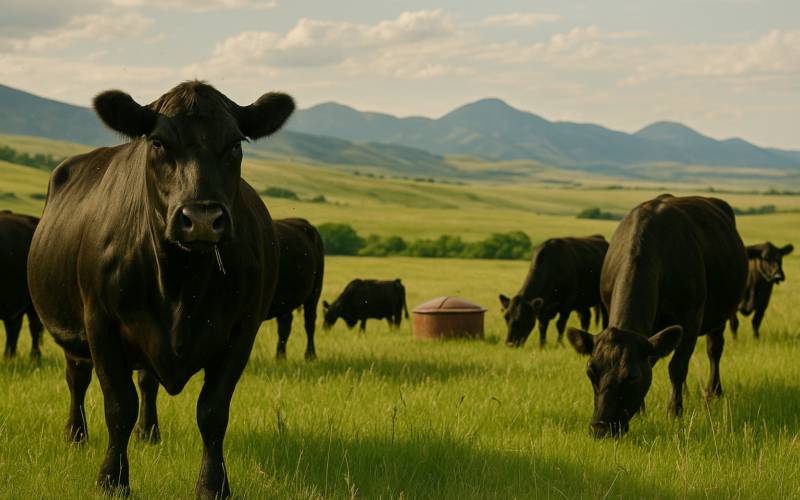
Cattle drink a lot more in the heat, and they drink it in a hurry when they come off pasture at midday. A tank that keeps up fine in May can run dry by afternoon in a heat wave, and cattle crowding a low tank turn the ground around it to muck. Make sure the fill rate keeps up with the draw, not just the total volume. Check your floats and lines before the hot spell, not during it.
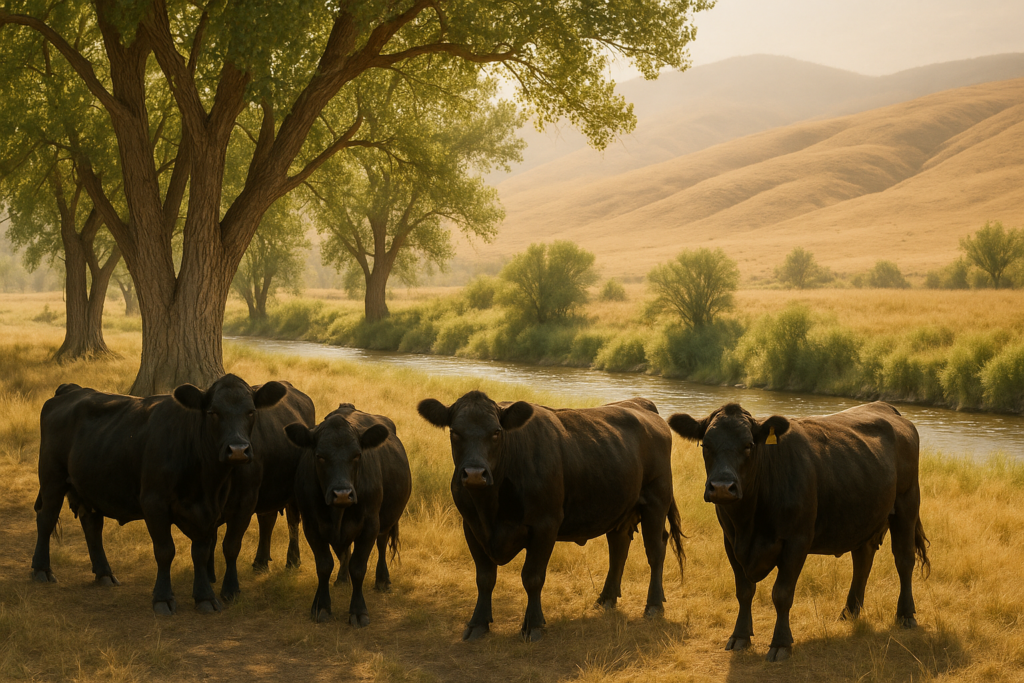
Shade matters more than a lot of us give it credit for, and plenty of Montana summer pasture doesn’t have much. A stand of cottonwoods along a creek, a coulee that throws afternoon shadow, a north-facing slope — cattle will find it and use it. When you’re planning which pasture cattle go to in July, count the shade and the water together, not just the grass. The best grass in the country isn’t worth much if there’s no relief from the sun and the tank can’t keep up.
None of this is complicated. It’s mostly about getting ahead of the first hot stretch instead of reacting once cattle are already panting in a corner.