By mid-June most Montana cows are out on grass, the bulls are working, and the mineral feeder is probably an afterthought. That’s the mistake. The stretch from green-up through summer is exactly when a thin mineral program quietly costs you—open cows in the fall, weak calves, hair coats that look rough by July. Grass this time of year is high in moisture and energy, but it doesn’t deliver everything a lactating, breeding cow needs, and what it lacks varies a lot from one corner of the state to the next.
The cow is asking for the most she’ll ask all year right now. She’s milking hard, trying to breed back, and she’s doing it on forage that’s changing under her every week. A good free-choice mineral fills the gaps. A neglected one just sits there crusting over while you assume she’s covered.
What Montana grass tends to come up short on
Lush spring and early-summer growth is often low in magnesium relative to the potassium and nitrogen in it, which is the setup behind grass tetany earlier in the season. By June that risk fades, but the broader picture is that fast-growing forage can be unbalanced. Phosphorus tends to drop as plants mature. Calcium-to-phosphorus ratios shift. And then there are the trace minerals.
Copper, zinc, and selenium are the ones that bite Montana producers. A lot of the state sits on soils that don’t supply much selenium, and high sulfur or molybdenum in some water and forage can tie up copper so the cow can’t use what she eats. You don’t see this with your eyes until it’s expensive—poor conception, lower immunity, calves that don’t thrive. Picking a mineral with trace minerals in a form the animal can actually absorb matters more than chasing the cheapest tag.
If you’ve never had your water tested or your forage analyzed, that’s a worthwhile thing to do once. High-sulfate stock water is common in parts of eastern Montana, and it changes what your mineral needs to do. You’re not guessing as much when you know what’s coming in.
Getting cows to eat the right amount
Free-choice mineral only works if intake lands in the range it’s formulated for—usually somewhere around two to four ounces a head a day depending on the product. Cows that eat too little aren’t getting the trace minerals. Cows that gorge are eating your money. Salt content drives a lot of this. If they’re hammering the mineral, they may be short on salt elsewhere; if they won’t touch it, sometimes a little loose salt nearby pulls them back.
Placement does more than people give it credit for. Cows graze in patterns, and they’ll camp near water and shade. Set feeders where the cattle already loaf and travel—near water, near the gate, along the trails they use—and move them as the herd shifts to fresh pasture. Mineral parked in a far corner they never visit isn’t a program, it’s a lawn ornament. In a big rotational setup, the feeders should travel with the cows.
- Check feeders on the same schedule you check water and salt—don’t wait until they’re bone dry.
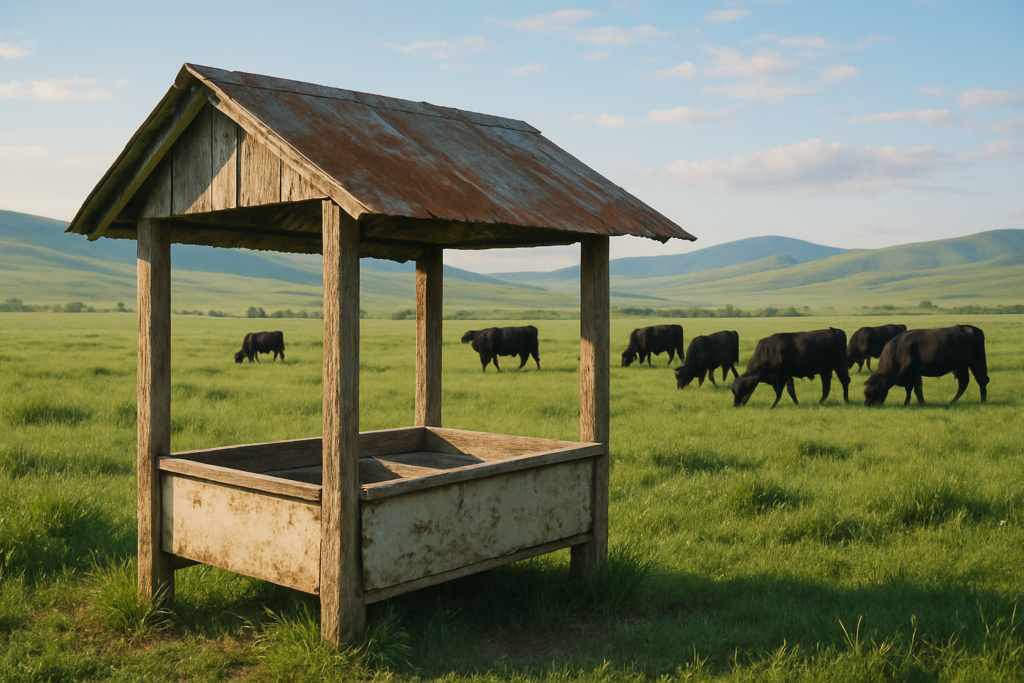
- Keep mineral out of the weather. A covered feeder that doesn’t blow over saves a lot of waste, especially with summer thunderstorms.
- Watch for caking. Mineral that’s set up into a brick gets ignored, and intake drops right when you need it steady.
The fly-mineral question
A lot of summer minerals come with an insect growth regulator mixed in to knock back horn flies breeding in fresh manure. These can work, but only if the cows eat enough of the mineral consistently—and only if you start before fly numbers build, which for most of the state means getting it out in late spring rather than waiting until the cows are stamping and bunching. If intake is erratic, the fly control is too. It’s a supplement to your fly program, not a replacement for it. Plenty of operations run a feed-through product alongside back rubbers or tags rather than betting everything on one tool.
One more thing worth saying plainly: the cheapest mineral on the shelf is rarely the cheapest cost per cow. A bag that’s mostly salt and filler with cheap oxide trace minerals doesn’t deliver during breeding season, and an open cow in the fall is the most expensive thing on the place. Read the tag, match it to what your country actually lacks, and keep the feeder full. The cow will do the rest.