Cattle find the weak spot in a fence faster than any inspection ever will. By the time the herd hits summer grass, the fence has been through frost heave, snowload, spring runoff, and a few elk going through sideways. The wire that held all winter looks fine from the truck. It isn’t until a cow leans into it at a salt lick or a calf finds a low spot along the creek that you learn where the trouble was.
Mid-June is the window to walk it. The water gaps have settled out, the ground is soft enough to reset a post, and you’ve still got time before haying eats every daylight hour. A morning spent fixing fence now is cheaper than a phone call at midnight telling you your pairs are on the county road.
What winter does to a fence
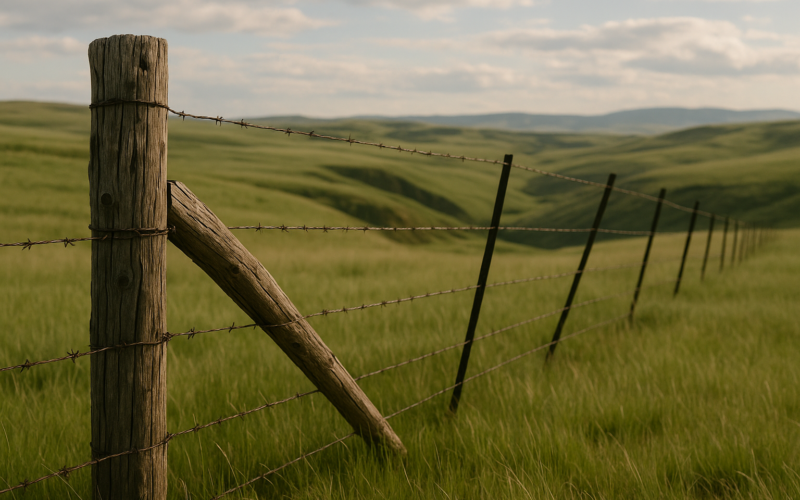
Frost heave is the quiet one. A corner brace or a line post that looked solid in October works its way up an inch or two over the winter as the ground freezes and thaws. The post is still standing, but it’s loose in the hole and the wire has gone slack. You’ll feel it before you see it — grab the post and rock it. If it moves, it needs tamping or resetting.
Then there’s the snow. A heavy, wet load bends top wires and pushes whole stretches downhill on a side slope. Where drifts piled against the fence, the wire can be stretched past where it’ll spring back. Drifts also drag down old staples, so check that the wire is still stapled and not just laying against the post.
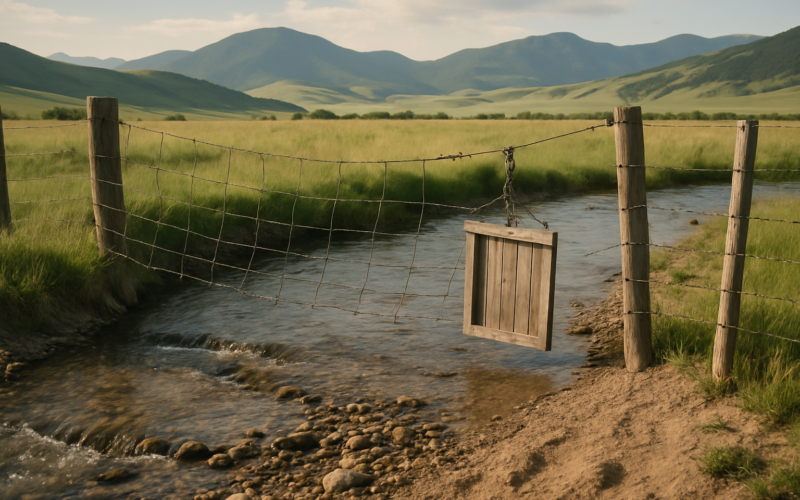
Water gaps take the worst of it. Any place the fence crosses a creek, a draw, or a coulee that ran hard this spring probably lost its bottom wires, or the whole gap washed out and is hanging downstream in a pile of willows and baling twine. These are the first holes cattle find because the grass and water are right there.
Work the corners and braces first
A fence is only as tight as its corners. If a brace post has heaved or rotted at the ground line, no amount of stretching line wire will hold. Check the H-braces and corner assemblies before you touch anything in between. A brace that flexes when you push on it is doing nothing, and the next hard pull will lay your corner over.
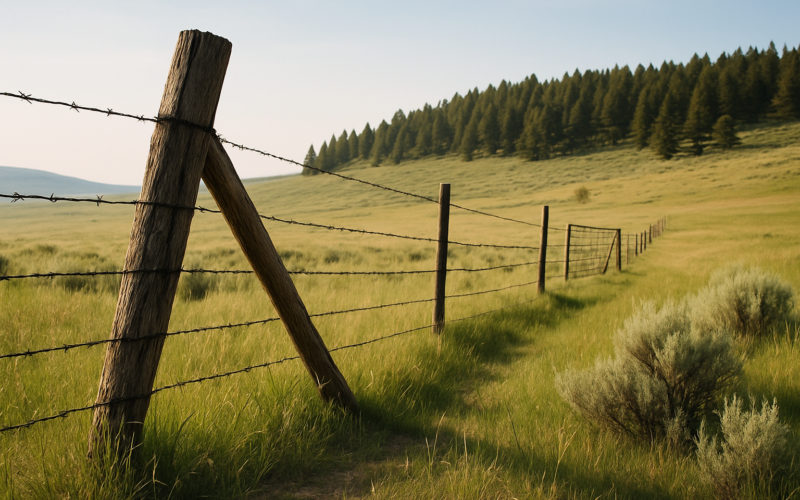
When you reset a post, don’t just shove it back in the same loose hole. Tamp it hard in layers — a few inches of dirt, pack it, repeat. A post tamped right will outlast one set in concrete that cracked and let water in. On rocky ground where you can’t get a clean hole, a steel T-post driven alongside and clipped to the wooden post will hold it until you can do it right in the fall.
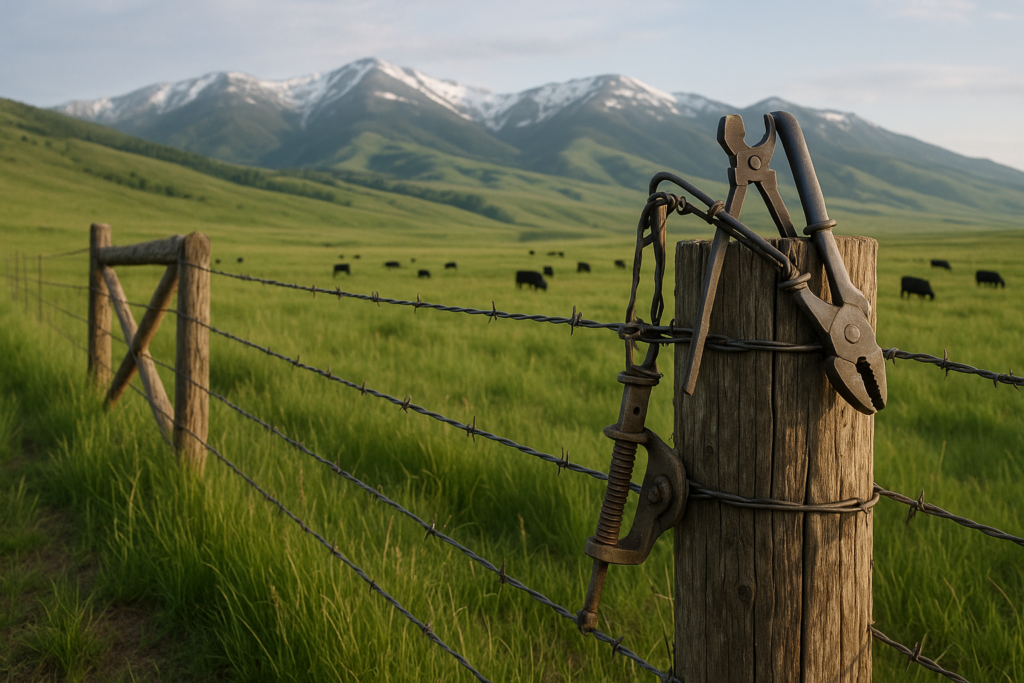
Carry the basics so you’re not making two trips: a fencing tool, a roll of smooth or barbed wire to match what’s up, extra T-posts and clips, a bag of staples, a hammer, a post driver, and a couple of crimping sleeves or splices. A come-along or a wire stretcher earns its weight on any stretch that’s gone slack.
Splices, water gaps, and electric checks
When you splice a broken wire, do it right the first time. A wrapped splice that’s just twisted a few times will pull loose under tension and under a cow. Use enough wraps, or run it through a crimp sleeve and crimp it tight. On a long slack stretch, it’s usually faster to cut, restretch with the come-along, and splice than to try to take up the slack by hand.
Rebuild water gaps so they’ll give and not catch. A rigid gap across a creek just dams up debris until the next high water takes the whole thing out. Hang the bottom wires so they swing and let sticks pass, or build a floating gap you can lift and reset after each runoff. You’ll be back at it more than once, so make it easy to fix.
If you run any electric — a single hot wire to back up a barbed fence or to split a pasture for rotation — walk it with a tester, not just your eye. Grass grown up into the bottom wire will bleed off enough voltage that the fence holds nothing. Spray or trim the wire line, check your ground rods, and make sure the charger is actually reading a charge out at the far end, not just at the box.
None of this is complicated work. It’s just work that pays for itself the first time it keeps your cattle home. Walk it now, while you’ve still got the time and the ground is soft.