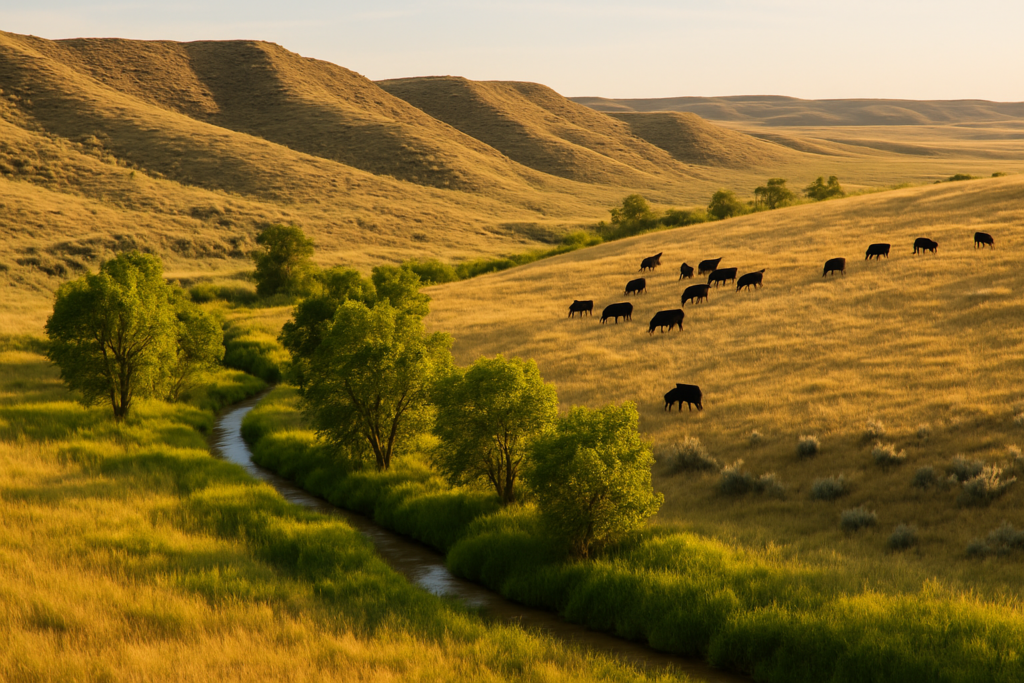
Turn a hundred pairs into a section of rough country in July and watch where they end up. They’ll camp in the creek bottom, lay around in the cottonwoods, and graze the same flat over and over until it’s stubble and cow tracks. Meanwhile the south slopes and the benches a half mile up carry knee-high grass nobody ever touches. You paid for that whole pasture. The cattle are using maybe half of it.
This is the oldest problem in big-country grazing, and it’s worse on the dry years because the bottom is the one green spot pulling everything to it. The cattle aren’t being lazy out of spite. Water, shade, level ground, and the best feed all sit in the same place, so they sit there too. The fix is to give them reasons to go somewhere else.
Move the salt and mineral away from water
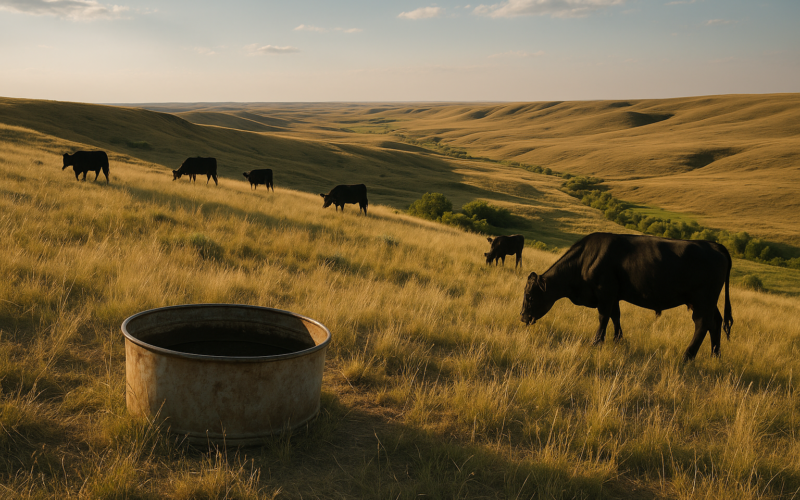
If your mineral tub sits by the tank in the bottom, you’ve built a feedlot. Cattle will water, lick, lay down, and graze the immediate area into the ground. Pack the salt and mineral up onto the slopes and benches you want grazed — a quarter to a half mile from water, out where the grass is going to waste. Cattle will walk to salt. Put it where their feet ought to be.
Move it again every week or two. Once they’ve grazed off the area around a salt ground, drag the tub or the blocks another few hundred yards onto fresh feed. On a big pasture you can pull a herd across the whole thing over a summer just by leapfrogging the mineral uphill. It’s the cheapest distribution tool you’ve got and most outfits never use it on purpose.
Water is what really holds them
Cattle won’t graze country they can’t get water from. The rule of thumb a lot of range people use is that cattle graze hard within roughly a quarter to a third of a mile of water, then use less the farther out you go, and on rough or timbered ground that circle shrinks. If your only water is the creek, that’s why the whole herd lives on the creek.
Spreading water spreads cattle better than anything else. That can mean a stock tank fed off a solar pump on a ridge well, a pipeline to a couple of tire tanks up the draws, or even hauling water to a portable tank for a few weeks to open up a corner that never gets used. The riparian benefit is real too — every gallon you offer up on the bench is a cow that isn’t standing in the creek breaking down the bank and fouling the water everyone downstream of you drinks.
If you run a forest or BLM allotment, water development and salt placement are usually exactly what the range con wants to see anyway, and they’ll often help with the planning. Worth a call before you assume it’s all on your dime.
Ride the country and use a little pressure
Salt and water do most of the work, but sometimes you have to go gather the bunch out of the bottom and quietly push them up where you want them. Do it early, slow, and let them trail out on their own once they’re pointed the right way — drive them like you’ve got the morning to spend, not like you’re shipping. Bump them up to fresh grass, drop a little mineral right there, and a lot of them will stay.
Fence is the heavy-handed version. Cross-fencing a giant pasture into two or three pieces, even with a single hot wire, forces cattle to clean up one chunk before they get the next and keeps them off the creek bottom until you want them there. It costs money and labor, but on ground you’ll be running for the next thirty years it pays back in carrying capacity. A temporary electric fence around the worst-abused riparian stretch for part of the season is a cheaper start.
None of this is fancy. Walk the pasture in late summer and read it — where the grass is gone and where it’s wasted tells you exactly where the salt and the next water need to go. Fix one piece of it this year. The bottom gets a chance to recover, the upland feed actually gets eaten, and that section starts running like a full section instead of half of one.