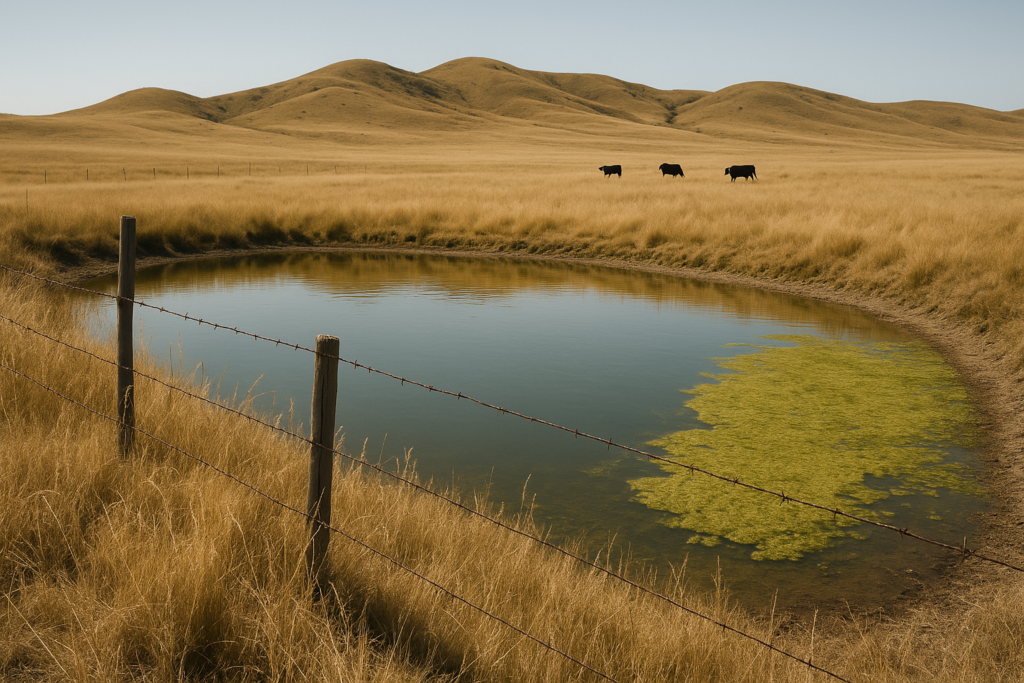
Late June heat does two things at once on a Montana ranch. It pushes cattle to the nearest water, and it cooks the shallow, nutrient-loaded stock ponds where they want to drink. Put those together and you get the conditions for a blue-green algae bloom — and a dead cow found stiff at the water’s edge with nothing else to explain it.
People call it pond scum, but blue-green algae aren’t really algae. They’re cyanobacteria, and a few of the common ones produce toxins that hit fast. Some attack the liver, some go after the nervous system. With the neurotoxic kind, an animal can drink, walk a few steps, and go down. You don’t get a sick pen to treat. You get carcasses.
What sets a pond off
Blooms need three things, and a hot Montana summer hands them over: warm, still water; sunlight; and nutrients, mostly nitrogen and phosphorus. A stock pond that catches runoff from fertilized hay ground, or one that cattle have been loafing and dunging in all spring, carries plenty of feed for cyanobacteria. Add a stretch of 85-plus days with no wind and the water level dropping, and the bacteria multiply into a surface bloom that can turn the whole pond the color of pea soup.
The dangerous part is how fast it concentrates. Wind pushes the bloom to one bank, and that’s exactly the corner cattle wade into and drink from. A pond that looked fine three days ago can have a thick, paint-like mat along the downwind shore by the time you ride past.
What you’re looking for: water that looks like spilled green or blue-green paint, a surface scum that smells off, or grass-clipping-green streaks along the edge. True blue-green scum smears when you disturb it. Filamentous green algae — the stringy, hair-like stuff you can pick up in a clump — is a different organism and isn’t the toxic problem, though a pond growing one can grow the other. If you can’t tell, treat it as suspect.
Signs you’ve already got a problem
By the time most ranchers know they have a toxic pond, an animal has died near it. That’s the brutal part of this one — there often isn’t a warning window. If you find a dead cow or calf within sight of water with no signs of struggle, no bloat that explains it, and no obvious injury, look hard at the pond before you write it off.
Animals that took a smaller dose may show muscle tremors, staggering, drooling, labored breathing, or diarrhea. Liver-type toxins can show up as weakness and going off feed a day or two later. There’s no field antidote you can pull out of the truck. The only real move is getting them off the water and onto clean feed and water, and calling your vet.
One more thing worth knowing: a hard die-off of the bloom itself, after a cold snap or a treatment, can release a slug of toxin into the water all at once. A pond can actually be more dangerous right after the scum starts to break up than when it was thick and green.
Keeping cattle off bad water
Fencing the pond and piping water to a tank is the cleanest answer if you can swing it. Cattle drinking from a trough fed off the pond bottom — not the scummy surface — are far better off, and you control where they drink. A lot of the solar and spring development work people do for grazing distribution pays a second dividend here.
Short of that, watch your at-risk ponds through the hot, calm stretches. Walk or ride the downwind shore where the bloom piles up. If you’ve got a pond that scums up every summer, plan now to keep stock off it during July and August rather than hoping it behaves.
You can manage the nutrient load over the longer haul — keeping cattle from camping in the water, fencing ponds and offering tank water, and slowing runoff from heavily fertilized ground above the pond. Those changes don’t fix a bloom that’s already going, but they make next summer’s pond less likely to turn on you.
If you suspect a toxic pond, fence it off, move the cattle, and don’t let the dogs or horses drink either — they’re just as susceptible, sometimes more so. Take a photo of the scum and call your vet or county Extension office; testing can confirm what you’re dealing with. A green pond in a hot June isn’t always poison, but it’s the kind of guess you don’t want to lose.