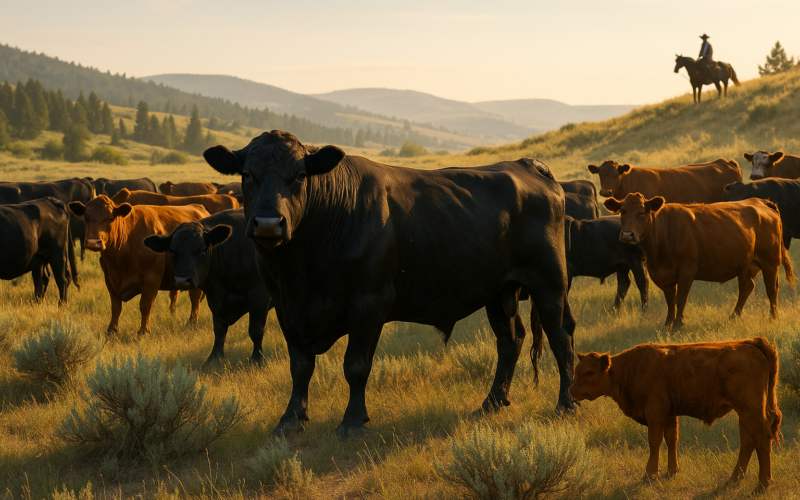
You can hear the problem before you see it. Cows bunched in a corner of the pasture at midday, tails going like windshield wipers, calves crowding underneath to get out of the swarm. By mid-June the horn flies are building, and if you don’t have a plan they’ll be thick by the Fourth of July and stay that way until frost.
Horn flies live on the animal, taking dozens of blood meals a day. That constant biting keeps cattle moving instead of grazing and drives them off the good grass into shade and standing water. The pounds you lose don’t show up as a dead calf. They show up as a lighter weaning weight in October that you never think to blame on flies. That’s what makes them easy to ignore and expensive to leave alone.
Don’t Hang the Tags in May
The most common mistake is the earliest one. A rancher orders insecticide ear tags, gets excited to use them, and clips them in at branding or turnout when the fly numbers are still low. The tag starts releasing chemical on day one whether the flies are there or not. By August, when the population peaks, the tag is spent and the cattle are covered.
Tags are built to last a set number of weeks, roughly the back half of fly season if you time them right. Wait until you actually see flies building on the cattle before you tag. In much of Montana that’s late June, sometimes into early July depending on how warm and wet the spring ran. Tagging into the pressure instead of ahead of it lets the tag carry you through the worst weeks.
Two things matter as much as timing. Put a tag in each ear on adult cattle for a full-season product, and rotate your chemical class. Horn flies build resistance fast when you run the same pyrethroid tag year after year. If you used a pyrethroid last summer, switch to an organophosphate this year, or the other way around. And pull the tags in the fall when you preg check or wean. Leaving spent tags in the ear just teaches the surviving flies to shrug off that chemical.
Tags Alone Won’t Carry It
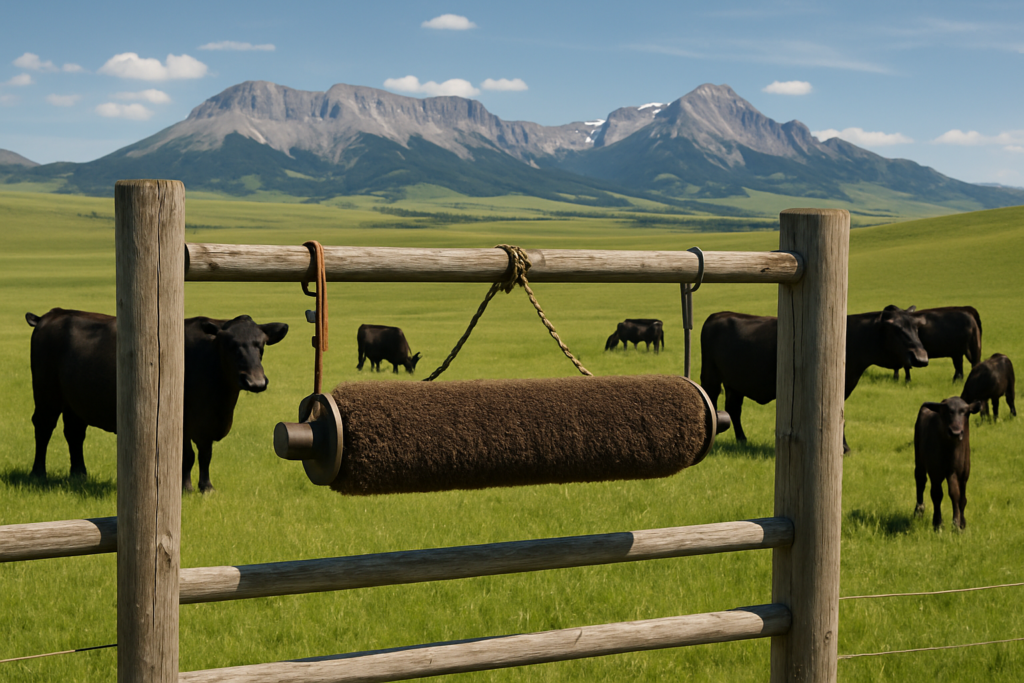
An ear tag is a good backbone, but it’s rarely the whole program. The cheapest fly control you can run is a back rubber or oiler hung where cattle have to use it — across a gate they walk through to water, or in a mineral pen they visit anyway. Charge it with the labeled insecticide and oil mix, keep it charged, and it works every time an animal passes under it. On a good rub, cattle self-treat their necks, backs, and faces without you touching them.
Feed-through products are the other layer worth knowing. A mineral or block with an insect growth regulator passes through the animal into the manure, where horn flies lay their eggs, and keeps those eggs from hatching into adults. The catch is that it only controls flies born in your own pastures — it does nothing about flies that drift in from the neighbor’s cows across the fence. It works best as part of a program, not by itself, and it only works if the cattle actually eat the mineral consistently. If your mineral consumption drops off in July, so does the fly control.
Watch the Faces, Not Just the Backs
Horn flies stack up on the shoulders, back, and belly. Face flies are the other half of the fight, and they’re the ones that spread pinkeye by feeding around the eyes. Tags and rubs help with face flies, but a rub with a fly-flip or fringe that wipes the animal’s face as it passes does more good than a tag alone. If you’re already fighting pinkeye in a group, tightening up face fly control is part of the same job.
None of this has to be complicated or expensive. The point is to match your treatment to when the flies are actually there, layer a rub or feed-through under the tags so you’re not leaning on one product, and change your chemistry so the flies never get comfortable. Do that in June and you’ll still have control when it counts in August, instead of watching your calves burn daylight in the shade.