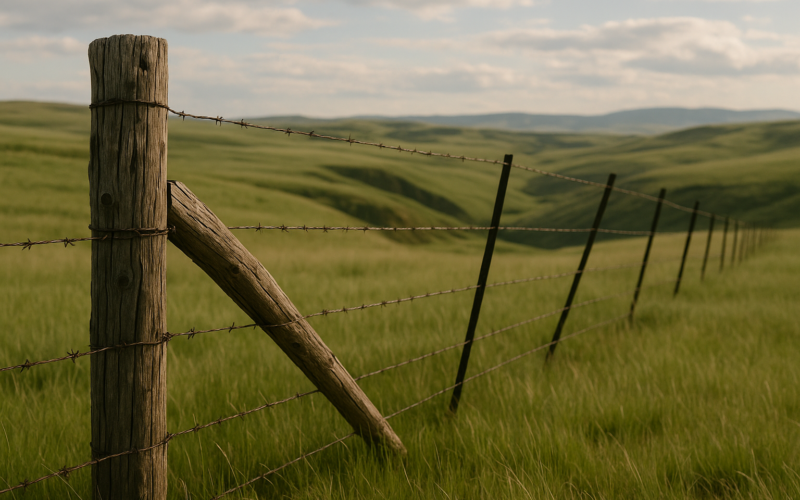
The cows have been out on summer range a week or two now, and the grass is finally coming. That’s exactly when the fence you haven’t looked at since last fall decides whether they stay where you put them. Wire that held all winter under three feet of snow is often laying on the ground come June, and a bunch of pairs that drift through a downed corner don’t come back on their own. They keep going until something stops them—usually the neighbor’s better grass, or a highway.
Riding fence isn’t glamorous work and it never makes the day feel productive. But a hole you fix in June with a fence stretcher and four staples is a lot cheaper than a July gather in the heat, and a whole lot cheaper than a phone call telling you your black cows are mixed in with somebody else’s.
Where the fence breaks first
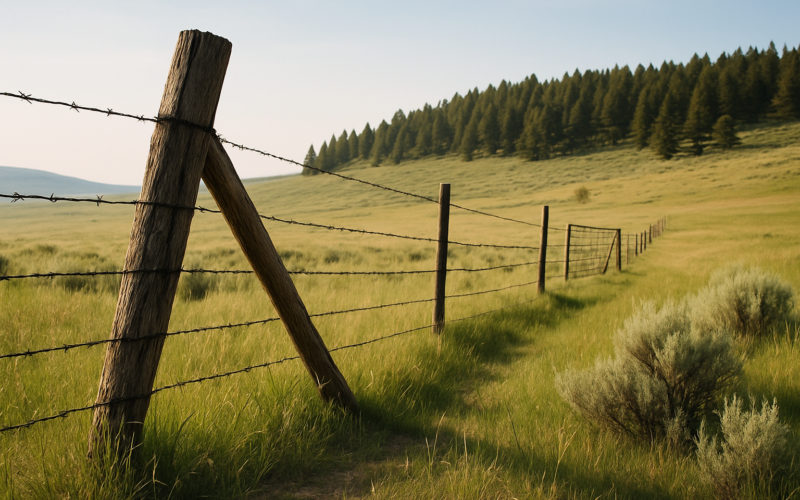
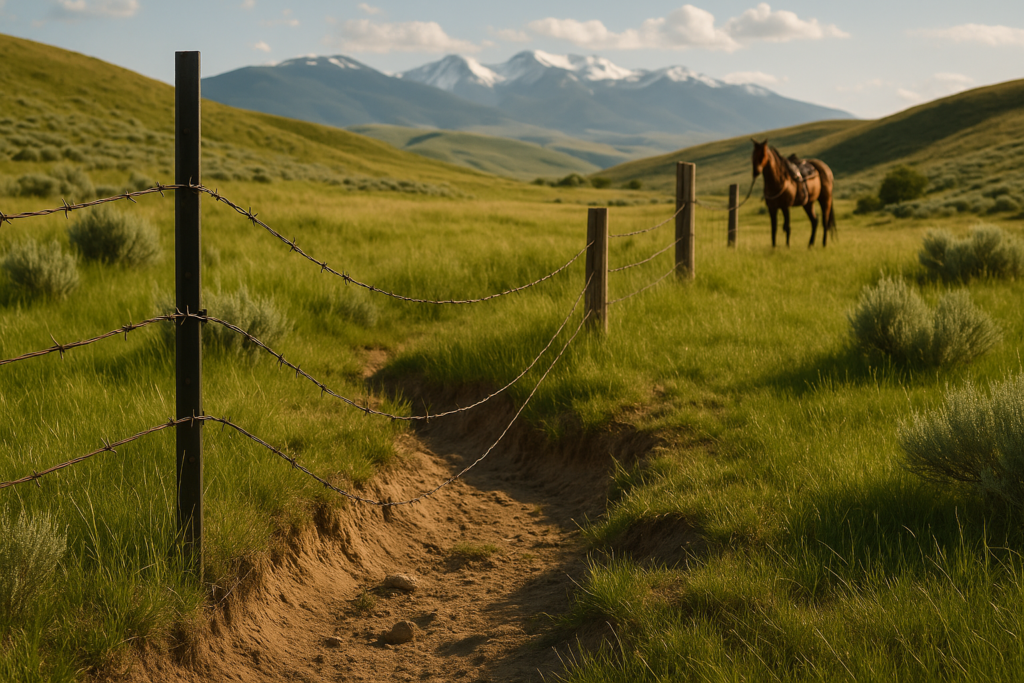
You already know the trouble spots on your own country, but the pattern holds most places. Draws and coulees where snow drifts deep will have wire pushed down or posts leaning downhill. Timber edges take a beating from deadfall—one blown-over pine across the top wire can flatten a whole span. Elk cross the same low spots year after year and stretch or snap the top strand until it’s belly-high to a calf.
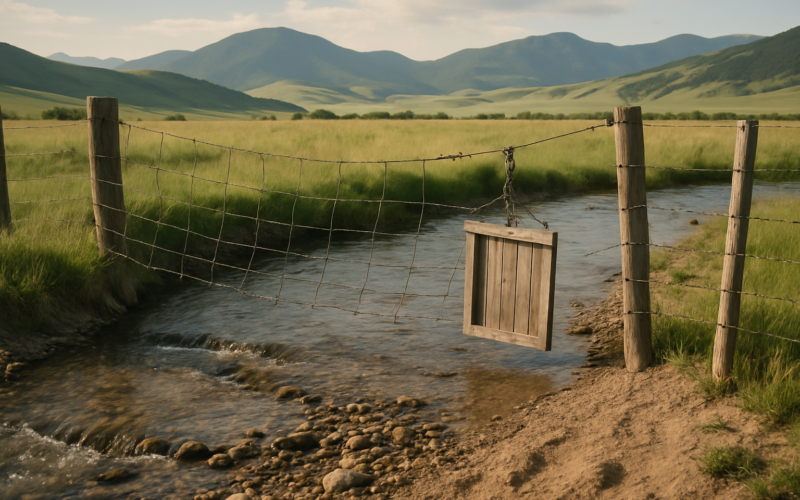
Water gaps are the ones that’ll get you. Any place the fence crosses a creek or a wet-weather draw, high water in May and early June tears out the hangers and rolls the wire into a wad of brush and mud. A gap that washed out during runoff leaves an open door as soon as the creek drops. Ride those first and expect to rebuild rather than repair.
Gates deserve a look too. A wire gate that got left half-latched or dragged open by a horse, a wooden gate sagging off a rotted hinge post—cattle test gates constantly, and a loose one becomes an open one by August.
Fix it right the first pass
Carry enough to actually do the job when you find it, not just note it and ride on. A pair of fencing pliers, a fence stretcher or a come-along, a coil of smooth wire and a small roll of barbed, a sack of staples, a few steel posts and a driver, and some good gloves will handle most of what you run into. If you’re horseback, pack it on a second horse or make the loop short enough to get back to the pickup.
When you splice, wrap it tight and wrap it clean—a lazy splice pulls loose the first time a cow leans on it. Reset leaning steel posts while you’re there instead of telling yourself they’ll hold one more year. On the brace posts and corners, check the wire wraps and the H-brace; a corner that’s given up will drag a whole stretch of fence down with it. Those are worth doing over completely, even if it means coming back with the post pounder and a load of material.
Splices and stretches on smooth wire hold better if you don’t overtighten in the cool of the morning. Wire tightens as the day heats and slacks in the cold, so leave a little give.
Make the ride pay double
You’re already out there covering the country, so use the trip. Count what you see and note where the cattle are bunched—if they’re hammering one corner and ignoring a whole ridge, that tells you something about your water and your salt placement. Look at the grass. Check the stock a little: any limping, any swelled jaws, any calf hanging back. A fence ride is the cheapest herd check you’ll make all summer.
Keep a simple list going as you ride—which gaps still need material, which corners need rebuilt when you’ve got a full day. It beats trusting your memory two weeks later when you’re deep in haying and can’t remember whether it was the east fence or the north that had the washout.
None of this is complicated and none of it is new. It’s just easy to put off, and the country doesn’t care that you’re busy. Spend the days now, while the wire’s easy to find and the cattle haven’t tested every weak spot, and you’ll ride a lot less come fall gather.