Nobody puts fence at the top of the June list. There’s hay to put up, cows to move, a branding or two still hanging over you. But the fence is the one job that quietly decides how the rest of the summer goes. Turn a bull out into a pasture with a wire down in the far corner and you may not find out anything is wrong until you spot him a mile away in the neighbor’s cows, or until preg-check tells you a bunch of your cows caught to a bull you never bought.
Montana fence takes a beating between fall and turnout. Snowdrifts lean posts and stretch wire. Frost heave lifts steel posts an inch or two out of the ground every spring. Elk and deer crossing all winter break top wires and mash bottom wires flat. Runoff cuts under the wire in every draw. A fence that looked tight in October is rarely tight in June, and the only way to know is to walk it or ride it, gate to gate.
Ride the whole line, not just the easy stretch
The temptation is to eyeball the fence from the pickup along the county road and call it good. The road stretch is almost never the problem. The trouble is in the coulee bottoms, the timber, the far corner where two neighbors’ pastures come together and nobody’s sure whose responsibility that quarter-mile is. Those are exactly the places cattle drift when the grass gets short or the flies get bad, and they’ll test every weak spot you didn’t fix.
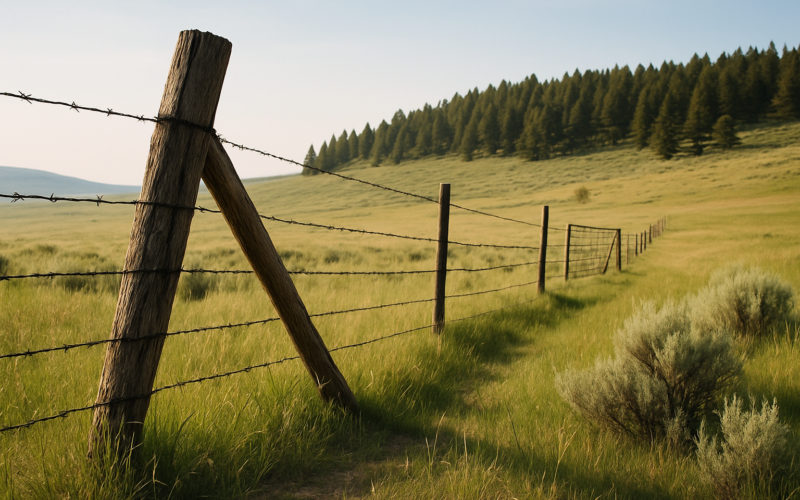
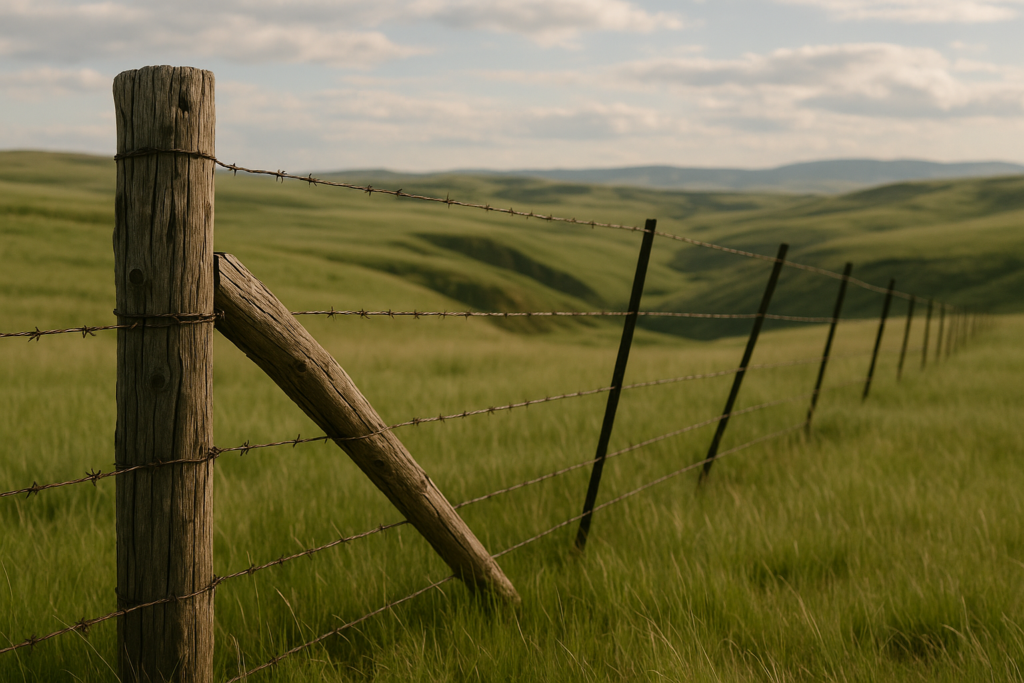
Go the whole line. Watch for wire that’s down or so loose a cow can walk over it, posts that have heaved or rotted at the ground line, staples backed out of wood posts, and clips sprung off steel posts. Carry a stretcher, a fencing pliers, a sack of staples and clips, and a few extra posts on the four-wheeler or in the saddlebags so you can fix what you find instead of making a list to come back to. Half the down wires on a ranch are down because somebody drove past them twice meaning to get to it later.
Water gaps and gates are where you lose cattle
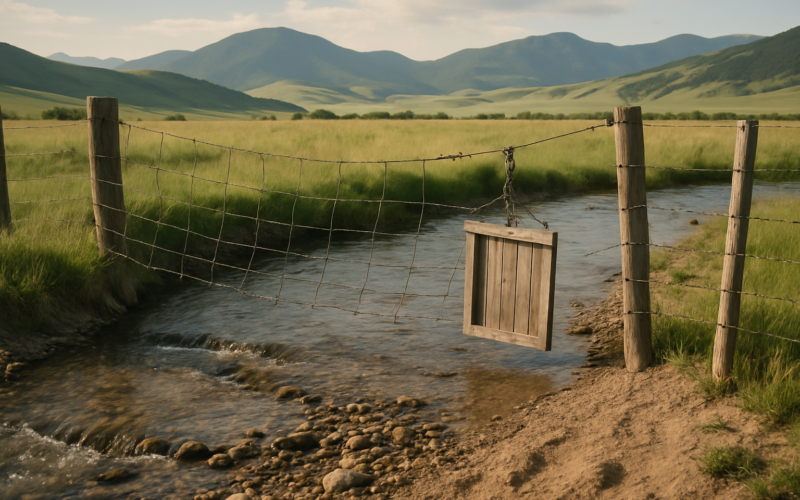
The water gap across a creek is the first thing high water takes out and the last thing anybody checks. A gap that washed loose in the spring runoff is an open door. Rebuild it so it’ll swing and drop debris in the next high water instead of catching a raft of brush and pulling the whole thing down. In the wet draws where the ground stays soft into summer, posts pull out easy and a cow leaning through for grass on the other side will have a hole made by August.
Gates deserve a hard look too. A gate that drags, won’t latch, or has a broken wire loop gets left open by the first person in a hurry, and a gate left open scatters a pasture faster than any down wire. If you’re running rotational paddocks with a single hot wire, walk the whole hot-wire circuit and put a fence tester on it. A grounded-out electric fence is worse than no fence because you think the cattle are held and they know they aren’t.
Check it again a week after turnout
Turnout day isn’t the end of fence season. Cattle test a new pasture hard the first few days, hunting the corners and leaning on anything loose while they figure out where the water and shade are. A fence that held an empty pasture all spring finds out in a hurry what it can’t hold with pressure on it. Ride the perimeter again three or four days after the cows go in and you’ll catch the weak spots that only show up under a thousand pounds of cow.
The same goes for a bull pasture. A bull will walk fence looking for cows or a fight the whole time he’s out, and he’ll find the one spot you missed. Two neighbors’ bulls working the same fence line will tear it apart between them and end up in the wrong pastures, which fouls up both men’s breeding season and starts an argument nobody wins.
Fence is thankless until the day it saves you a wreck. The hours you put in riding it in June don’t show up on any tally sheet, but a summer where the cattle stay where you put them, the bull settles your cows and nobody else’s, and you never get the neighbor’s call at supper is a fence that paid for itself. Fix it while it’s a wire, not after it’s a wreck.