You find her on her side in the bottom of a draw, legs stiff, sometimes still paddling. Maybe you saw her the day before looking a little off — high-headed, twitchy in the flank, walking like the ground was moving under her. By the time she’s down, you’ve got minutes to an hour, not days. That’s grass tetany, and it kills some of the best cows in the herd every year on grass that looks like a paradise.
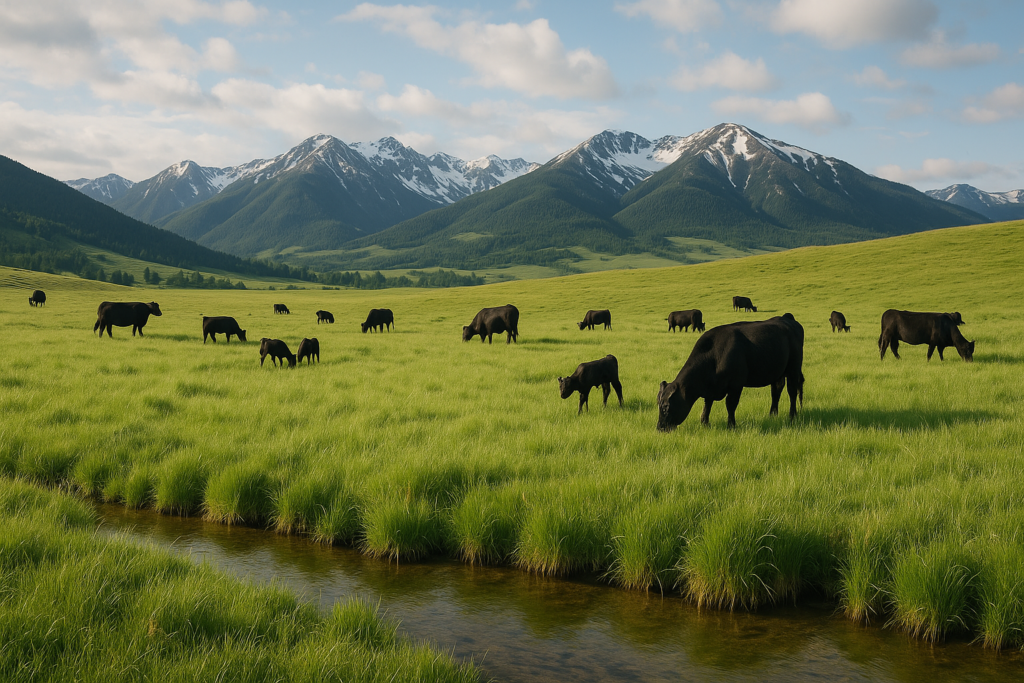
People think of it as a March-and-April problem, and most years it is. But a cold, late spring or a wet June keeps cool-season grasses growing fast and green longer than usual, and irrigated meadow regrowth after you pull the first cutting is its own lush flush. Both hold the risk open later than the calendar says. So it’s worth keeping in the back of your mind through turnout, not filing it away the day the snow melts.
Why lush green grass sets the trap
Grass tetany is low blood magnesium. The frustrating part is that the same forage that puts weight and milk on a cow can starve her of it. Fast-growing cool-season grass — brome, wheatgrass, meadow regrowth — runs low in magnesium and calcium and high in potassium, especially early in the season and on ground that’s been fertilized or sits over rich bottom soil. That high potassium actually blocks what magnesium the cow does take in. A cow can’t store much magnesium day to day; she has to keep taking it in, and a big-milking cow is dumping it out into that calf every day she nurses.
So the animals that go down aren’t the poor ones. It’s the older cows, third-calf and up, the heavy milkers, the ones raising a good calf. Add a cold snap or a wet spell that cuts grazing time and makes the grass grow even faster, and you’ve built the whole setup: high demand, low supply, nothing in reserve.
What it looks like, and how fast it moves
Early on it’s easy to write off. A cow off by herself, jumpy, ears working, stepping high and stiff. Some walk with a stagger or a strange gait. If you push her, she may get worse fast — that’s a tell. From there it goes to muscle tremors, going down, thrashing with her head back and legs paddling, and death. Sometimes you never see the early stage at all. You just find one dead with the grass tore up around her where she thrashed.
If you catch one down and alive, this is a call-your-vet situation, right now. Treatment is getting magnesium and calcium into her, and it has to be done carefully — a shot of the wrong thing given the wrong way can stop her heart. Handle her as quiet as you can, because excitement alone can be enough to finish a tetany cow. This isn’t one to doctor by feel and hope.
Getting ahead of it beats treating it
The whole game is prevention, because the ones you save are the ones you never lose. The standard tool is a high-magnesium mineral — the loose stuff with magnesium oxide worked in. Magnesium oxide is bitter and cattle won’t line up for it, so you have to get them eating it well before the risk period, not the day you get nervous. Mix it with something they want, keep it fresh and dry, and put it where they’ll hit it.
A few things that actually move the needle:
- Start the high-mag mineral a few weeks ahead of turnout onto lush grass, and check that they’re eating it — measure how fast it disappears, don’t just eyeball a full tub.
- Put mineral where the cows are, not where it’s handy for you. If they’re bunched on a creek bottom and the mineral’s up on the bench, they’re not getting it. This is the same lesson as spreading salt to pull cattle off the low ground.
- Watch the heavy-milking older cows hardest. If you’re going to lose one, it’s her.
- Don’t turn hungry cows out onto a lush cool-season pasture first thing on a cold morning. A little dry hay in front of them takes the edge off and gives them some magnesium and fiber to start on.
Grass tetany is one of those wrecks that looks like bad luck and usually isn’t. The cow that went down in the draw was short on something you could have handed her in a mineral tub for the price of a few bags. Once the grass heads out and dries down through summer, the risk falls off on its own — but until it does, and again when the meadow greens back up after first cutting, it pays to keep the high-mag out and keep an eye on your best cows.