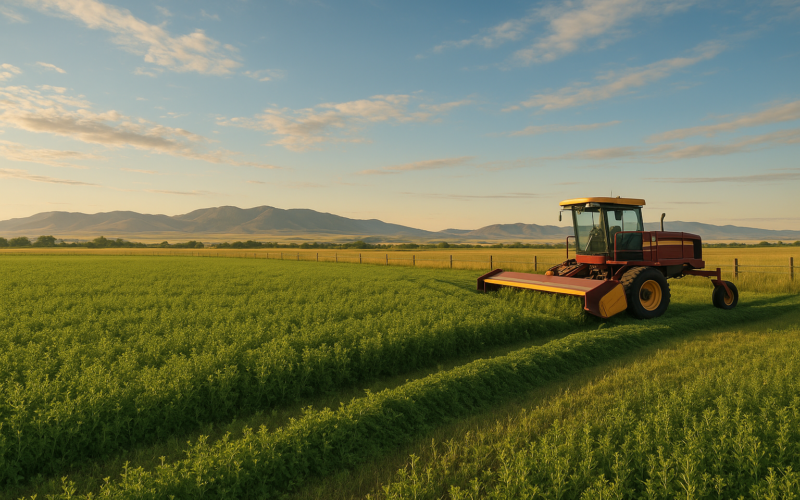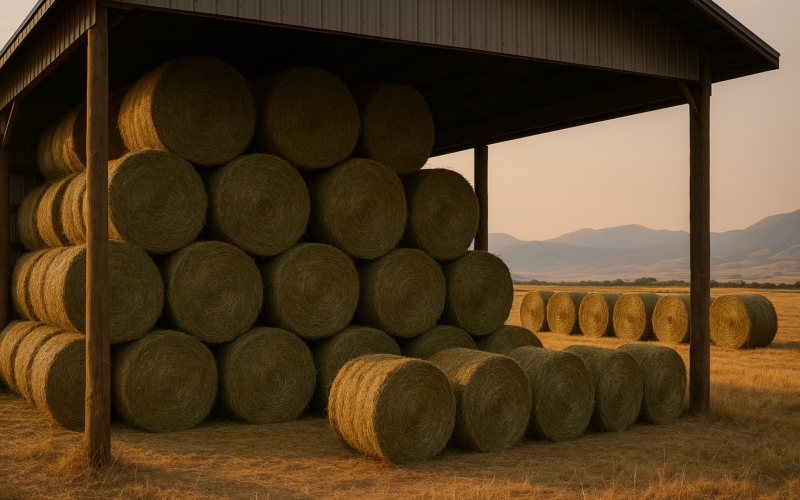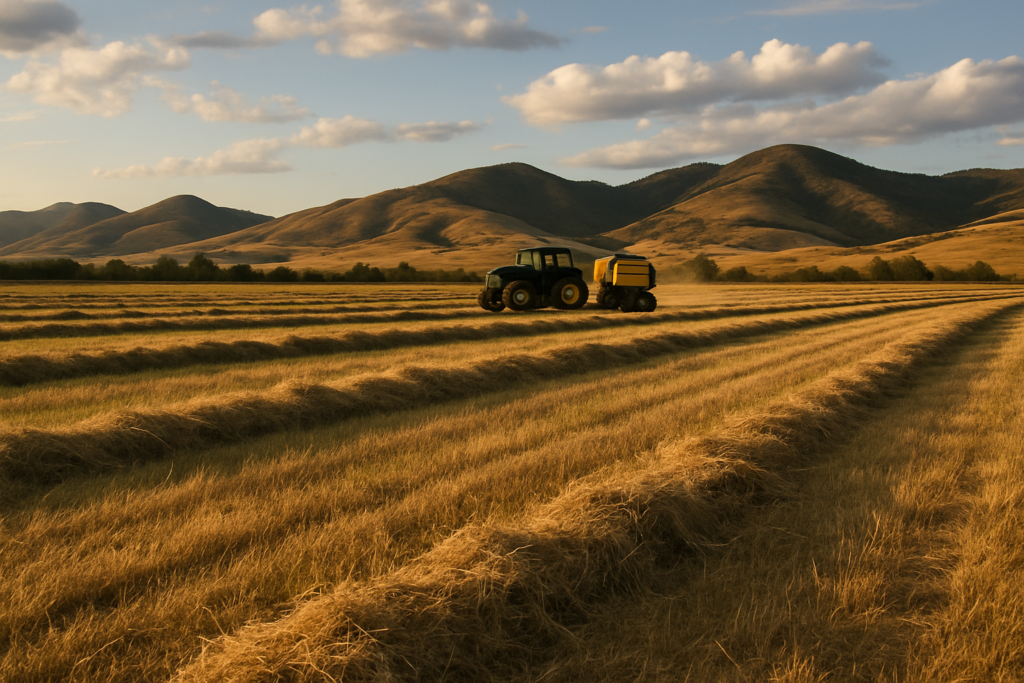
Mid-June is when the first-cutting rush hits, and it’s when a lot of good hay gets ruined without anybody noticing for weeks. You cut, the sky looks right, and by the time the dew burns off you’re baling because the forecast has a storm in it Thursday. The bales look fine. They stack fine. Then in the middle of July somebody climbs the stack for a broken bale and the top layer is warm to the hand, the color’s off, and the smell is sweet like tobacco. That hay was already lost the day it went through the baler. It just took a few weeks to prove it.
Hay heats because it went up wet. The plant cells keep respiring after cutting, and molds and bacteria go to work on the moisture that’s left. That activity throws off heat. In a loose windrow the heat escapes. Packed into a bale and stacked tight, it has nowhere to go, so it builds. A little heating burns sugars and protein and leaves you feeding stems and dust. A lot of heating chars the hay brown and, in the wrong conditions, sets it on fire from the inside out.
Know the number before the baler ever moves
Dry matter is the whole game, and eyeballing it will fool you every time on a heavy first cutting. Small square bales want to be down around 18 to 20 percent moisture. The bigger and tighter the package, the drier it needs to be, because a dense round or big square holds heat that a small square would shed. Big packages you want closer to 14 to 16 percent. Those aren’t targets to argue with the weather about — they’re what keeps a stack from cooking.
Buy a hay moisture probe and actually use it, several bales, several spots, not one bale off the top. The cheap testers get you close; the better ones with a long probe reach into a big round where the wet spots hide. If you’re baling by feel, the old twist test tells you something: pull a handful, twist it hard, and if you can wring anything or the stems still feel cool and pliable instead of crackly, you’re not there yet. That’s a rough check, not a substitute for a number.
Curing is where you win or lose the leaves
Grass hay dries mostly out of the stem, and the stem is the last thing to give up water. That’s why a windrow can feel bone-dry on top and still be green underneath. Getting air and sun to the bottom is the job. Tedding or turning a heavy swath a day after cutting opens it up and cuts drying time, especially on that first cutting when the tonnage is high and the nights are still cool.
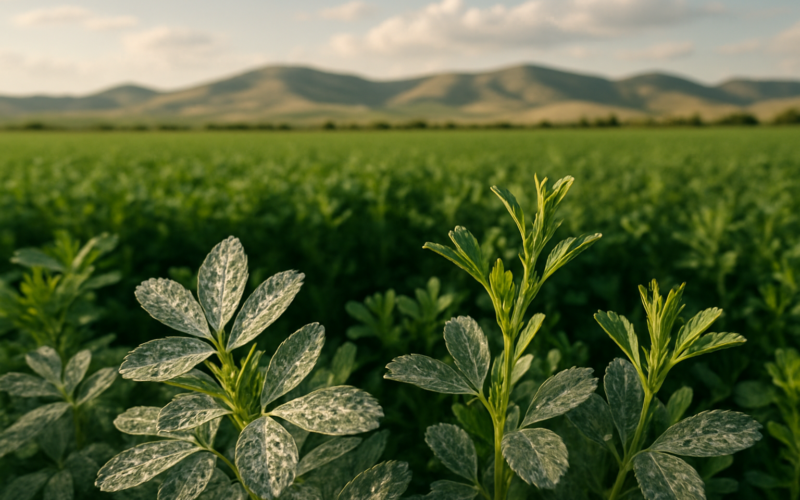
Rake when there’s still a little dew in it. On a legume mix the leaves are where the feed value lives, and raking dry alfalfa at noon shatters them onto the ground — you’re literally raking money into the dirt. Early morning, when the plant’s a touch tough, keeps the leaves on the stem where they belong. Then let the sun finish it. The window for baling grass hay in Montana is often just a few hours in the afternoon before the evening dampness comes back up out of the ground, so you plan the day around it, not the other way around.
If you’re chasing a storm and the hay’s a hair wet, a propionic-acid preservative buys you a couple points of moisture safely. It’s not a license to bale swamp grass, but it saves a cutting that would otherwise rot or wait for rain.
Watch the stack, not just the calendar
Even hay you baled right will sweat and warm for the first few weeks — that’s normal curing, and it settles down. What you’re watching for is heat that keeps climbing. Get a long-stem compost thermometer or make a probe out of pipe and check the interior of a suspect stack, not the surface.
Under about 130 degrees you’re fine, just curing. Around 150 you start paying attention and checking daily. At 175 and above you’ve got a real problem — call the fire department before you go pulling bales, because opening a hot stack feeds it oxygen and hot spots can flash. Pockets over 200 mean fire is close or already smoldering inside. A stack that smells sharp and sweet, or shows steam on a cool morning, is telling you the same thing your thermometer would.
Stack green hay loose and single-high if you have to store it wet, and keep it away from the barn and the good stack until you know it’s stable. A haystack fire doesn’t announce itself. It just glows in the middle of the night, and by the time you see it from the house, the barn and everything in it is gone. The cheap insurance is a moisture probe in your hand in June, not a hose in August.