Green grass fools people. The country comes on strong in June, the cows slick off, and it’s easy to figure they’re getting everything they need out of the pasture. Most of them are getting close. But the two or three things they’re short on happen to be the things that decide whether a cow breeds back on time and whether a calf’s immune system holds together through a wet, buggy summer. You don’t see the gap. You see the result at preg-check.
A mineral program isn’t a feed. It’s insurance, and June is when the premium comes due, because breeding season and peak forage growth land right on top of each other.
Why summer grass comes up short
Phosphorus is the big one. Range forage runs highest in phosphorus when it’s young and leafy, and it drops steadily as the plants head out and cure. By the back half of summer a lot of Montana native range is flat deficient. A cow can pull the calcium she needs out of most forage, but phosphorus tracks with green growth, and green growth doesn’t last on the ridges past July.
Then there are the trace minerals — copper, zinc, selenium, manganese. Cows need them in small amounts, but small amounts matter when a cow is trying to cycle, hold a pregnancy, and mount an immune response to flies, foot rot, and pinkeye all at once. Selenium is spotty across the state; some ground is short, some isn’t, and it doesn’t always match the county line. Copper is the one that gets sabotaged, because high-sulfate water and molybdenum in the soil both tie it up. A cow can be eating copper and still run deficient if her water and forage are working against her.
You can’t eyeball any of this. Two pastures that look identical can test different, and the same pasture tests different in June than it does in September.
Get the tub in the right spot, and keep it full
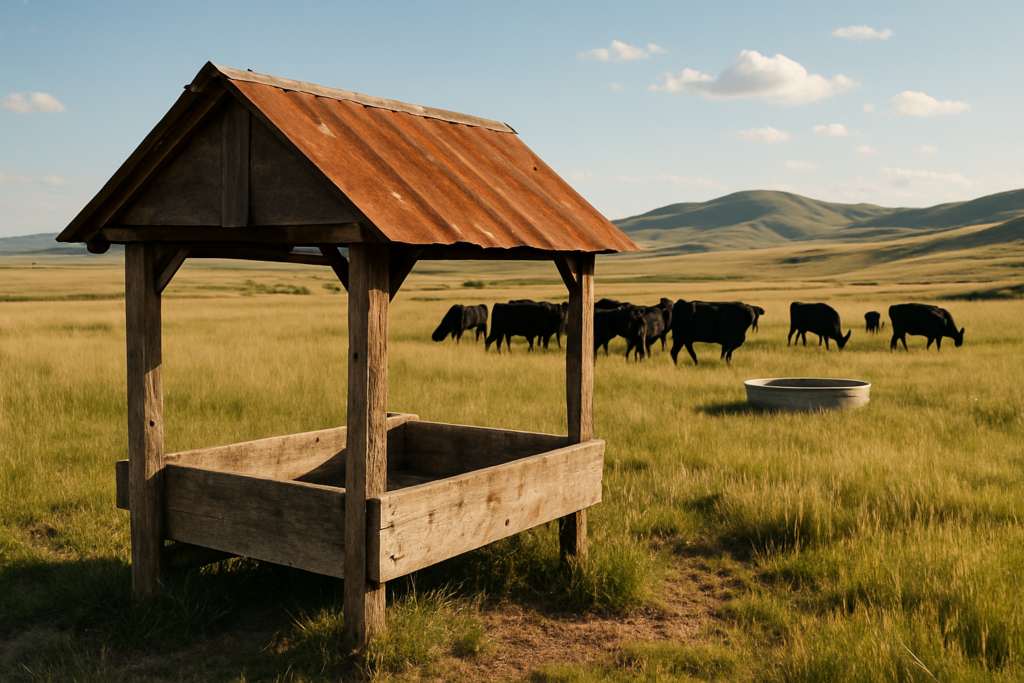
Cows won’t walk far for mineral, and they won’t work for it. If the tub is sitting back by the corral where you unloaded it, the cows grazing the far end of a section aren’t touching it. Set mineral where cows already spend time — near water, on a loafing area, along a trail they use every day. That said, park it far enough back from the tank that they’re not standing in it and fouling it. A little distance also nudges them to spread out instead of camping.
Salt is the throttle. Loose salt and a good salt-based mineral drive intake; a mineral with too little salt sits there, and one with too much gets under-consumed. Watch what they actually eat. If a tub that should last a couple weeks is gone in three days, you’ve got a hungry mineral situation or a salt-starved herd. If it’s molding and untouched, the salt balance is off or the cows found something else. The label gives you a target consumption per head per day — check your empties against it instead of guessing.
Weather is the quiet thief. A June thunderstorm turns loose mineral into a brick, and a baked crust in a tub gets left behind. Covered feeders earn their keep, and a mineral that sheds rain beats a cheaper one that sets up hard after the first storm. If you’re running blocks or tubs, make sure they’re not sitting in a mud hole by the tank where every drop of runoff hits them.
Match the program to your country
There’s no single right bag. A place with high-sulfate wells and molybdenum-heavy ground needs more available copper and often the chelated (organic) trace forms that hold up against the antagonists. Ground that’s short on selenium needs a mineral that carries it, and there’s a legal ceiling on how much selenium a commercial mineral can contain, so injectable selenium is sometimes the backup on the worst ground. If you don’t know what your country does, a forage test and a water test in early summer will tell you more than any label on the shelf.
Get the program running before you turn bulls out, not after. The mineral status a cow carries into breeding is what she built over the weeks prior — you can’t fix a copper or phosphorus shortfall in the ten days before the bull goes in. Same with the calves. A nursing calf leans on the cow’s milk and starts nibbling mineral itself by mid-summer, and the ones that go into a wet stretch short on trace minerals are the ones that end up with pinkeye and summer pneumonia while their pasturemates stay slick.
Keep it simple to run and honest to check. Full tub, right spot, right formula for your dirt and water. Do that in June and you’re buying pounds and pregnancies you won’t be able to buy back in the fall.