Anaplasmosis is one of those things that doesn’t announce itself. You turn cows out on good grass, the flies come on in June, and everything looks fine clear through haying. Then in the heat of August or into the fall you find a five- or six-year-old cow off by herself, breathing hard, weak in the back end, or already down and dead with no wound and no bloat to explain it. She wasn’t sick that morning. That’s the part that fools people.
The disease is caused by a blood parasite that gets into red cells and destroys them. The animal turns anemic. By the time you see the signs — dull, dropping off the bunch, pale or yellowish around the eyes and gums, breathing hard on a short walk — she’s already lost a big share of her red blood cells. Handle a cow that far along and you can kill her just moving her to the corral. The stress of a hot gather pushes an already-oxygen-starved animal over the edge.
Why it hits the old cows and skips the calves
Anaplasmosis is backwards from most things. Calves and yearlings that pick it up usually shrug it off and may never show a sign, but they can carry it for life. Cows past three or four are the ones that get knocked down, and the older and heavier-milking they are, the harder it hits. A first-calf heifer might weather an infection you’d never notice. Your best mature cows are the ones you find dead.
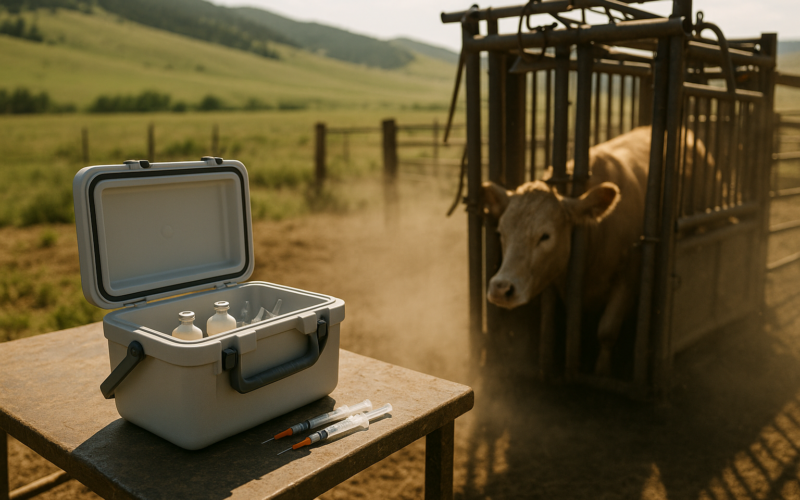
The bug travels two ways. Ticks carry it, and so do biting flies — horse flies, deer flies, stable flies, the ones that draw blood. Anything that moves blood from one animal to another moves anaplasmosis with it, and that includes your needles and your dehorning and castrating tools. Reusing a needle down a whole chute at branding or preconditioning is a clean way to spread it from one carrier cow to the next. So is a bloody knife.
That’s why June matters even though the wreck comes later. The flies and ticks are working now. By the time you’re finding down cows, transmission has been going on for weeks.
What actually helps before it starts
The main prevention tool most outfits use is chlortetracycline in a free-choice mineral or feed, fed through the vector season — roughly when flies and ticks are active until frost knocks them back. It doesn’t clear carriers, but it holds infections down and keeps the parasite from building to the level that drops a cow. The catch is intake. Cows have to eat enough of it, consistently, and they have to eat it every day. A tub or mineral feeder that runs empty for a stretch, or that cows quit hitting when June grass comes on lush, leaves a hole right when the flies are worst. Put feeders where cattle actually loaf and water, keep them full, and watch consumption instead of assuming it.
The rest is basic sanitation and fly management. Change needles more often than feels necessary when you’re processing — at minimum between groups, and it’s cheap insurance to change them a lot more than that. Clean your castrating and dehorning tools between animals. Fly control that you’re already running for horn flies and face flies helps here too; fewer biting flies means fewer bites moving blood.
There is a vaccine available in some areas, but availability and whether it fits your operation vary, so that’s a conversation with your veterinarian, not something to bank on blind.
When you find one down
If you spot a cow showing signs — pale, weak, breathing hard, hanging back — the worst thing you can do is push her hard to the barn. Move her slow or bring treatment to her if you can. Anaplasmosis is treatable with the right antibiotic early, but the animal is fragile, and rough handling kills more than a few that might have pulled through. Call your vet before you do much; the cows in that pasture that look fine may already be carrying it, and how you handle the whole bunch matters.
Blood tests can tell you whether your herd is carrying anaplasmosis, and if you’re buying replacements or bulls from an area where it’s common, you can be dragging carriers home without knowing it. Knowing your herd status is what lets you decide whether the summer mineral program is worth the money. On a lot of Montana outfits, one old cow saved pays for the whole season of medicated mineral.