You ride through the bunch on green grass and one cow is holding up a hind foot, three-legged, standing off by herself. By the time she’s that obvious, she’s already been sore a day or two and dropped off the water and the good grass. Foot rot doesn’t kill many cows, but it pulls weight off her calf and eats your time doctoring, and it shows up right when the ground stays wet.
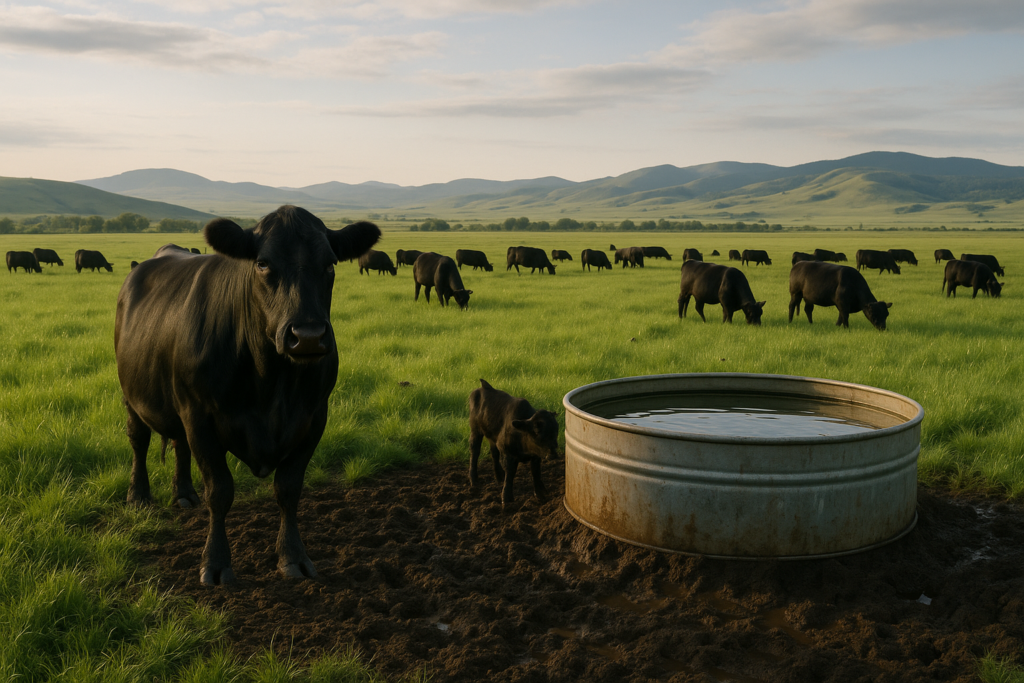
Early summer is prime time for it. Snowmelt and June rain keep the mud deep around tanks, salt grounds, and gate openings. Cattle mill in that soup, the skin between the claws stays soft and waterlogged, and any little cut from a rock, a stob, or coarse stubble lets the bug in. The organism behind it lives in manure and soil, so the churned-up, dirty spots are exactly where it gets a foothold.
What you’re actually looking at
Foot rot is an infection of the soft tissue between the two claws. The tell is swelling that’s even and symmetrical, pushing both claws apart, usually coming up above the hairline. The skin in the crack splits open and rots, and there’s a foul, distinctive smell once you get down and look. Lameness comes on fast — a cow can be sound one day and packing a leg the next. Run a bad one through the chute and she’ll likely be running a temperature.
Catch it early and it treats well. A course of the right antibiotic, given per your vet’s direction, will usually turn it around in a few days if you get to it before the infection works deeper. That’s the whole game: get to them early. Once it settles into the joint of the toe, antibiotics stop being enough, and you’re looking at a chronically lame cow, possibly a claw amputation, or a cull decision. The difference between a three-day fix and a lost animal is often just how soon you noticed the limp.
Don’t assume every lame foot is foot rot, though. If the swelling is only in one claw, or it’s down at the sole, or the smell and the split between the toes aren’t there, you may be dealing with a sole abscess, a puncture, a rock wedged up in the cleft, or something in the joint. Those get treated differently. It pays to actually catch her, tip the foot up, and look before you hit her with the same shot you give everything.
Doctor early and keep her on dry ground
When you pull a sore-footed cow in, clean the foot enough to see what’s going on and confirm it’s foot rot. Treat her, and if you can, keep her somewhere clean and dry for a couple days rather than turning her right back into the mud that started it. A dry corral or a hard-ground trap lets the foot start healing instead of soaking. Mark her so you can find her again and see whether she’s improving — if she’s not better in a few days, she needs another look, because that’s often the one heading into the joint.
On big country you can’t always gather a limper the day you spot her, and that’s the frustrating part. Keep a mental list, check her every time you’re horseback through the bunch, and don’t let a slight limp ride for a week hoping it clears on its own. The ones that go untreated are the ones that turn into a mess.
Fix the ground and the mineral
You’ll doctor fewer feet if you deal with the wet, dirty spots. Anywhere cattle crowd and stand in mud is a factory for this — around a leaky tank, a boggy spring, a heavily used gate. Rock or gravel the worst approaches to water if you can, move salt and mineral away from the tank so cattle aren’t loafing in one churned pit, and fix the float or the pipeline that’s keeping the mud deep. Anything that gets them out of standing manure and water cuts the odds.
Trace minerals matter too. Zinc and copper both go into hoof integrity, and a summer mineral that covers them helps the skin and horn hold up. Keep good mineral out and consumed where the cattle are grazing. There are foot rot vaccines on the market, but producers get mixed results out of them, so treat that as a maybe worth discussing with your vet rather than a fix on its own.
None of this is dramatic. It’s just the difference between doctoring one cow a summer and chasing a dozen, and between catching a limp early and cutting a chronic cripple out of the herd in the fall.