Turn cows out on a good stand of June grass and it’s easy to figure the job’s done. The bunch is grazing hard, the calves are slick, and the country is as green as it gets in Montana. But a full belly of lush forage isn’t the same as a balanced diet. The minerals that decide whether a cow settles, whether her calf’s immune system holds up, and whether she breeds back on time can be running short even when the grass looks like a magazine cover.
You won’t see the gap. That’s the trouble with mineral deficiency. There’s no limping cow to catch, no bloated carcass by the water. The cost shows up months later as open cows at preg-check and a calf crop that’s a little lighter and a little later than it should be.
Why summer grass falls short
Growing forage pulls minerals out of the soil, and Montana’s soils don’t hand out a balanced ration. A lot of ground across the state runs low on copper and zinc, and high in things that tie those minerals up. Molybdenum and sulfur are the usual culprits—when they’re high, a cow can eat plenty of copper and still not absorb enough of it. Sulfate-heavy stock water makes that worse, so a cow drinking from a dugout in a dry summer is fighting the problem from two directions.
Copper and zinc matter most in the middle of the summer because that’s breeding season. Trace minerals feed reproduction and immune function. A cow that’s marginal on copper can cycle late, hold a service poorly, or throw a calf that scours easy and doesn’t fight off summer pneumonia. Selenium is its own story in parts of Montana—short in some areas, plenty in others—and it ties into everything from breed-back to weak calves the following spring.
The other thing lush grass does is move fast. Green, washy forage runs through a cow quick, and the magnesium picture around turnout is thin enough that grass tetany is a real threat on the heavy-milking cows. A mineral with adequate magnesium in the early green-up stretch heads that off before you’re dragging a downer cow out of the coulee.
Get it in front of them and keep it there
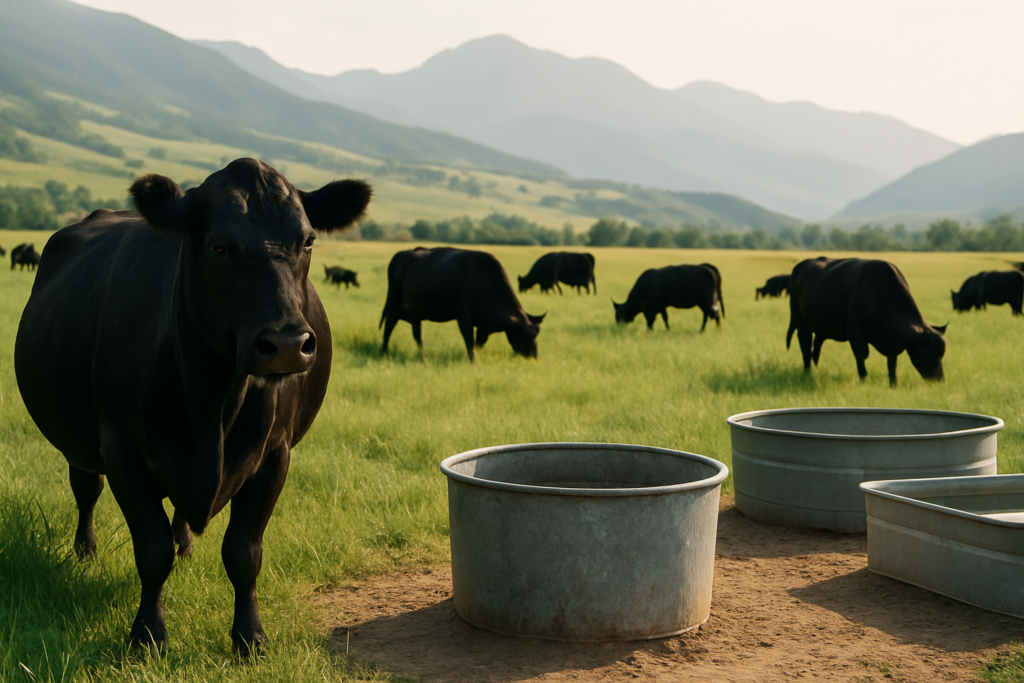
The mineral only works if the cows eat it, and they’ll only eat it if it’s where they are. Free-choice mineral needs to sit near the water and along the trails the bunch already uses, not off in some corner they visit twice a month. If they’re not touching it, move the feeder before you decide the cows don’t need it.
Match the intake to the label. Most loose mineral is built for a few ounces a head a day, and cows will overeat a fresh, palatable mix or ignore a stale one that’s caked up from a rain. Check the feeders when you’re riding through. If a tub’s been rained into and turned to concrete, they’ve quit eating it, and you’ve had a hole in the program for however long it’s been like that.
Salt drives intake. If you’re putting out plain white salt in one spot and mineral in another, cows will fill up on the salt and skip the mineral. Either use a mineral that carries its own salt or quit offering straight salt alongside it. Loose mineral generally beats a block for this—cows can lick a block all day and never get a real dose of the trace minerals they’re after.
Start before you think you need to
The mistake is waiting until something’s wrong. Copper and other trace minerals build up in the liver over weeks, and a cow going into breeding wants those reserves already banked. Starting a mineral program the week before you turn the bulls out is too late to fix a cow that spent the winter running low. The cows that were on a decent mineral through calving and green-up are the ones carrying a reserve into July.
You don’t have to guess at all of it. A liver panel on a cull cow, or a forage and water test on the country you’re grazing, tells you what your ground is actually short on—and whether it’s a copper problem, a high-sulfate water problem, or a selenium situation. That’s cheaper than blanketing the whole outfit with a high-dollar mix you may not need, or running a cheap one that doesn’t cover the gap you’ve actually got.
Mineral is a small line on a summer’s budget. A handful of open cows is not. The bunch that grazes off good, keeps eating a balanced mineral through the breeding season, and drinks water that isn’t loaded with sulfate is the bunch that shows up bred in the fall—no matter how green the grass looked in June.