Most Montana outfits worry about heat later in the summer, but a July-style stretch can hit in the back half of June and catch cattle before they’ve slicked off their winter hair. The dangerous part isn’t a single 90-degree afternoon. It’s a run of hot days that don’t cool down at night. Cattle load heat all afternoon and shed it after dark, and when the low only drops into the 70s, they start the next day already behind.
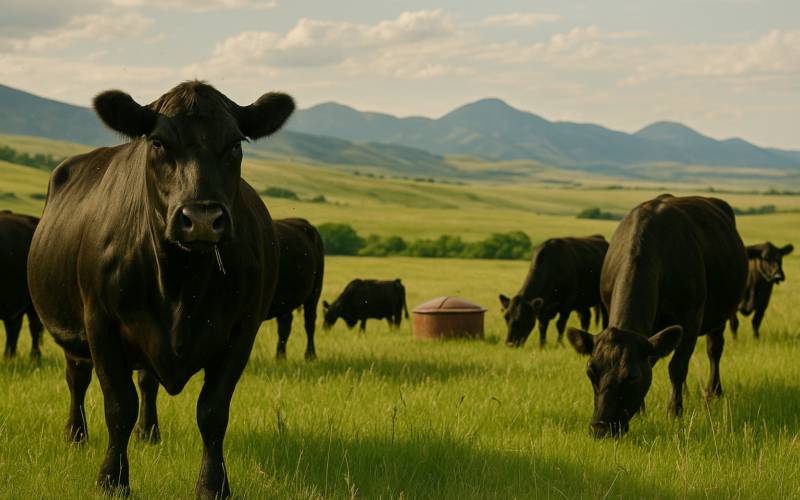
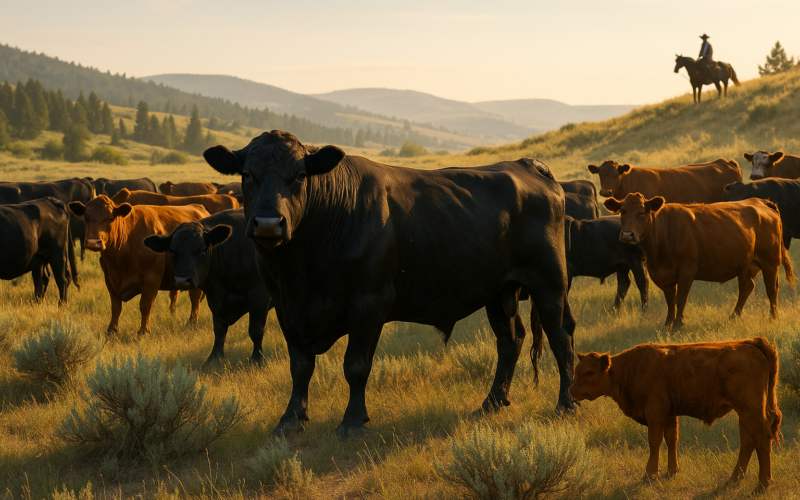
A black cow soaks up more sun than a red or a lighter-hided one, and a cow still carrying a full coat of last winter’s hair holds it in. Add a heavy milker nursing a big calf, a fleshy fat cow, or one fighting foot rot or pneumonia, and you’ve got animals with less margin than the rest of the bunch. They’re the ones you’ll find standing off, breathing hard, when everyone else has gone back to grazing.
What heat stress actually looks like
Cattle don’t sweat much, so they dump heat by breathing. Early on you’ll see faster breathing and cattle bunching in whatever shade or breeze they can find. Push further and they start open-mouth panting with the head lowered and the tongue out, slobbering, refusing to lie down. A cow that’s really in trouble will stand with her front legs spread, neck stretched out, breathing from the flank. That animal is close to the edge, and the wrong move—running her to the corral in the heat of the day—can finish her.
The tell most people miss is the timing. Heat load peaks in late afternoon and takes hours to come off. A cow that looked rough at four o’clock may be fine by dark if the temperature drops. The trouble is a string of nights that stay warm, because she never gets caught up. Two or three of those in a row is when you start losing weight, and sometimes animals.
Water is the first thing that runs short
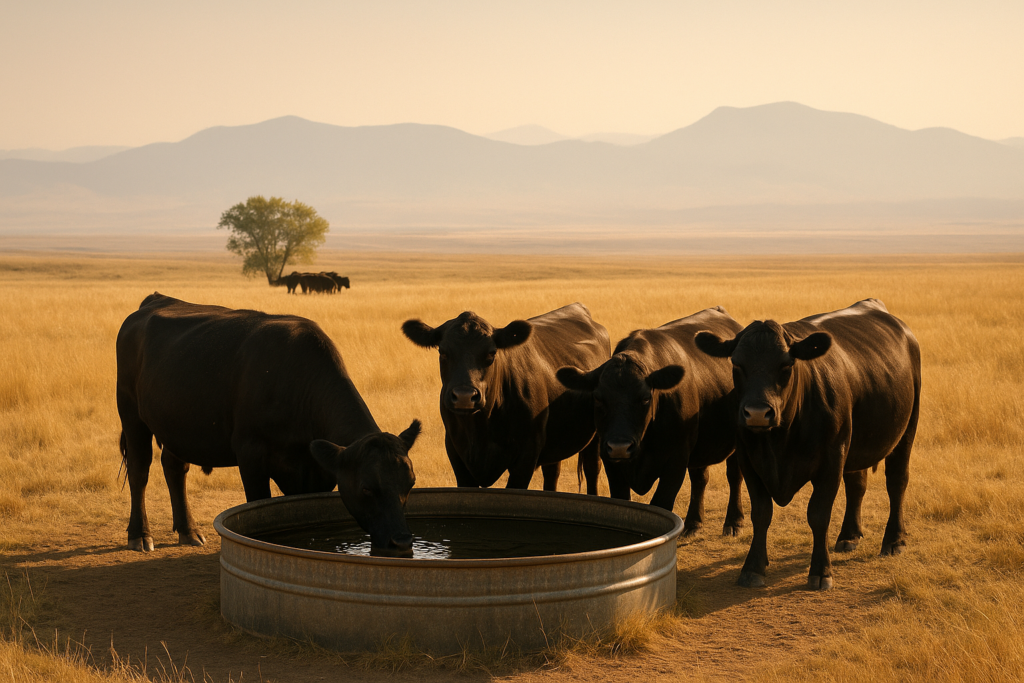
A cow’s water intake climbs hard in heat—she may drink two to three times what she does in cool weather. That’s the piece that gets outfits in the far country. A tank, spring, or pipeline that carried the bunch fine in May can come up short on a hot afternoon when every animal wants a drink at once and they’re standing in line. Cattle that can’t get to water fast enough will crowd, quit grazing, and stand around the tank instead of spreading out.
Check that your fill rate keeps up with peak demand, not just total daily use. If the recovery is slow, cattle bunched at the tank on a hot day will pull it down faster than it comes back. More trough space and a second water point spread the crowd out and cut the standing around. It also keeps the boss cows from hogging the tank while the timid ones wait.
Shade helps if you’ve got it, but a lot of Montana summer country doesn’t. Where cattle do have trees or a shed, watch that they don’t pack into one spot and quit eating—crowding into shade in still air can trap heat and make it worse instead of better. A little breeze on a ridge beats dead-still shade in a draw.
Work cattle early or not at all
If you have to gather, sort, haul, or doctor during a hot spell, do it at daybreak and be done before mid-morning. Cattle carry the day’s heat load into the evening, so late-afternoon work stacks the stress you’re adding on top of what they’re already fighting. Handling itself raises body temperature, and a cow that’s already panting has no room left to give.
Hauling in the heat is its own trap. Cattle packed on a trailer with no airflow, stopped at a scale or a cafe, will cook standing still. If you’re moving cattle in a hot stretch, load light, keep moving, and don’t park loaded in the sun.
There’s a breeding cost, too. Bulls run down and semen quality drops when they overheat, and a heat-stressed cow around breeding may not settle or may lose an early pregnancy. A rough June stretch during turnout can quietly show up next spring as open cows and a strung-out calving season. You won’t tie it back to the weather until you’re preg-checking in the fall.
None of this needs fancy gear. Know which cattle are most at risk, make sure water can keep up when everybody’s thirsty at once, and quit handling them when the day heats up. The bunch that comes through a hot spell in good shape is usually the one whose owner planned the water and worked at daylight.