You ride out to move pairs and one cow hangs back, favoring a hind foot, walking like the ground hurts. Nine times out of ten in June that’s foot rot. It comes on quick — a cow that was sound yesterday can be dead lame today — and the swelling sits up between the two claws, not off to one side. That even, symmetrical puff above the hoof is the tell. If the swelling is lopsided or higher up the leg, you’re probably looking at something else, and that difference matters for how you treat it.
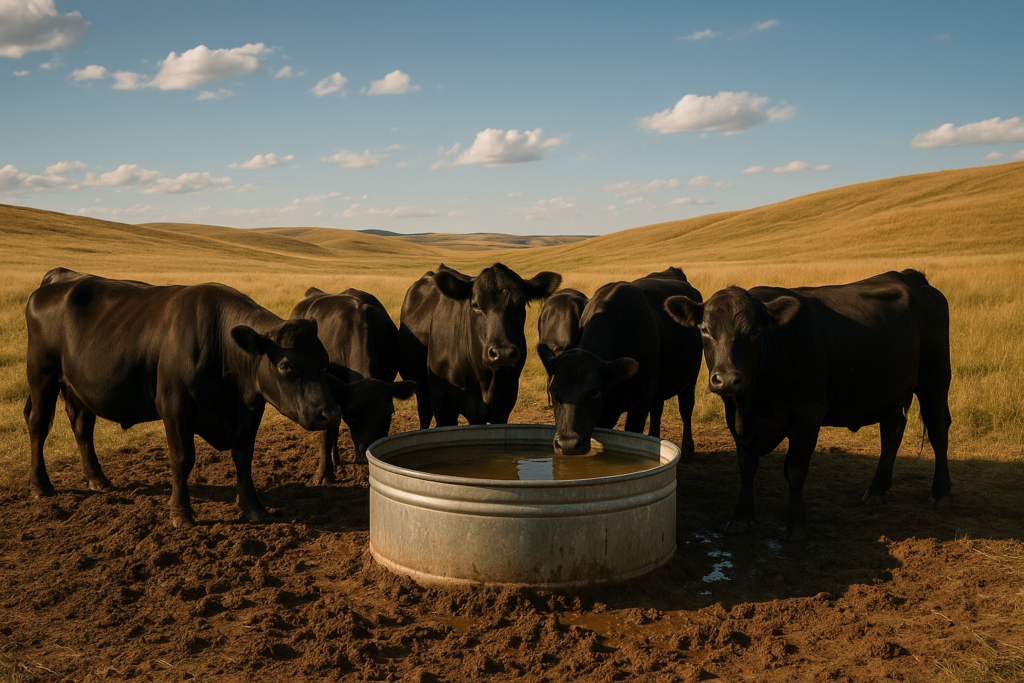
Foot rot is a bacterial infection that gets in through broken skin between the toes. The bug lives in the ground, especially where the ground stays wet and gets churned to muck. Cattle pack the same paths every day: the trail into the water tank, the shady spot under the cottonwoods, the gate they crowd at, the edge of a drying pond. Those are the spots that stay soft and cut up hooves, and those are the spots foot rot comes from.
What makes June the setup for it
Early summer hands the bacteria everything it wants. Spring moisture keeps the low ground soft. Rocks, stubble, and dried mud that’s gone sharp scrape the skin between the claws. Then a cow steps on a sharp edge, the skin splits, and the infection is in. Once one foot goes, that cow can’t graze the far country, she drops behind the herd, and she starts losing condition right at the time you need her breeding back.
You’ll see it more where you can’t do much about the mud — a single tank that a hundred pairs are crowding, a spring the cattle stand in to drink, a corner that never dries. If you’ve got a chronic wet spot causing repeat cases every summer, that’s worth fixing with gravel or by moving the water, even if it’s a project you keep putting off.
Treat it early and it’s a simple fix
Caught in the first day or two, foot rot responds well to antibiotics. That’s a conversation to have with your vet on which product, dose, and withdrawal time, but the point is speed. A cow treated when she first goes lame is usually walking sound in a few days. The same cow left a week turns into a real problem — the infection works up into the joint or the tendon sheath, and once it’s in the joint no shot pulls it back out. That’s the animal that ends up chronically lame, that you haul to town light, or that you lose outright. The gap between an easy case and a wreck is measured in days.
Before you reach for the syringe, it’s worth getting a look at the foot if you can get her caught. Clean the mud out from between the claws. Foot rot will smell and the skin between the toes will be split and raw and swollen. What you’re checking for is whether it’s actually foot rot or something masquerading as it — a rock or a chunk of wood wedged up between the claws, a sole abscess, a puncture, hairy heel wart. Those don’t respond to the same treatment, and dumping antibiotic into a cow with a rock stuck in her foot just wastes the drug and the days.
Doctoring on the big country is the hard part. A cow spread out on summer range that goes lame two miles from the corral isn’t easy to get in, and roping and doctoring in the pasture beats letting her sit another three days while it gets worse. Some outfits carry a dart setup for exactly this reason. Whatever gets the drug into her sooner is the right answer.
Watch the whole bunch, not just the one
Foot rot isn’t as contagious cow-to-cow as pinkeye, but the ground that gave it to one animal is the same ground the rest are standing in. If you’re pulling two or three cows a week off the same pasture, the pasture is the problem, not bad luck. Drying up a wet crossing, hauling in some rock at the tank, or spreading cattle out so they quit hammering one path all cut the number of feet the bacteria gets into.
The other thing worth watching: a bull that goes lame during breeding quits working. He won’t chase cows on a sore foot, and a bull standing in the shade for a week leaves open cows you won’t find out about until spring. Bulls get foot rot the same way, and they’re worth a close look every time you check the herd this time of year. Catch the limp early on a bull and you’ve protected a lot more than one animal.