By the time the grass is up and the pairs are strung out across the summer country, mineral feeding is the first chore that quietly falls off the list. The cows look slick, the calves are growing, and the tub you filled in April is still half full because they quit hitting it hard when the green came on. It’s easy to read that as the cow telling you she doesn’t need it. She isn’t. She’s just eating enough grass to feel full, and a full cow and a well-fed cow aren’t the same thing.
The trouble with summer grass is that it hides its own shortages. Protein and energy are there in June, so the cow’s belly is satisfied. What the plant can’t give her is a reliable supply of the trace minerals her body runs on, and on a lot of Montana ground those are the exact things in short supply.
What the grass doesn’t put in the bank
Copper is the one that catches the most cows in this country. A lot of Montana forage runs low on it to begin with, and high sulfur or molybdenum in the water and the plants ties up what little is there so the cow can’t use it. She can be grazing green grass to her hocks and still be walking around short. Copper doesn’t announce itself the way a broken leg does. It shows up as a rough, faded hair coat, as calves that don’t gain like they should, and later, as a cow that doesn’t settle when the bull covers her.
That last one is the expensive part. The minerals a cow uses to keep cycling and hold a pregnancy are the same ones that come up short on summer grass. Copper, zinc, manganese, selenium in the pockets that are deficient in it. She’ll spend what she has on staying alive and raising the calf on her side first. Reproduction is the account she draws down when she’s running short, and you don’t see the overdraft until you preg check in the fall and find her open.
Phosphorus is the other quiet one, and it gets worse as the season goes. Green forage carries decent phosphorus early, but as the grass cures and dries through July and August, the level drops right along with it. A cow short on phosphorus eats less and does less with what she eats.
Keep it in front of them and keep it dry
The fix isn’t complicated, but it takes staying after it. A good loose mineral, balanced for your part of the state, in front of the cows all summer. Loose beats a block for most outfits because a cow can eat enough of it in a day to matter; she’ll wear her tongue out on a hard block before she gets a full dose. If you’re in copper-short country, look at the tag and make sure there’s real copper in it, and enough of it, not just a trace listed to check a box.
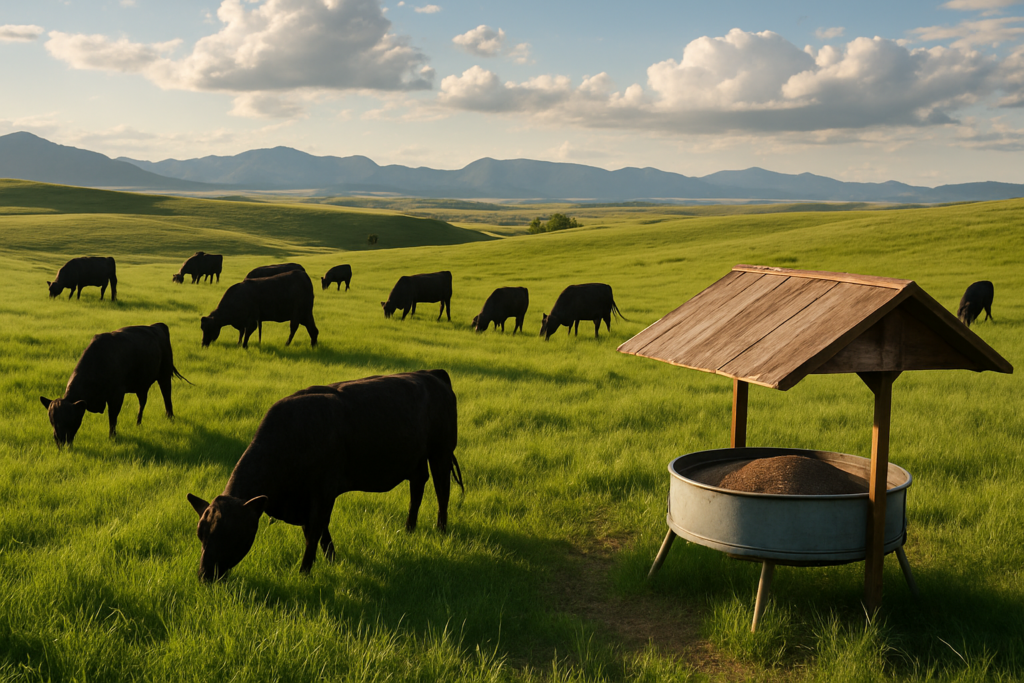
Placement decides whether they use it. Cows won’t walk far off water and shade to hunt up a mineral feeder, so put it where they already are, near the water, near the loafing spots, near the salt. Move it as you rotate. If one feeder sits empty while the cows camp a half mile away, that’s a placement problem, not a sign they’ve had enough.
Keep it dry. Mineral that’s been rained into a crust or blown full of dirt gets refused, and then you’re feeding the weather instead of the cows. A feeder with a lid or a tire flap over it, tipped so water runs off, holds up better than an open tub. Check consumption when you’re through checking cows. If they’re eating way over the target on the tag, they were short and are catching up, or they’re using it as a salt source and you need to set out plain salt alongside. If they’re barely touching it, something’s off with palatability or placement.
Why June is the month it counts
Turn the bulls out and the clock starts. Every cow you want bred in the first cycle has to be cycling in that first stretch of the breeding season, and the mineral status she carries into it is set by what she’s been eating for weeks beforehand. You can’t fix a copper-short cow the week before the bull goes in. The mineral you keep in front of her in June and early July is what she’s running on when it’s time to settle.
It’s a cheap line item compared to a wintered-over open cow or a light calf in the fall. Set the feeders where the cows are, keep them full and dry, and check them the same way you check the water. It’s one of the few summer chores where doing nothing costs more than doing it.