Most of what we worry about with bulls happens before turnout. We semen-test them, check their feet, look at scrotal circumference, and make sure they didn’t spend the winter too fat or too thin. Then we haul them to the cows and mostly quit thinking about them until we pull them out. That’s where a lot of open cows get made — not from a bull that failed the test in May, but from a bull that got cooked by a July heat wave and kept breeding cows he couldn’t settle.
A bull’s sperm production runs on roughly a two-month cycle. What he’s breeding with today started forming weeks ago. That lag is the whole problem. When a stretch of hot, humid, still afternoons pushes his core temperature up and his testicles can’t shed the heat, the sperm being made during that window get damaged. He’ll keep mounting cows, keep acting like a bull, and look completely normal. The cows he covers during and for several weeks after that heat won’t stick. By the time you’d notice anything, the damage is already baked in.
Why heat hits a bull harder than a cow
A bull cools his testicles by letting them hang away from his body and by moving blood through them. Anything that interferes with that — heat, a lot of standing water and mud, a footrot infection running a fever, even a bad case of pinkeye — can spike his temperature enough to hurt sperm. Younger bulls and heavier, thicker-fleshed bulls tend to struggle more in the heat because they carry more insulation and don’t shed it as fast.
Montana usually gives bulls a break because the nights cool off. A black bull that overheats on a 95-degree afternoon can recover overnight the same way a black cow does. The trouble comes with the long stretches — three or four days of heat with warm nights and no wind, the kind of spell that settles over the eastern half of the state in July. That’s enough sustained load to matter, especially if the bull is also fighting an infection or limping around on a sore foot.
What you can actually do about it
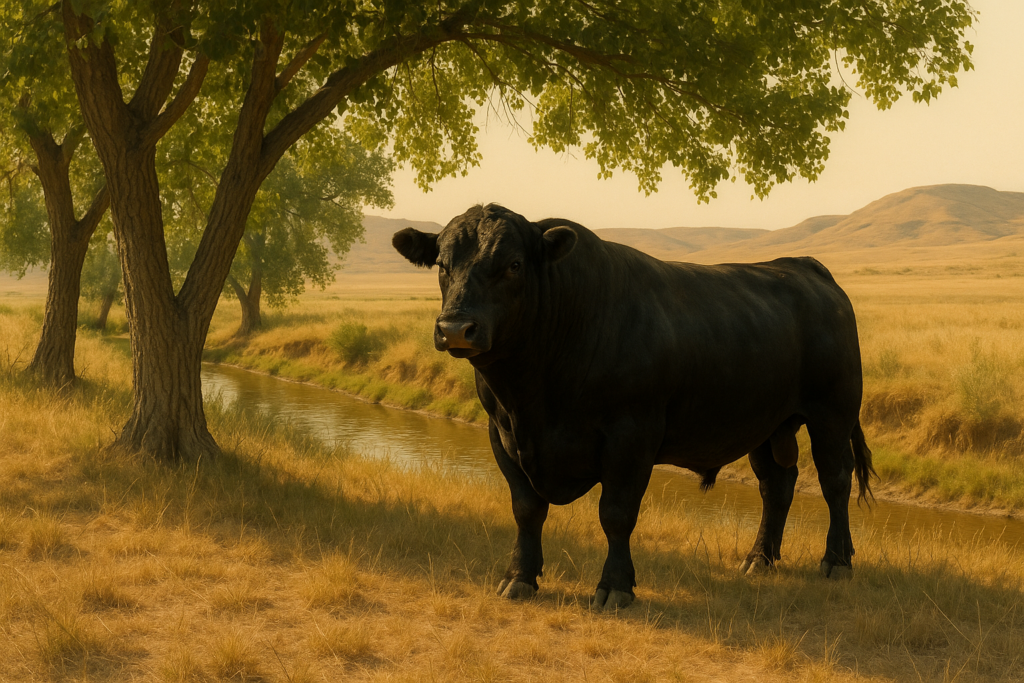
You can’t control the weather, but you can stack the deck. Shade is the big one. A bull with a stand of cottonwoods along the creek or a shade structure to lay up under during the worst of the afternoon holds his temperature down. Bulls out on wide-open summer country with no shade take the full brunt of it.
Clean water in enough places matters too. A bull that has to travel a long way to a single tank, or that’s drinking warm, low pond water, is already carrying extra heat load and dehydration on top of the sun. Keeping his feet sound keeps his temperature down — a footrot fever does the same thing to his sperm that a heat wave does, and a lame bull that won’t travel also quits covering the far end of the pasture.
The other move is numbers. If you’re running one bull to a big group and he goes down for any reason during breeding, you’ve got no backup. A little extra bull power, or splitting groups so no single bull carries the whole load, means a heat spell that knocks one bull back doesn’t turn into a pile of open cows.
Catch it while you can still fix it
Ride your bulls during breeding the same way you’d check anything else. A bull standing off by himself, favoring a foot, or not following the cows that are cycling is telling you something. If you’ve had a bad hot stretch and you’re worried, a bull can be re-tested — but remember the two-month lag. Semen tested a week after a heat wave may still look rough even if he’s going to recover; give him time and retest, and if he’s got cows left to breed, a fresh bull covers the gap.
The cheapest insurance is still writing down your turnout date and pull date, and paying attention to the weather in between. A hot July doesn’t show up in your checkbook until you preg-check in the fall, and by then all you can do is count what the heat cost you.