Pasture bloat doesn’t give you much of a window. A cow that filled up on wet alfalfa or clover at first light can be dead by ten o’clock, and the one you find is almost always down on her left side with her left flank ballooned up past her hip bone. It looks like she blew up overnight. She didn’t. The gas built while she grazed, and by the time she quit chewing and lay down, she couldn’t get rid of it.
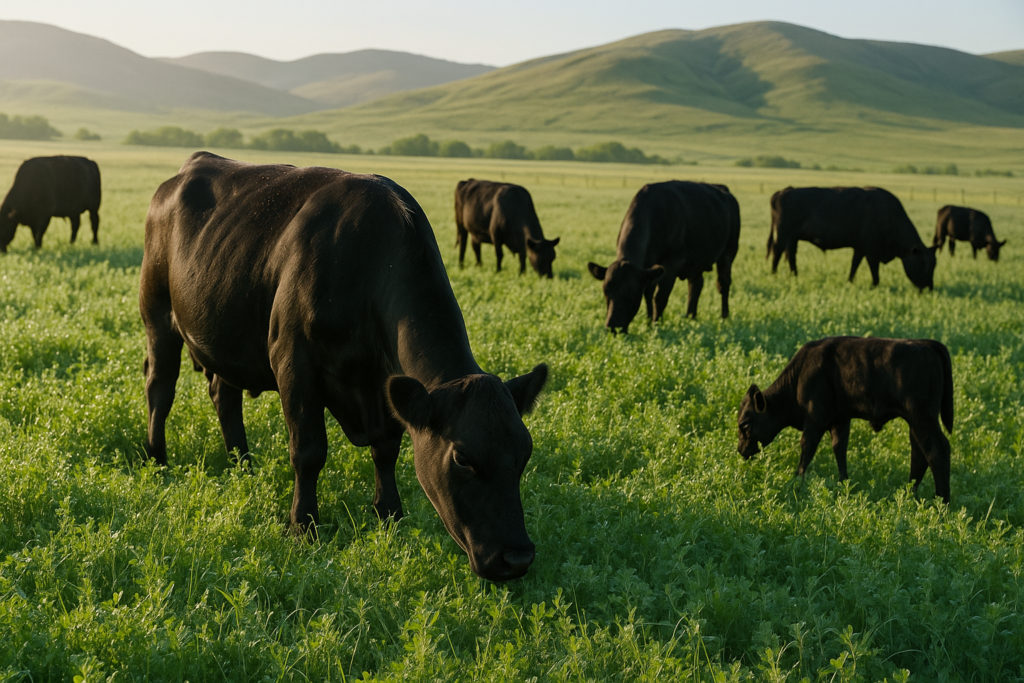
This is a June and early-summer problem in Montana because that’s when the legume stands are at their richest. Irrigated alfalfa fields grazed after a cutting, clover coming on strong in a subirrigated meadow, second-year alfalfa/grass mixes running heavy to legume — those are the setups that put cattle on the ground. Straight grass pastures rarely do it. It’s the legumes, and it’s the froth they produce in the rumen.
What actually kills her
A cow burps constantly. That’s how she gets rid of the gas that fermentation produces, and a healthy rumen turns over a surprising amount of it every hour. Frothy bloat wrecks that system. Certain legumes — alfalfa and the clovers especially — have soluble proteins that whip up into a stable foam in the rumen the same way soap does in a sink. The gas gets trapped in thousands of tiny bubbles instead of collecting in one pocket she can belch off. She keeps making gas, none of it comes up, and the rumen swells until it presses on her lungs and heart. She suffocates or her heart quits. That’s the difference between frothy pasture bloat and the free-gas bloat you sometimes see on grain — with froth there’s no clean gas cap to hit with a trocar, and sticking her often gives you nothing but a mess.
The risk is highest when the plants are young, growing fast, and wet. Dew, a rain shower, a field that hasn’t dried off — all of it stacks the deck. Hungry cattle turned onto that kind of feed in the morning will slam it, and a full load of lush, wet legume is exactly what foams.
Keeping cows off the ground
You manage bloat before you turn cattle in, not after you find one swelled up. A few things that hold up on real ground:
- Fill them first. Never turn hungry cattle onto a hot legume stand. Run them out with a belly full of grass hay or let them graze a grass pasture through the morning, then move them onto the legume once they’re already full. A cow who’s just topping off doesn’t gorge.
- Turn in after the dew burns off. Wait until midday or afternoon when the field has dried. Wet feed foams worse.
- Don’t pull them off and back on. Cattle that get moved off good feed come back hungry and overeat. Steady, continuous access is safer than on-again, off-again.
- Feed a bloat preventive. Poloxalene is the product built for this — it breaks up the foam. It comes in blocks, in loose mineral, and can be top-dressed. The catch is cattle have to eat enough of it every day, so put it out ahead of turnout and make sure the whole bunch is hitting it, not just the boss cows. An ionophore in a supplement can help too by changing rumen fermentation.
- Watch the stand. The danger drops as legumes mature and put on stem and bloom. First growth and tender regrowth are the worst. A hard freeze or a good frost also raises risk for a few days because it damages the plant tissue.
When one’s already down
If you catch a cow bloating and she’s still on her feet, get her up and moving — walking helps her belch, and it keeps her off her side. A drench of poloxalene or an anti-foaming agent works if you can get it into her, and some outfits keep a bottle in the pickup for exactly this. Mineral oil or a household defoamer will work in a pinch when nothing else is close.
The stomach tube is your real tool. Passing a tube down into the rumen lets froth and gas escape and lets you get medicine straight where it needs to go. Sticking her with a trocar or a knife is a last resort for a cow that’s going to die in front of you, and even then the froth doesn’t drain like clean gas — you’re gambling with peritonitis to buy a little time.
The honest truth is that the cattle you save are mostly the ones you never let get into trouble. Legume pasture grows more beef per acre than grass, and there’s no reason to be scared off it. Just respect what it does to a rumen, fill cattle before they graze it, keep a bloat block in front of them, and ride through the bunch in the morning when the field is wet. The cow you find standing and belching is worth a lot more than the one you find on her side.