Turnout is done, the bulls are working, and the mineral feeder you filled in May is still half full. That looks like a win on the mineral bill. It usually isn’t. The window when a cow needs trace minerals most is the same six or eight weeks she’s supposed to breed back, and the shortfall doesn’t announce itself. You find it in the fall, in the string of open cows and the tail of late calves, and by then the grass is brown and there’s nothing to fix.
Green June grass fools people. It’s high in moisture, high in energy, and low in some of the things a cow’s reproductive system runs on — particularly phosphorus, copper, zinc, manganese, and selenium. Much of Montana sits on ground that’s short on selenium and copper to begin with, and lush spring forage can tie up copper further. A cow can be fat and shiny and still be running a deficit that keeps her from cycling on time.
Why the summer months are the ones that count
A spring-calving cow is asking a lot of her body right now. She’s milking hard, she’s rebuilding after calving, and she’s supposed to settle again inside about 80 days if she’s going to hold a 12-month calving interval. Trace minerals feed all three of those jobs. Copper and zinc show up in immune function and in the reproductive tract. Selenium ties into early embryo survival and to retained placentas the following spring. Phosphorus, the expensive part of most mineral tags, is the one linked most directly to cows cycling and settling.
None of this shows up as a sick cow. It shows up as a cow that takes an extra heat cycle to breed, or doesn’t breed at all. Twenty-one days late on a heat is a lighter calf next fall. Two cycles late and you’re deciding whether to keep her open or sell her light.
Intake is the whole game
The best mineral on the market does nothing sitting in a tub the cows walk past. Loose mineral is generally formulated for a target intake — often somewhere in the range of a few ounces a head a day — and hitting that number is the part most outfits get wrong. Check the tag, then check what’s actually disappearing. Divide the pounds fed by the number of cows and the days, and see if it lines up.
A few things throw intake off in June:
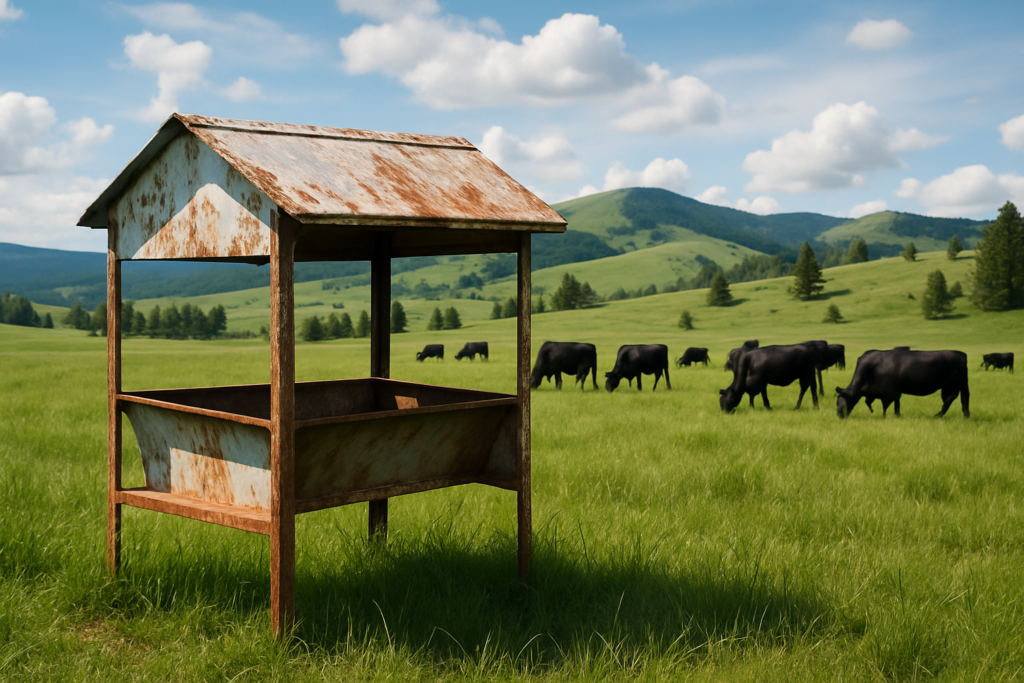
- Location. Cows won’t travel to mineral any more than they’ll travel to salt. Put feeders near water, near loafing areas, and out in the country you want grazed. Move them to pull cattle onto lazy corners.
- Salt on the side. If you’ve got straight white salt out next to a salt-carrier mineral, cows fill up on the free salt and skip the mineral. Pull the plain block if you want mineral intake to come up.
- Weather and washout. An open tub turns to concrete after a thunderstorm. Covered feeders or a mineral that sheds water keep it palatable and keep you from throwing away caked product.
- Too much, too fast. Cows that have been short will gorge when you finally set out good mineral, then back off. Give it a couple weeks to settle before you decide the intake is wrong.
One more thing worth the trouble: match the mineral to the season. A high-magnesium tag makes sense earlier, on cool lush grass when grass tetany is a risk, but you don’t need to keep paying for magnesium through the summer. Breeding-season mineral should be carrying its weight in phosphorus and trace minerals, and on a lot of Montana ground, added copper and selenium at the levels the tag actually lists.
Read the cows, not just the tub
The tub tells you how much is going out. The cattle tell you whether it’s working. Rough, faded hair coats on black cattle by midsummer, calves that seem to catch every bug on good grass, more foot problems than the country warrants — those can point back to trace mineral shortfalls, copper and zinc in particular. None of it proves anything by itself, and plenty of other things cause the same signs, but a pattern is worth a conversation with your vet and maybe a blood or liver test to see where you actually stand instead of guessing off the tag.
The math on a mineral program is uncomfortable because you pay all summer and you don’t see the return until you preg-check. A cow that breeds up on the first cycle and drops a big calf on time pays for a lot of mineral. The open one you haul in the fall was cheap to feed and expensive to keep. Keep the feeders full, keep them where the cows will use them, and check the intake the same way you’d check anything else on this place that costs money and doesn’t complain when it quits working.