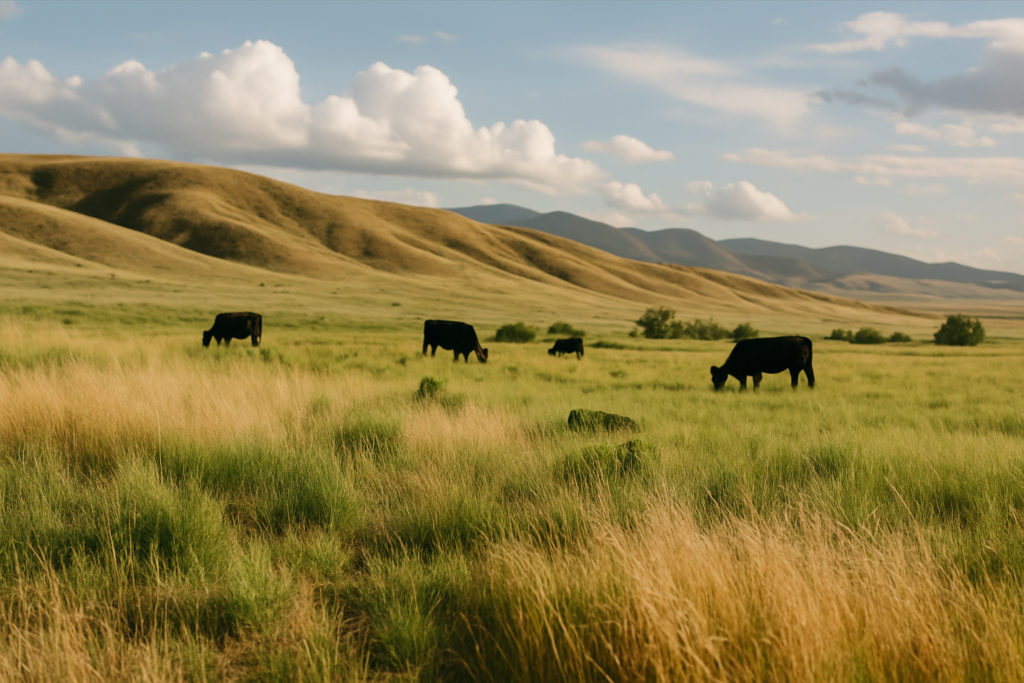
By the middle of June a lot of Montana range that looked green and soft in May has already gone tan along the ridges and field edges. That color change is cheatgrass and foxtail curing out, and the day they turn brown is the day they stop being feed and start being a problem. The seed heads dry into stiff, barbed awns built to bore into anything they touch. On a cow that means gums, eyes, ears, nostrils, and the soft skin between her toes.
Most producers know cheatgrass as the stuff that fills in overgrazed spots, burned ground, and old cropland. What gets overlooked is how narrow the good grazing window is. Green and immature, it’s decent forage and the cows will hunt for it. Cured out, it drops in feed value fast and the awns turn mean. Foxtail barley does the same thing in the wet corners and along ditches, and its awns are even worse about lodging.
What the awns actually do to a cow
The trouble starts in the mouth. A cow grazing cured seed heads packs awns into her gums, cheeks, and the roof of her mouth. They work in one direction, so chewing only drives them deeper. You’ll see her quit eating right, drop wads of half-chewed grass, drool, or hold her head odd. Left alone, those punctures abscess. A hard lump on the jaw or under the tongue often gets blamed on lump jaw when it’s really a foxtail seed that festered.
Eyes are the other common spot. An awn caught under the eyelid scratches the surface all day, and the eye waters, squints, and clouds over. That looks a lot like the start of pinkeye, and the two can run together, because a weepy irritated eye pulls flies that spread pinkeye on top of it. If you treat what looks like pinkeye and it won’t clear, flip the lid and look for a seed before you keep pouring medicine in.
Then there’s the feet. Cows walking through cured foxtail pick up awns in the soft web between the claws. That gives you a lame cow with swelling low on the foot that mimics foot rot but doesn’t answer to the usual treatment. Ears and nostrils catch them too, mostly on calves nosing around in the seed heads.
Catching it before it turns into a vet bill
The tell is a cow that goes off feed or comes up lame or squinty for no reason you can see. When one does, actually get a look in the mouth and under the eyelids instead of assuming. An awn found and pulled early is a five-minute fix. The same awn left two weeks is an abscess that has to be lanced, flushed, and sometimes treated for a good while after.
Watch your first-cutting hay off any ground that’s carrying foxtail or cheatgrass. Bale it after the seed heads are up and cured and you’re feeding those awns back to the herd all winter, right into their mouths at the bunk. The best fix is timing the cut early, before the seed sets, or keeping the worst infested corners out of the hay ground entirely.
Managing the ground so it doesn’t build
Cheatgrass and foxtail take over where the desirable perennials are thin, so anything that keeps a good stand of native grass and doesn’t leave bare, beat-up ground is working against them. Cheatgrass is best grazed hard while it’s green and immature, then rested, but that only pays if you catch it in the narrow window before it heads. Foxtail loves the wet, salty edges of stock ponds and ditches, and mowing those spots before they seed keeps the awns from ever forming.
None of it is complicated. The mistake is treating early summer as a coast-along stretch between branding and haying, when it’s actually when the range crosses over from soft green feed to sharp, dry seed. A cow standing off by herself not eating in late June is worth a look in the mouth. Half the time you’ll find a little brown spear stuck where it doesn’t belong, and pulling it beats every antibiotic you own.