You trail a bunch of pairs into fresh pasture, everything walks off fine, and four days later there’s a cow standing off by the tank on three legs. No wire cut, no obvious wound. The foot’s swollen up between the toes, she won’t put weight on it, and by the time you get close you can smell it. That’s foot rot, and June is when it starts showing up in a hurry.
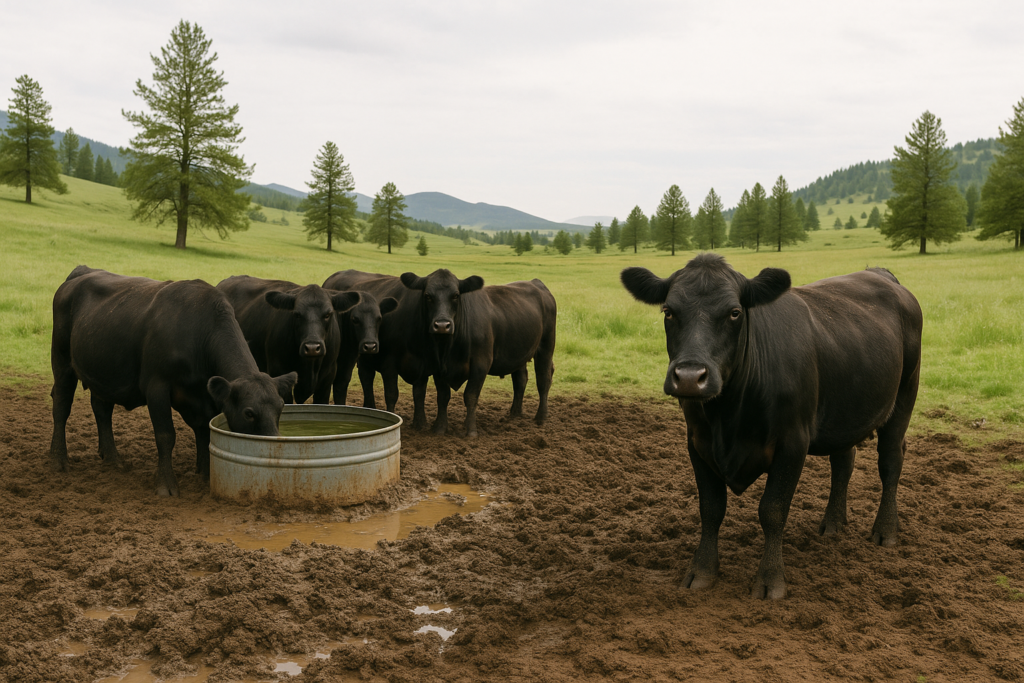
It isn’t an injury the way a rock bruise or a sole abscess is. Foot rot is a bacterial infection that gets going when the skin between the two claws breaks down enough to let bugs in. Warm, wet, mucked-up ground does the breaking down for you. Standing water around a tank, a boggy spring, the churned mud where cows cross a creek to get to the other side — all of it softens the skin and keeps it soft. Add a little stubble, sharp gravel, or froze-out ice ruts that dried rough, and you’ve got the scratch that lets the infection start.
Catch it early or fight it for two weeks
The tell is sudden, severe lameness in one foot with swelling that’s even around the whole foot — both toes puff up, and the skin between them splits and stinks. That symmetric swelling is what separates foot rot from a sole abscess or a foreign body, which usually put a cow lame in just one claw. If only one side is hot and swollen, you’re probably looking at something else, and pouring antibiotics into it won’t fix a rock jammed up in the toe.
Caught in the first day or two, foot rot answers to antibiotics fast. A cow that was dead lame at daylight can be walking near normal in a couple of days on the right treatment. Let it ride, though, thinking she’ll walk it off, and the infection climbs into the joint. Once it’s in the joint you’re no longer treating foot rot — you’re deciding whether that cow ever gets sound again or whether she loads out on the cull truck. The margin between an easy fix and a lost animal is measured in days.
Work with your vet on what to run and the withdrawal times, especially on anything close to shipping. The practical piece most people miss is restraint. You cannot doctor a 1,300-pound cow’s foot in an open pasture, and chasing her another quarter mile on a bad foot the day you find her just drives the infection deeper. If she’ll walk to the corral quietly, take her. If she won’t, treat her where she is and sort the rest later.
The ground is the problem, not the cow
One lame cow is a cow. Three or four out of the same pasture inside a week is a management problem, and the management is the ground. Look at where they’re standing water and where they cross. A tank that overflows and turns fifty feet of ground to soup is a foot rot factory. So is the one gate every cow in the pasture has to funnel through to reach the good grass.
You can’t dry out June, but you can move the wet spots around. Haul rock or gravel into the worst crossings and the ground right around the tank so cows aren’t standing hock-deep in muck every time they drink. Fence off a boggy spring and pipe the water to a tank on solid ground. Rotate off a pasture before the traffic lanes get pounded into mud. None of it is glamorous and most of it is work you’d rather not do in June, but it’s cheaper than doctoring cattle all summer.
Zinc plays a real part in hoof and skin integrity, and a good free-choice mineral with adequate zinc through the grazing season is worth having out regardless. It’s not a cure and it won’t drain a mud hole, but cattle on decent mineral tend to hold up better through the wet stretches. Where a herd gets hit hard year after year in the same lots, some outfits run an organic iodide product or work zinc into the program on a vet’s recommendation, and a few use a foot bath through gates in the worst situations. Those are tools for a chronic problem, not a first move.
Mostly it comes down to watching. Ride through often enough that you catch the cow standing off before she’s toe-touching, and know your ground well enough to guess where the next one’s coming from. The cow limping to water this morning was sound when you turned her in. What changed was the mud she had to cross to get a drink.