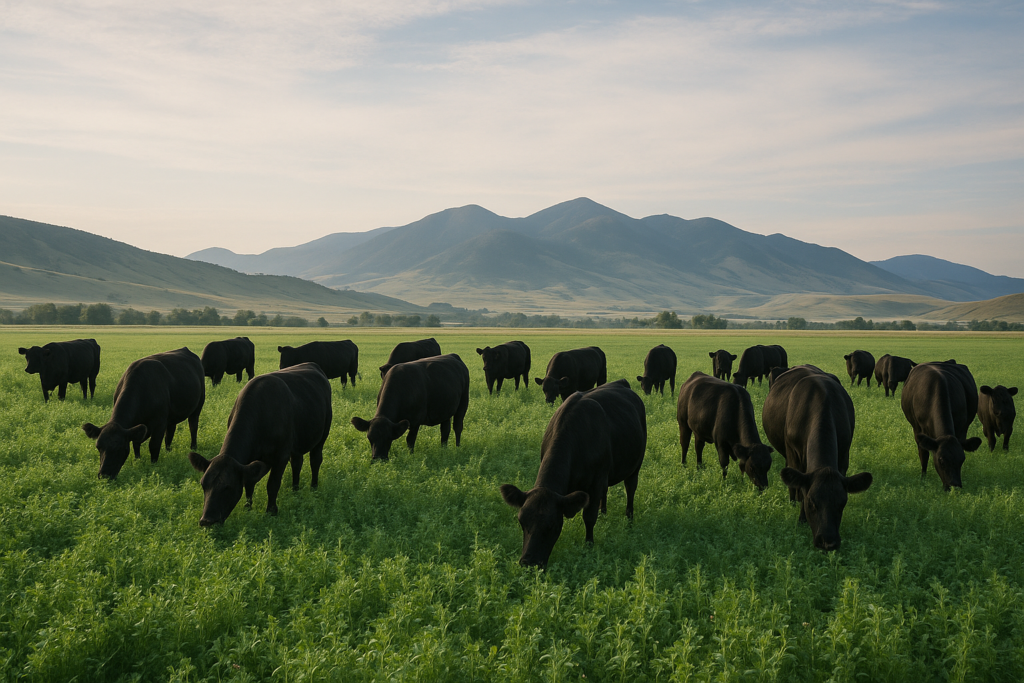
You find her out from the bunch, laid over on her side with her left flank swelled up like a barrel. An hour ago she was grazing. Bloat doesn’t give you much of a window, and on lush June pasture — new alfalfa, a clover-heavy meadow, second-year seeding coming on strong after a wet spring — it can drop a cow that looked fine at daylight.
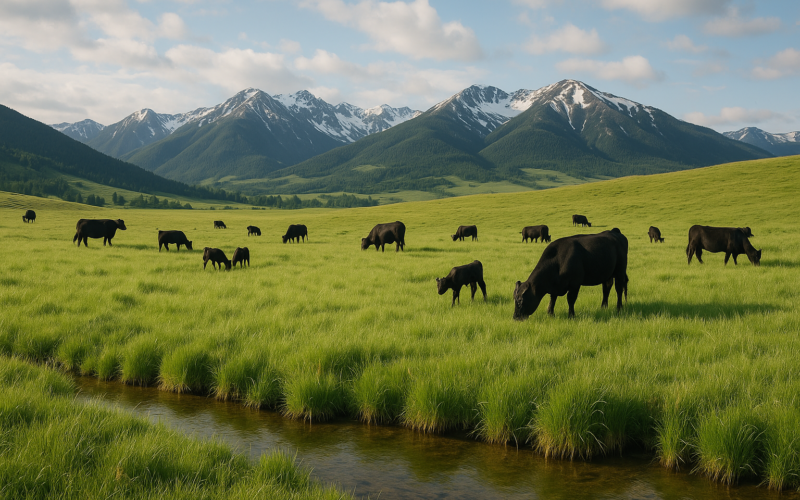
Most Montana operations turn cows onto green feed sometime in late spring or early summer. Irrigated meadows in the valleys, dryland seedings that finally caught a rain, ditch banks running to clover. That green is exactly the feed you want on a cow going into breeding. It’s also where frothy bloat lives.
What’s actually happening in the rumen
Frothy bloat isn’t a burp problem you can fix with a stick down the throat. Legumes like alfalfa and clover break down fast in the rumen and release soluble proteins that trap gas in a stable foam. The cow can’t belch foam the way she belches free gas. Pressure builds, the left flank swells, and the swelling itself starts pushing on the lungs and diaphragm. A cow that goes down hard can suffocate before you get to her.
Speed is the part that catches people. This isn’t a slow decline over a couple of days like footrot or pneumonia. A bad case can go from grazing to dead inside an hour or two. That’s why the cow you spot bloated needs help right then, not after you finish the chore you were in the middle of.
A few conditions stack the odds against you:
- Cattle turned out hungry, so they gorge on the richest feed instead of grazing it slow.
- Wet forage — heavy dew, a morning after rain, or the flush right after a frost, when plant cells rupture and release even more of the foaming compounds.
- Stands heavy on immature legumes in the vegetative-to-early-bloom stage, before the plant coarsens up.
- The first few days on new pasture, before rumen microbes adjust to the change.
Keeping it from happening in the first place
The single biggest mistake is turning a hungry bunch onto lush legume first thing on a wet morning. Fill them up first. Put out grass hay and let them eat before you open the gate, or turn them out later in the day after the dew has burned off and the plants have dried down. A cow with a belly already working is far less likely to overload on the green stuff.
Poloxalene — the bloat blocker sold as a block, a loose mineral additive, or a drench — works by breaking down the foam so gas can escape. It’s the most reliable tool for pastures you know are risky, but it only helps if cattle are actually eating it. Set the blocks out a few days before you turn onto the legume so animals are already consuming it, and put out enough that the boss cows don’t hog it while the timid ones get none. A cow that walked past the block for two days isn’t protected.
Grazing management helps too. Stands with more grass mixed in bloat less than a pure legume stand. Letting alfalfa mature past early bloom before you graze it cuts the risk compared to grazing it tender and vegetative. And moving cattle onto new legume paddocks in the afternoon rather than at daylight keeps them off the wettest, most dangerous forage.
When you find one bloated
A mild bloat — some left-side swelling, a cow still up and moving — will sometimes work itself down if you get her walking. Keep her on her feet and moving; standing and moving helps her position the gas cap so she can belch.
A cow that’s down, breathing hard, tongue out, is an emergency and you’re on the clock. A trocar or a large-bore needle into the left flank can save a cow that’s about to go, and if you run legume pastures every summer it’s worth having a bloat kit and knowing how to use it before you need it. This is a good thing to walk through with your vet ahead of turnout rather than trying to figure out over the phone while a cow dies.
The frustrating part of bloat is that it hits your best pasture and your good-doing cows — the ones that dive into feed and eat hard. You don’t get bloat because the grass is poor. You get it because the feed is rich, and the cow that took full advantage of it is the one you find on her side. Manage the turnout, keep the foam blocker in front of them, and don’t put a hungry bunch onto wet green on a June morning.