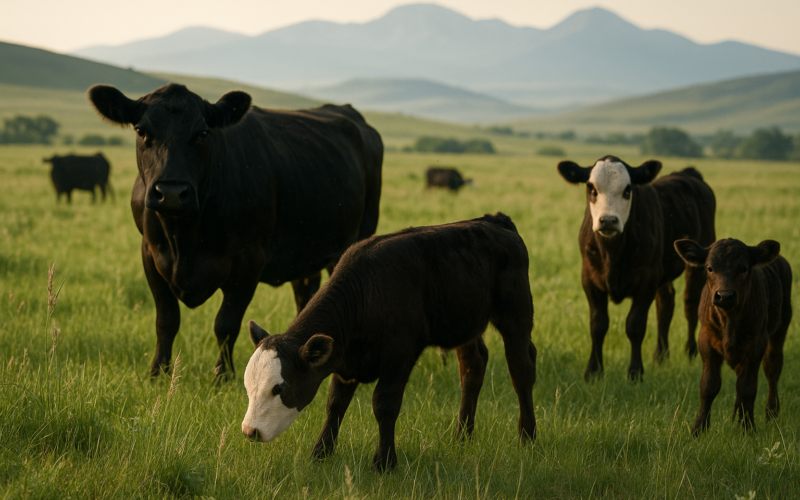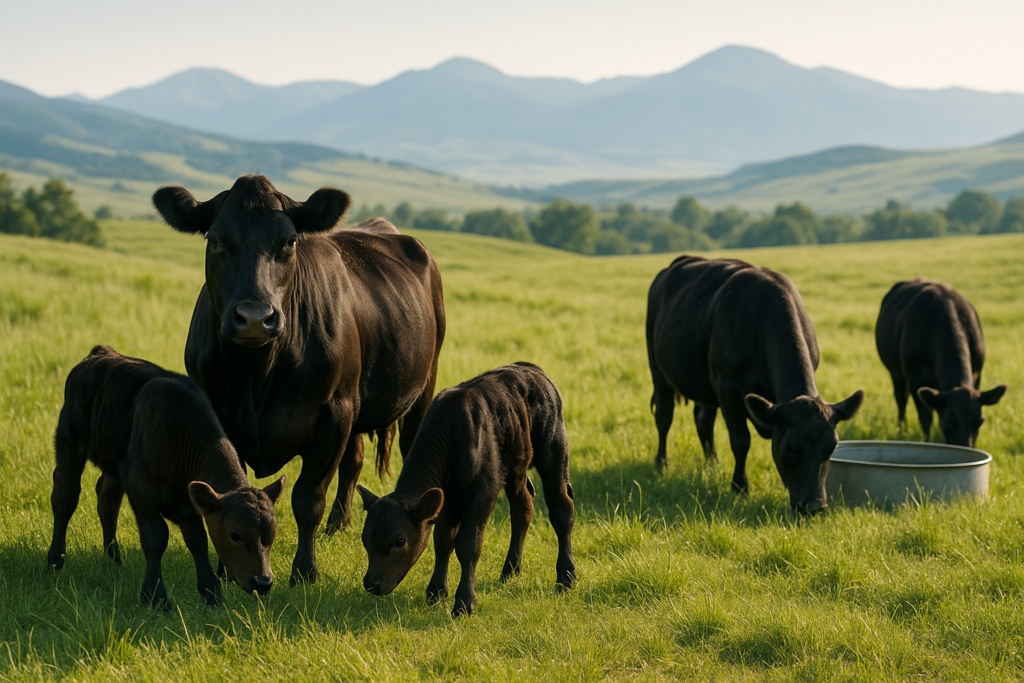
The two-year-old you kept back last fall is carrying the heaviest load on the place right now. She calved this spring, she’s nursing, she’s still filling out her own frame, and somewhere in the next few weeks she has to settle a calf again. Nobody else in the herd is asked to do all four at once. A mature cow just has to milk and breed. The heifer is doing that and building herself at the same time, and she does it on the same grass and out of the same feed budget as cows that outweigh her by two or three hundred pounds.
That’s the reason first-calf heifers are the ones that come up open in the fall. They aren’t weak cattle. They’re behind on groceries, and when you run them in the big bunch, they stay behind.
Why she breeds back last
A heifer’s body puts her own survival and growth ahead of getting pregnant. Milk comes before a new pregnancy too. When energy runs short, reproduction is the first thing she quits. She’ll keep the calf on her side alive and keep growing before she’ll cycle. So the young cow that’s a little thin doesn’t come into heat on time, and every heat she skips pushes her calving date later next spring. Miss two cycles and she’s calving in the back half of the season, when she’s got even less time to recover before you turn the bull out again. The following year she’s later still, and eventually she’s the open cow riding to town.
The trap is that she looks fine in June. Green grass covers a lot. It’s September, when you preg-check, that you find out she never settled, and by then there’s nothing to do but sort her off.
Run them separate if you can
The cleanest fix is to keep the two-year-olds in their own bunch through breeding. In a group of mature cows, the young ones get pushed off the water, off the salt, and off the best grass every time there’s a shove. Pull them out and put them on your better pasture — the closer, flatter ground with easy water — and they’ll eat without fighting for it. A heifer that isn’t walking two miles to drink and getting bumped off the trough has energy left over to cycle.
Not every outfit is set up to run a separate bunch, and country and fences don’t always allow it. If you can’t split them, at least be honest about which cattle are getting shorted, and give the young ones every edge you’ve got — the pasture with standing water, mineral where they can actually reach it, and a close eye during the first three weeks of the breeding season.
Some producers breed their heifers to start calving a couple weeks ahead of the main cow herd. It sounds backward to make the youngest cattle calve first, but it buys the exact thing they’re short on: time. A heifer that calves early has more days to heal up, start cycling, and settle before the bull leaves. It also lets you keep a closer watch on first-calvers during calving, when they need the help.
Condition is the whole game
The number that matters is how much fat she’s carrying. A first-calf heifer needs to be in better flesh at breeding than a mature cow, not the same — a full body-condition point better is the usual target. She’s still growing, so a thin mature cow and a thin heifer are not in the same boat. The cow can gain on summer grass and cycle. The heifer is trying to grow and gain and milk on that same grass, and it’s often not enough.
Watch them through the first cycle. If your two-year-olds aren’t showing much heat activity when the bull’s been out two or three weeks, they’re telling you they’re short on feed. That’s the window to move them to better grass, not fall, when the vet gives you the news.
The calf a heifer is nursing takes a lot out of her too. If a young cow is really pulled down and you’ve got the market for it, weaning her calf a little early can take the milking load off and let her put condition back on before she has to breed. It’s not something you do casually, but a thin two-year-old with a heavy calf on her is a cow headed for open.
The heifers you kept were the future of the herd — you picked them for a reason. Keep them in the herd by giving them a fighting chance the one summer they need it most. The cost of running them a step separate is a lot less than the cost of raising a replacement to two years old and then shipping her open.