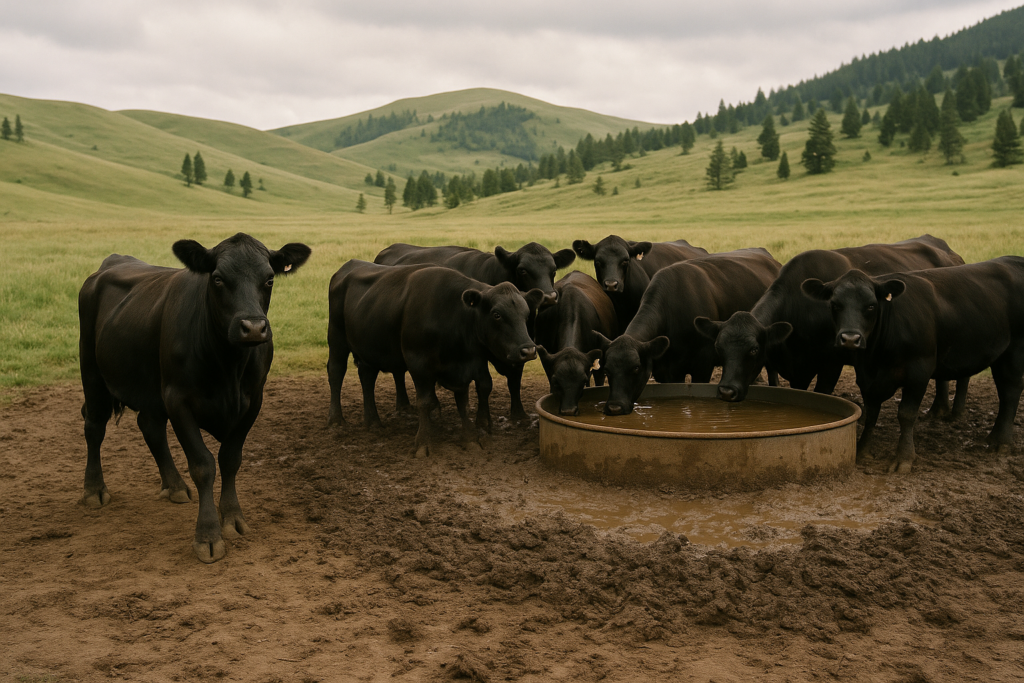
Wet spring, warm June, cattle stringing back and forth to the same tank or crossing the same boggy draw a hundred times a day. That’s the setup for foot rot, and it usually announces itself with one cow hanging at the back of the bunch, favoring a hind leg, not putting weight square on the foot. You’ll see her before you see the reason. By the time you get close enough to look, the swelling is already up over the hoof and the two toes have spread apart.
Foot rot is a bacterial infection that gets in through broken skin between the claws. It doesn’t need much of an opening. Ground that stays soft and muddy softens the skin between the toes, gravel and stubble and dried mud around a water gap scratch it, and the bug does the rest. It moves fast once it’s in. A cow sound at daylight can be dead lame by evening chores.
Know it from the other things that make a cow limp
Not every limp is foot rot, and treating the wrong thing wastes days you don’t have. The tell with true foot rot is swelling that’s even and centered right between the two claws, pushing them apart, usually with a foul smell and a break in the skin once you get the foot up. It’s warm and it hurts.
Compare that to a cow who stepped on something sharp, has an abscess up in one claw, or a hairy heel wart down at the back of the foot. Those stay to one side or one toe. A joint injury or a hip problem makes her limp too, but you won’t find the swelling down between the claws. If both sides of the foot are equally puffed up and it stinks, you’ve got foot rot. If it’s lopsided, look harder before you reach for the same treatment.
The reason it matters: foot rot answers to antibiotics if you catch it early. A sole abscess needs to be opened and drained. A hairy wart needs a topical and a wrap. Guess wrong and the cow gets worse while you wait for a shot to work that was never going to.
Treat early, and treat like you mean it
Caught in the first day or two, foot rot usually clears with a course of an appropriate antibiotic and a few days of rest. Talk to your vet about which product and what dose for the size of animal — this is a systemic infection, and a single under-dosed shot that knocks it back without clearing it just teaches the bug to hang on. Follow the label withdrawal times, especially on anything you might ship later in the summer.
The hard part in June isn’t the medicine, it’s catching her. A lame cow two miles out on summer range doesn’t want to come to the corral, and running her hard on a bad foot makes everything worse. If you can, doctor her in a portable panel setup or bring the bunch in slow and cut her off quiet. The longer you let it ride hoping she works out of it, the deeper the infection goes. Once it gets up into the joint, no shot fixes it, and you’re looking at a chronically lame cow or a salvage decision.
Watch her for a couple days after treatment. Most cows are noticeably better in 48 to 72 hours. If she’s not improving, she either needs a second look — maybe it’s an abscess, maybe it’s gone into the joint — or she needs your vet’s hands on the foot.
Cut down the ground that causes it
Foot rot follows mud and traffic. The wettest, most cut-up spots on the place are where you’ll lose feet: around a leaky tank, the approach to a pond, a gate everybody funnels through, a low crossing on a creek. A little gravel or fill on the worst approaches, or moving a portable tank off the boggy spot, takes pressure off those ground-up areas where the skin gets torn.
Some outfits run a zinc-based mineral or a footbath through problem years and think it helps toughen up the hoof and skin. It’s not a cure, but on a place that fights foot rot every wet spring it’s worth asking your vet whether it fits your program. The bigger payoff is usually just keeping cattle from standing in the same soup day after day.
The math on this one is simple. A cow that spends June and July on three legs isn’t grazing, isn’t holding condition, and if she’s nursing, her calf is coming up short too. A day of watching the back of the bunch and one well-timed trip through the alley saves a whole summer of a cow that never quite gets right.