You ride out to check the pairs on a June morning and find a calf dead in the bottom of a draw. Big, slick, one of the good ones. No sign of a struggle, no marks from a predator, no bloat you’d expect from larkspur. By the time you get down there the carcass is already swelling and the smell is off. What killed him was inside him the whole time.
That’s blackleg, and it has a way of taking the calf you’d have kept. Clostridial diseases don’t pick off the poor-doers. They kill the ones putting on the most gain, because the bug thrives in muscle that’s growing fast and carrying a good store of energy.
Why it hits calves on green grass
Blackleg is caused by Clostridium chauvoei, one of a handful of clostridial organisms that live as spores in the soil. Those spores are already on your place. They survive for years in the dirt, ride into a calf on grass or through a small wound, and sit quiet in the muscle tissue until conditions turn right for them.
What flips the switch is low oxygen in the tissue. A bruise from bunching through a gate, a hard run when you gather, a knock in the alley, even the rapid muscle growth of a thriving calf on lush June feed can create a pocket where the spore wakes up. Once it does, it multiplies fast and releases toxins that swell the muscle, put gas under the hide, and shut the animal down. The window from a calf that looks fine to a calf that’s dead is often measured in hours, not days.
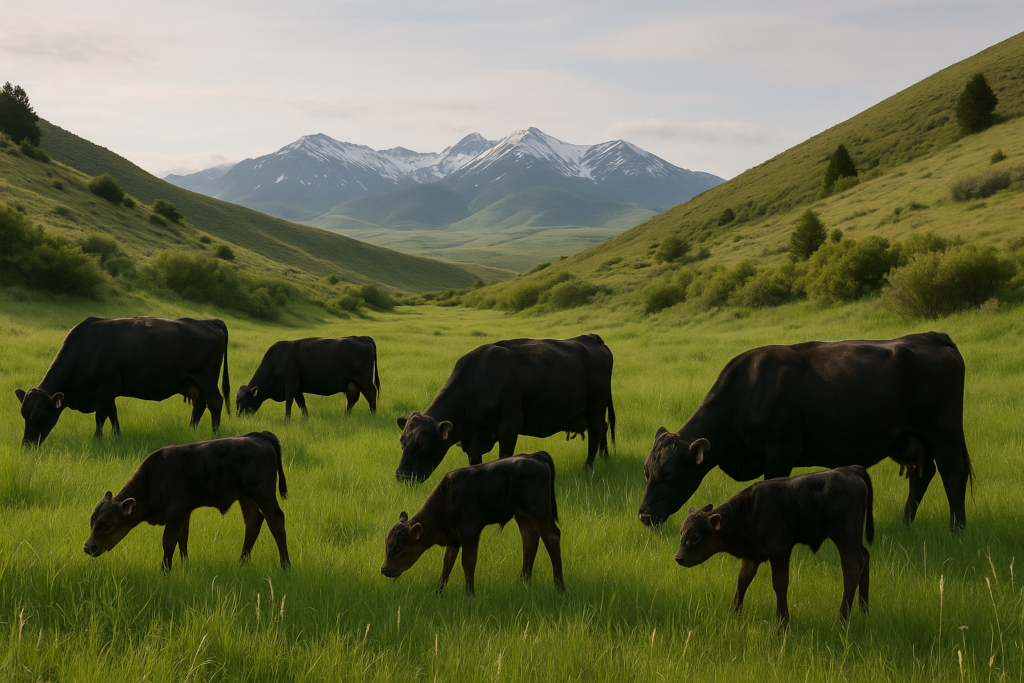
Calves from about two months to a year are the classic victims. Older cows have usually been exposed enough to carry some immunity, and very young calves still have some protection from the cow if she was vaccinated. It’s the growing calf on summer grass that sits in the gap.
The vaccine is the cheapest thing on the ranch
There is no treating your way out of blackleg once a calf goes down. By the time you see swelling and lameness, the toxins have usually done the damage. Antibiotics are a long shot at best. Prevention is the whole game, and prevention is cheap.
A clostridial vaccine — the standard “7-way” covers blackleg along with malignant edema, blackleg’s cousins, and several other clostridial killers — costs about the price of a cup of coffee per head. Most outfits give it at branding, which is good timing because it puts protection in place before calves are out on summer range through the highest-risk stretch.
Two things people get wrong. First, these are killed vaccines that need a booster. One shot at branding gives partial coverage; the calf isn’t fully protected until it gets a second dose three to four weeks later. If you only run them through once, you’ve bought less than you think. Second, the protection doesn’t last forever. Immunity fades over months, so calves worked in early spring can be short by late summer if you never came back with a booster.
If you’re buying calves or bringing in animals with unknown history, treat them as unvaccinated and start the series.
What to do when you find one
If you turn up a dead calf and blackleg is on your mind, don’t cut into the carcass any more than you have to. Opening it up scatters spores across ground where other calves graze, and you’ll seed the very pasture you’re trying to protect. A vet can confirm the cause, and confirming it matters, because finding one usually means the rest of that bunch is exposed and due for a booster now rather than later.
Get the carcass out of the draw and dispose of it away from where cattle water and graze. The same soil that grew the first case will grow the next one.
Blackleg is one of the few things in this business you can nearly wipe out with a plan and a syringe. The producers who lose calves to it most years are usually the ones who gave a single shot and called it good. The ones who don’t lose calves boostered on time and quit thinking about it. It’s a rare problem where the cheap fix is also the sure one — worth doing right while you’ve got them in the chute this spring.