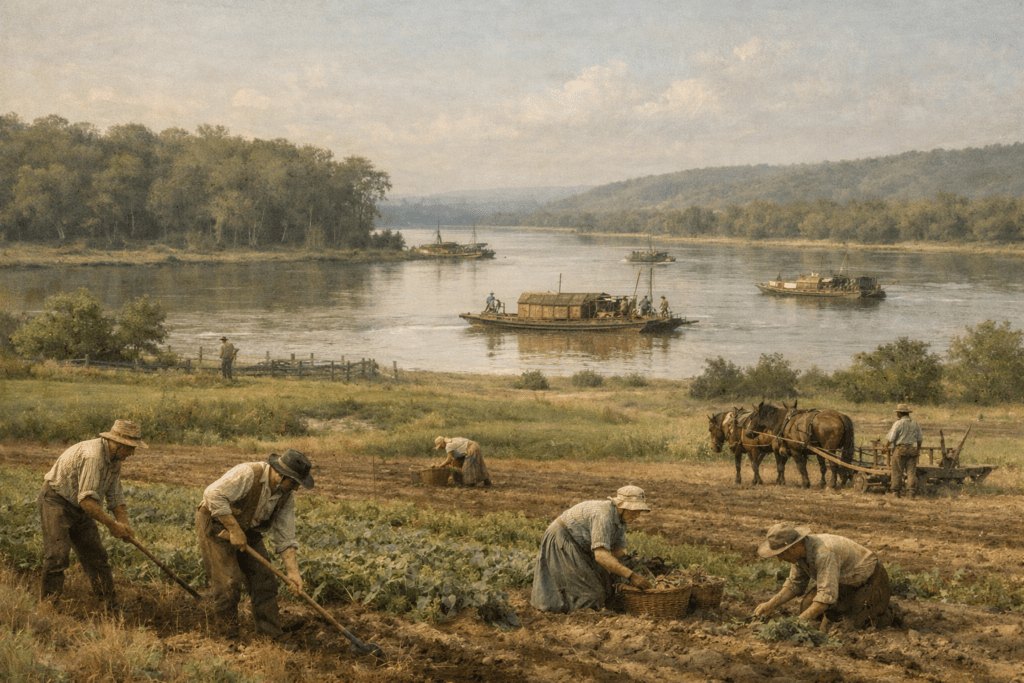
Missouri’s agricultural roots reach back to the late 1700s and early 1800s, when fertile ground and access to major rivers helped set the stage for a strong farm economy. In an “American Agriculture History Minute,” Mark Oppold describes how geography, migration, and commerce shaped the state’s early agricultural identity.
Farmers produced more than local communities could use, and that surplus became an economic engine. With the Mississippi River system serving as a key transportation network, Missouri growers could move crops to broader markets at a time when rivers functioned as the main highways for trade.
Much of that surplus was shipped downriver to plantation societies in the lower Mississippi Valley, where demand for food and feed was high. River transport lowered costs and expanded market reach, making larger-scale commercial farming more practical.
Prime farmland was concentrated along the Missouri River’s fertile bottomlands, pairing rich soils with direct access to shipping routes. That opportunity drew wealthier farmers from states including Virginia, Kentucky, and Tennessee, who brought experience and capital and viewed land ownership as both an economic strategy and a marker of long-term stability and status.
Why it matters
- Missouri’s early farm economy was built around surplus production and access to river-based trade.
- Downriver markets in the lower Mississippi Valley helped create dependable outlets for Missouri crops.
- Migration to Missouri’s river bottomlands linked land, transportation, and commercial agriculture from the start.
What to do next
- Read the full history minute for more context on how river commerce shaped early Missouri agriculture.
- Use this background to better understand how transportation access influenced where early farming concentrated.
Source
Original reporting by agnetwest.com: https://agnetwest.com/missouri-early-agricultural-history/