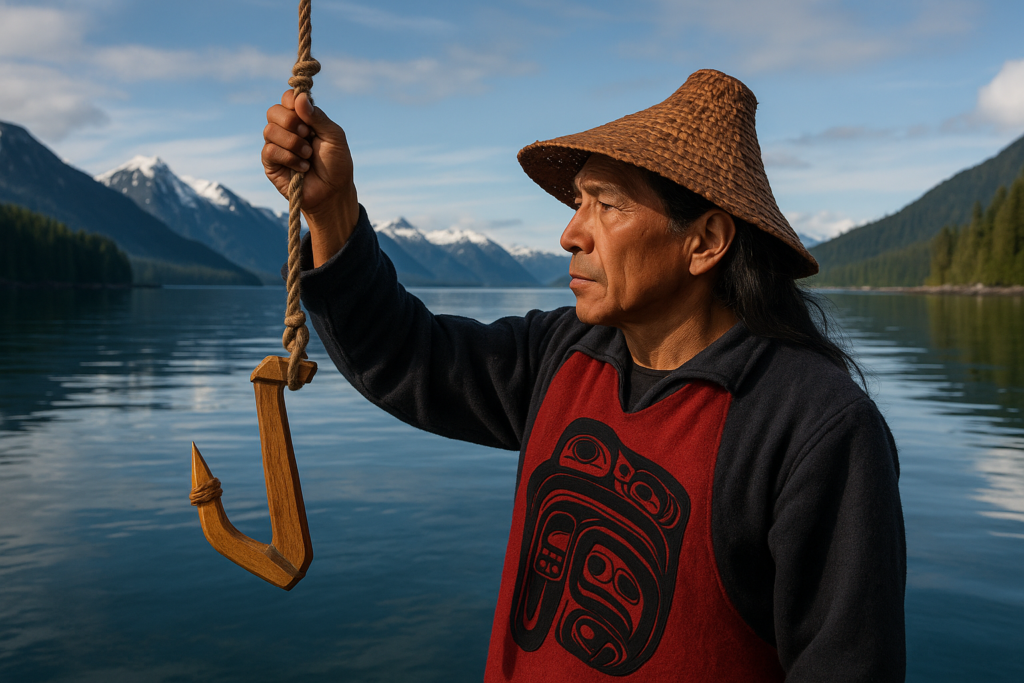
In the remote waters of Southeast Alaska, a fishing tradition endures—rooted in heritage, ingenuity, and a deep relationship with the sea. In MeatEater’s latest video, Heather and Mike take viewers along to explore the cultural and practical importance of the Náxw, the traditional halibut hooks of the Tlingit people.
Key Takeaways
- The Náxw is a traditional Tlingit wooden halibut hook used in Southeast Alaska.
- The hook’s distinctive V-shape is central to how it works.
- The video focuses on both how the hooks are made and why they matter culturally.
- Traditional Tlingit fishing methods reflect long-standing ecological knowledge and responsible harvest practices.
- Interest in traditional fishing techniques connects to broader conversations about sustainability and cultural preservation.
Watch: MeatEater’s Video on Tlingit Náxw Halibut Hooks
What’s in the Video
Hosted by Heather and Mike, the video showcases the construction and use of Náxw—wooden halibut hooks that have been employed by the Tlingit people for centuries. These hooks are crafted with precision and treated as more than simple gear: they’re also symbols of cultural resilience and continuity.
The hosts demonstrate how the hooks are carved and assembled, emphasizing the unique V-shape that’s pivotal to their effectiveness in catching halibut. Along the way, viewers also get sweeping views of Southeast Alaska’s seascapes, reinforcing the connection between place, practice, and tradition.
Why It Matters
This exploration of Tlingit fishing methods resonates on multiple levels.
- Indigenous knowledge and sustainability: The use of Náxw reflects a deep understanding of local ecosystems and species behavior—knowledge that supports responsible, sustainable fishing.
- Cultural preservation: The video highlights the cultural importance of continuing these practices, and serves as a reminder that Indigenous cultures remain vital and present in Southeast Alaska.
- Tradition alongside modern life: The story offers an example of how traditional methods can coexist with modern technology without losing the core values behind the practice.
The Bigger Picture: What Traditional Hooks Can Teach Modern Fisheries
Growing interest in traditional fishing techniques—like those of the Tlingit—fits into a broader global movement toward sustainability and cultural preservation. As modern fisheries face challenges tied to overfishing and environmental degradation, looking to Indigenous practices can offer meaningful lessons.
The Náxw is one example of how traditional knowledge can inform modern conservation thinking, with an emphasis on maintaining ecological balance. Just as importantly, stories like this contribute to a wider effort to recognize and respect Indigenous heritage, and to advocate for the protection of both cultural and natural resources.
Related Reading
- Alaska outdoors news and field stories
- Halibut fishing coverage: tactics, seasons, and culture
- Fishing: gear, ethics, and on-the-water how-tos
- Indigenous knowledge and outdoor traditions
- Sustainability and conservation features
- MeatEater video highlights and recaps
Frequently Asked Questions
What is a Tlingit halibut hook?
A Tlingit halibut hook, known as Náxw, is a traditional wooden hook used by the Tlingit people for centuries to catch halibut.
What does “Náxw” refer to in the video?
In the video, Náxw refers to the traditional wooden halibut hooks and the knowledge involved in crafting and using them.
Why is the Náxw V-shape design important?
The Náxw’s V-shape is emphasized in the video as pivotal to the hook’s effectiveness in catching halibut.
How are Tlingit halibut hooks made?
Tlingit halibut hooks are meticulously carved and assembled from wood, forming the characteristic V-shape design.
Is this video a fishing tutorial or something else?
It includes practical demonstrations of how Náxw hooks are made and used, while also serving as a celebration of cultural preservation and sustainable practice.
Why are traditional fishing methods important today?
Traditional fishing methods are important because they can reflect sustainable practices aligned with ecological balance, while also preserving cultural heritage.
How does this connect to sustainability?
The video frames the Náxw as an example of Indigenous knowledge that supports responsible fishing and offers lessons relevant to modern conservation conversations.
Where can I learn more about Tlingit fishing traditions?
You can learn more by exploring resources on Indigenous cultures and by watching content like this feature from the MeatEater YouTube channel.
Video source: MeatEater