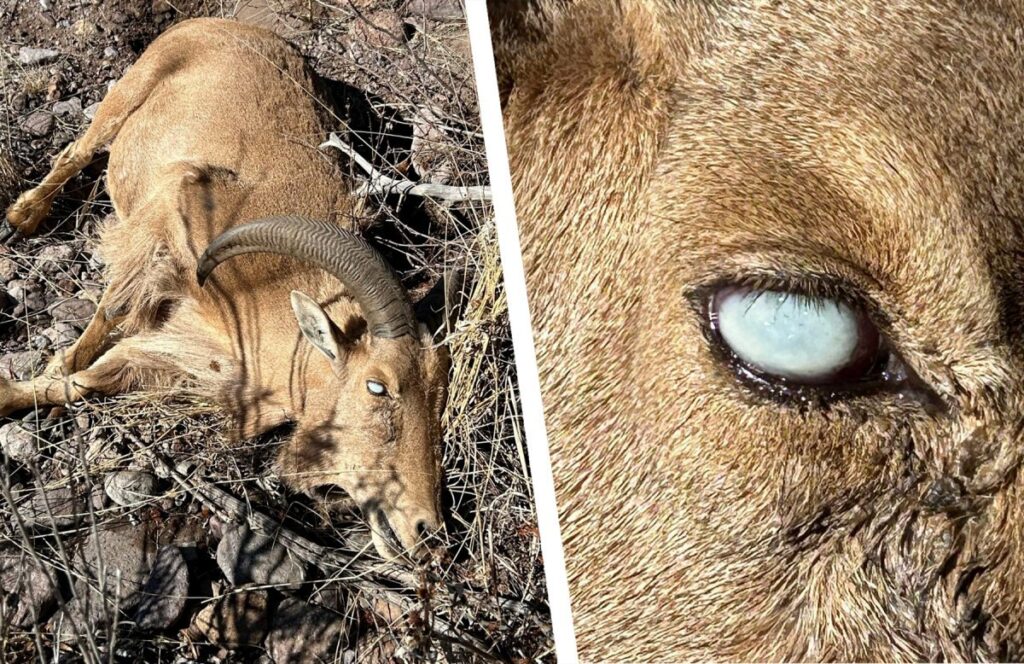
Concerns Grow Over Pink Eye Outbreak in Texas Aoudad
A recent pink eye outbreak among aoudad in Texas raises concerns for local wildlife, particularly desert bighorn sheep.
What happened
Earlier this month, a hunter in Texas reported harvesting an aoudad with eye issues to the Texas Parks and Wildlife Department (TPWD). This was notable as the state does not require harvest reports for these non-native animals. Following this report, three other hunters indicated similar problems over the past three months. Additionally, an aoudad that was euthanized in September exhibited swollen and cloudy eyes, leading to lab tests that confirmed the presence of pink eye.
Pink eye, or infectious keratoconjunctivitis, is a common bacterial infection among livestock and is now affecting aoudad in Texas. Reports indicate approximately 25 sightings of infected aoudad across state parks and private ranches. The primary concern is the potential spread of this infection to Texas’ native desert bighorn sheep, which are already facing significant declines due to pneumonia, a disease also associated with aoudad.
Despite the outbreak, TPWD wildlife veterinarian Sara Wyckoff stated that there have been no documented cases of pink eye in the native bighorn sheep population, which is a positive sign. The affected area spans a 30-mile stretch across Jeff Davis, Presidio, and Brewster counties.
Why it matters
- The outbreak could threaten the already declining desert bighorn sheep population.
- Pink eye can lead to poor vision or blindness, increasing vulnerability to predators.
- Aoudad populations are significantly larger than bighorn sheep, complicating wildlife management efforts.
What to do next
- Monitor local wildlife for signs of pink eye and report any findings to TPWD.
- Stay informed about the health of both aoudad and desert bighorn sheep populations in the area.
Source
Original reporting by www.outdoorlife.com: https://www.outdoorlife.com/conservation/texas-aoudad-pink-eye-outbreak/