What happened
Outdoor Life revisited a 1954 account by legendary Alaska wolf hunter and trapper Frank Glaser, framed around a long-running question: how likely is a wolf to attack a person?
Glaser described the 1933 disappearance of an experienced trapper known as “Moose John” Millovich, who left Fairbanks for a beaver-trapping trip on the Beaver River in Alaska’s White Mountains. When he didn’t return, two friends searched his cabin and found signs of an interrupted breakfast, wolf tracks around the area, and later human remains nearby. The men believed wolves killed him, but Glaser argued the cause was never confirmed and suggested other possibilities, including a bear encounter followed by scavenging.
Glaser also recounted his own close call with an unusually aggressive grizzly in the same region, using it to explain why he thought a bear could have been involved in Moose John’s death.
In contrast, Glaser said he had not seen wolves “tackle a man” in normal circumstances, and he shared examples where wolves approached and then quickly retreated once they realized a person was not prey.
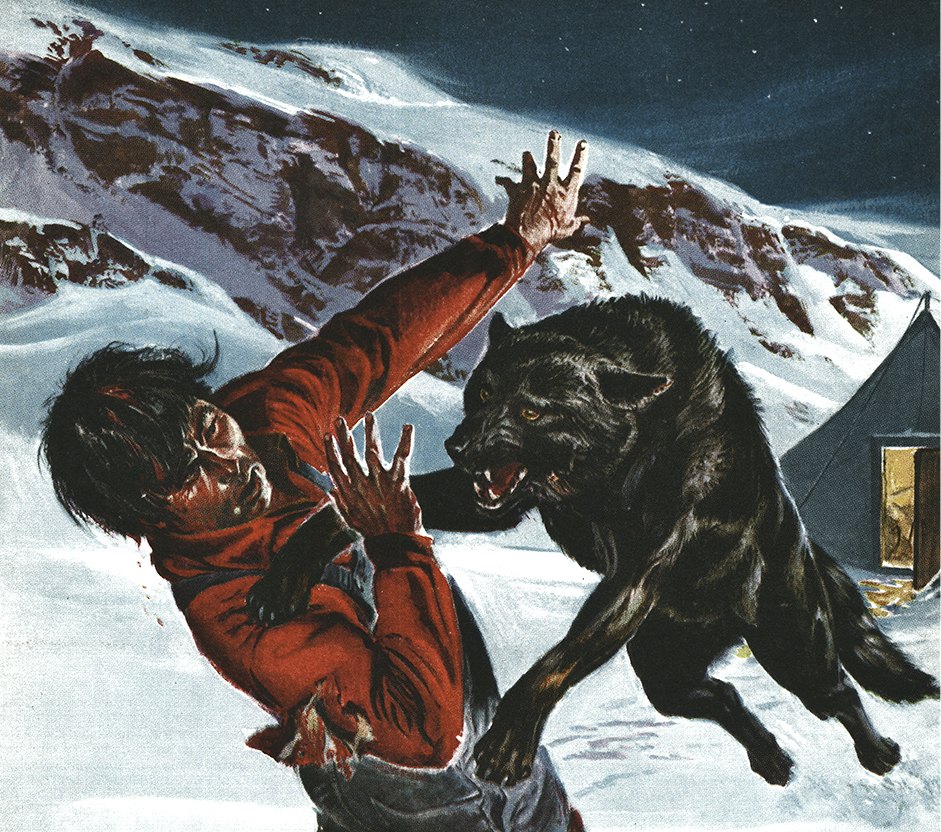
He did describe one case he personally investigated near Noorvik in Alaska’s Kobuk River country: a 63-year-old man named Punyuk was attacked outside his tent after mistaking a wolf for a loose dog. Glaser later learned the wolf was killed after it reached a nearby village, and laboratory testing later indicated the animal had rabies. Glaser reported that Punyuk later died after apparently recovering from the attack, with the exact connection to the incident not resolved in the story.

Why it matters
- Wolf management and public safety debates often hinge on how common attacks on people really are, and this reporting separates confirmed facts from assumptions.
- The story highlights how difficult it can be to determine what happened in remote country, especially when scavenging animals are involved.
- It underscores that abnormal animal behavior (including rabies) can change risk, and that not every “wolf attack” report reflects typical wolf behavior.
What to do next
- Read the full Outdoor Life piece for the complete historical account and Glaser’s firsthand observations.
- When evaluating reports of predator attacks, look for confirmation of cause (witness accounts, investigation details, lab results) rather than relying on assumptions.
Source
Original reporting by www.outdoorlife.com: https://www.outdoorlife.com/survival/frank-glaser-do-wolves-attack-men/