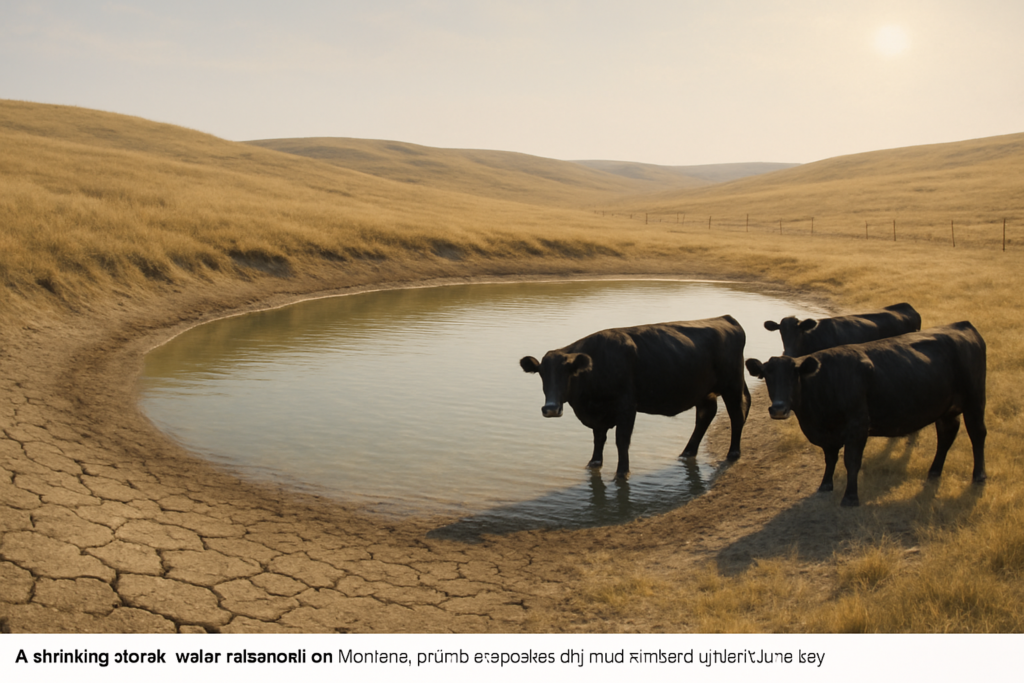
Everybody watches the grass in a dry year. Fewer people watch the water. But when the runoff quits early and the reservoirs start dropping, the water left in the bottom of a stock pond isn’t the same water your cows drank in May. It’s concentrated. Salts, sulfates, and everything else that was diluted by snowmelt gets stronger as the pond shrinks, and by August a hole that looked fine in spring can be pushing your cattle off feed or worse.
This is an old problem on the alkali country east of the divide, in the glacial-till pothole ground, and anywhere shallow wells pull from mineralized layers. Dry summers just make it show up sooner and hit harder.
What the water can do to a cow
Two things matter most in Montana stock water: total dissolved solids and sulfates. TDS is the catch-all for how much mineral is dissolved in the water. Low TDS water, cattle drink without complaint. As it climbs, they drink less, and a cow that won’t drink enough won’t eat enough, and a cow that won’t eat quits gaining. On a growing calf or a lactating cow in the heat, that adds up quick even before anything looks sick.
Sulfates are the sharper edge. High-sulfate water tastes bad, so intake drops first. Push the sulfate level higher and you get into real trouble — sulfur interferes with how cattle use copper and other trace minerals, and at high enough levels it can trigger polioencephalomalacia. Polio in this context isn’t the human disease; it’s brain swelling that shows up as a staggering, blind, head-pressing animal that often goes down and dies. You’ll sometimes find them dead by the water with no other explanation. Yearlings on summer grass seem to catch it most.
The part that fools people: the water gets worse as the season goes, not better. A test in June on a full reservoir can read acceptable, and the same hole in late August, evaporated down to a mud rim, can be double or triple the concentration. Sulfur also comes at cattle from more than one direction — the water, the forage, and any supplement all stack together. It’s the total load that counts.
Get it tested before you need to
A stock water test is one of the cheapest pieces of insurance you can buy. Most labs that run soil and forage samples will run water too, and your county Extension office can point you to one and help read the numbers. Ask for TDS and sulfates at minimum. You’re not looking for perfect — you’re looking for whether a source is safe, marginal, or one you need to keep cattle off of when it draws down.
A few things make the sample worth the postage:
- Sample the sources you actually rely on in July and August — the far reservoirs, the shallow wells, the seep that’s the only water in a big pasture. The good well by the corral isn’t the one that’ll bite you.
- Pull the sample from where cattle drink, not from a fresh inflow. You want to know what’s going down their throats.
- Use a clean container and get it to the lab reasonably fresh. Don’t dip it out of a tank rinsed with something.
- Retest a marginal source later in the summer once it’s drawn down. The number that mattered in June isn’t the number in August.
Keep a rough map in your head of which waters are safe and which are suspect. That tells you which pastures you can lean on late and which ones you’d better plan to be out of before the water turns.
When the good water runs short
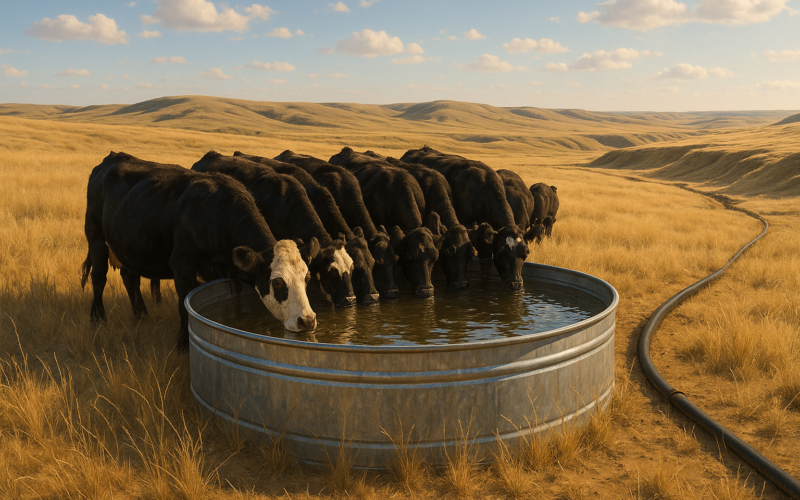
If a test comes back marginal, you’ve got choices that don’t involve gambling with dead yearlings. Fencing cattle off a bad reservoir and hauling water or piping from a better source is a pain, but it beats finding a downer at the water gap. A pond that’s evaporating toward the danger line is a reason to rotate out of that pasture early rather than squeeze the last week out of it.
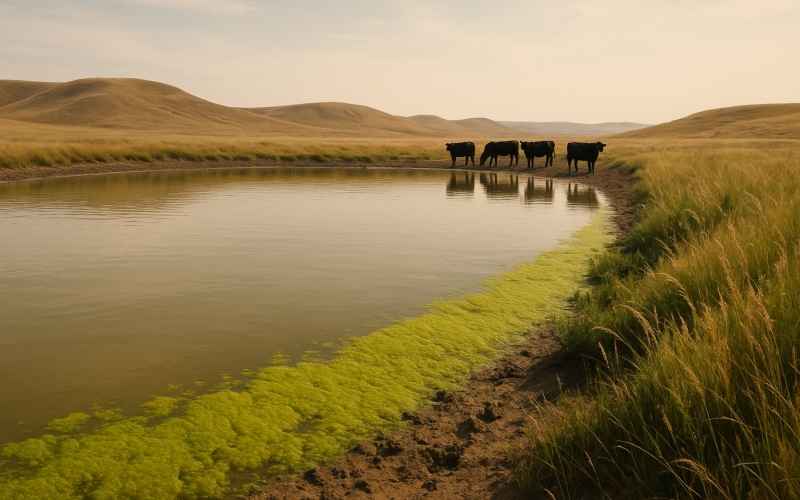
Blue-green algae is a separate hazard on warm, still, nutrient-rich water, and that one can kill fast — but even clear water with no scum on it can carry enough sulfate to cause trouble, so don’t let a clean-looking pond talk you out of a test.
Trace mineral matters too. If the water’s high in sulfates, cattle need more copper and other minerals to make up for what the sulfur ties up. A mineral program built for your country helps, and it’s worth a conversation with your vet or Extension agent about what to run when the water’s working against you.
Grass gets all the attention in a dry summer, and it should. But a cow can walk past thin grass and find another mouthful. She can’t fix bad water. Know what’s in yours before the reservoir tells you the hard way.