A cow will eat around a lot of problems, but she won’t drink around one. When the mercury climbs into the 90s out on the summer country and a float valve sticks or a spring quits, you don’t have days to sort it out. You have hours. A dry tank on a July afternoon can put a bunch of cattle down in a hurry, and the ones that make it back to water often trample a soft spring into a mudhole trying.
Mid-June is the window to catch that trouble while it’s still cheap. The runoff is mostly done, the ground has firmed up enough to get a rig around, and the real heat hasn’t set in yet. Everything you find now, you fix on your own schedule. Everything you find in July, you fix in the worst conditions with cattle standing over your shoulder.
Walk the whole system, not just the tank
It’s easy to drive out, see water in the trough, and call it good. That tells you the system worked this morning. It doesn’t tell you whether the spring box is silting in, whether a gopher has chewed a poly line, or whether the float is one hot week away from hanging up.
Start at the source. On a developed spring, pull the lid on the collection box and look at how fast it’s recharging. Clean out the silt and leaf litter that built up over spring runoff before it works its way down the line and plugs a valve. If you’re on a well and solar pump, watch it actually cycle. Panels get dusty, wire connections corrode, and a pump that ran fine in May under a light draw can fall behind when a hundred head are hitting the tank hard in the heat.
Then follow the pipeline. Buried shallow line heaves and shifts over winter, and rodents find the joints. Look for the green streak of a slow leak, the soft wet spot where a line is weeping, the low place where an air lock can form. If you’ve got pressure-reducing valves or check valves along the run, they’re worth a look too. They fail quietly.
The tank and float are where it usually goes wrong
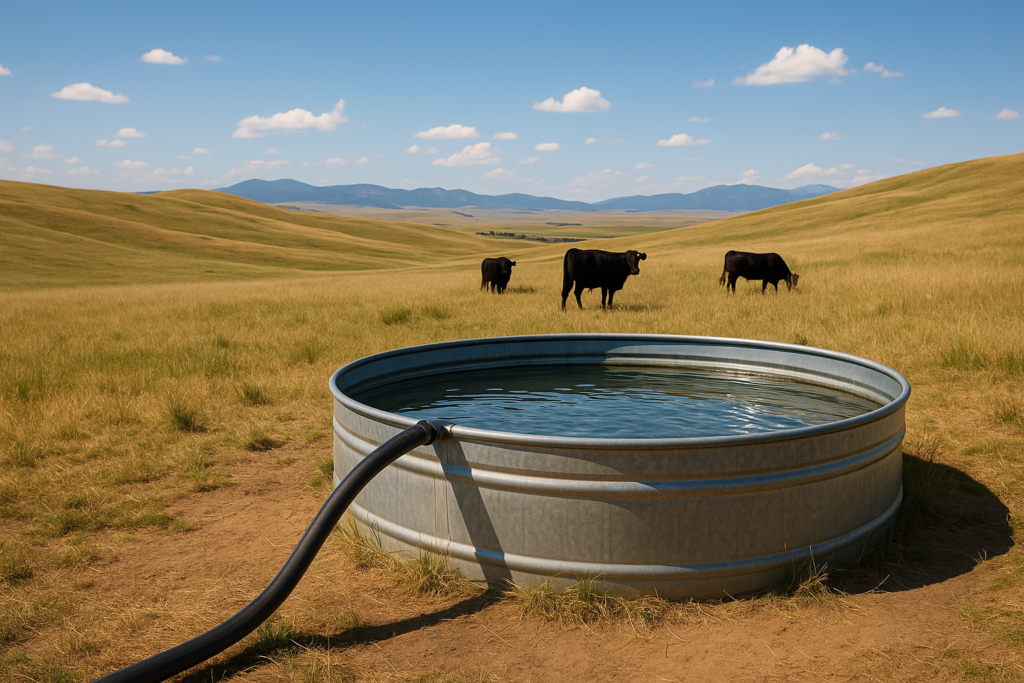
Most summer water wrecks come down to the float valve. It sticks open and floods the site, or it sticks shut and the tank goes dry with cattle standing there bawling. Work the float by hand and watch it seat. Replace the ones that are worn, sun-rotted, or gummed up with mineral scale. A spare valve or two in the truck box costs almost nothing and saves a trip back to the shop.
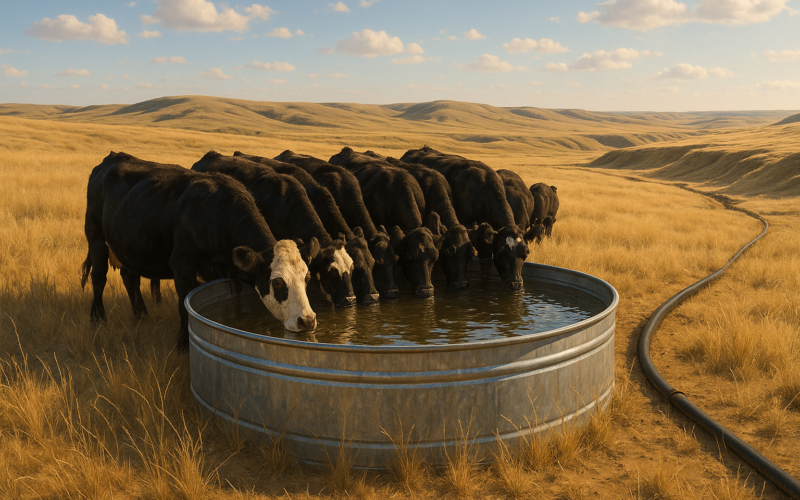
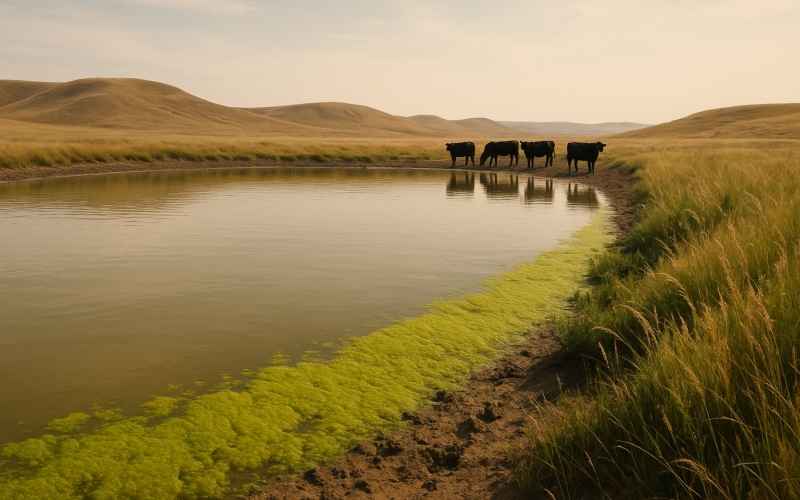
Clean the tank while you’re there. Algae, moss, and dead varmints foul the water and cut how much cattle will drink. A tank that’s half full of muck also holds a lot less than you think on the day you need every gallon. Check the overflow so a stuck float doesn’t wash out the base, and make sure the tank sits level and solid — cattle crowding one side in the heat can rock a poorly set tank right off its pad.
Size matters too. A tank that keeps up in cool weather can come up short when the whole herd waters within an hour of each other on a hot afternoon. If you’ve been running cattle tight to a tank that’s always a little behind, this is the summer to add capacity or a second waterer before it bites you.
Have a backup you can reach fast
Even a good system fails eventually, usually on a Sunday. Know where your nearest hauling source is and whether your stock tank and pickup can get to the pasture that’s most likely to run dry. On the drier country toward the eastern part of the state, or on any pasture that leans on a single spring, a haulable backup isn’t paranoid — it’s the difference between an inconvenience and a load of dead cattle.
It also pays to know where cattle will go when the water quits. They’ll drift downhill and bunch on the lowest wet spot they can find, which is often a creek bottom or a bog you’d rather they stayed out of. If you find them piled up in a coulee on a hot day, check the tank before you check anything else.
None of this is complicated work. It’s just work that’s easy to put off until the day it can’t wait. Spend a couple of days now driving the lines and pulling the lids, and you buy yourself a summer where the water is the one thing you don’t have to worry about.