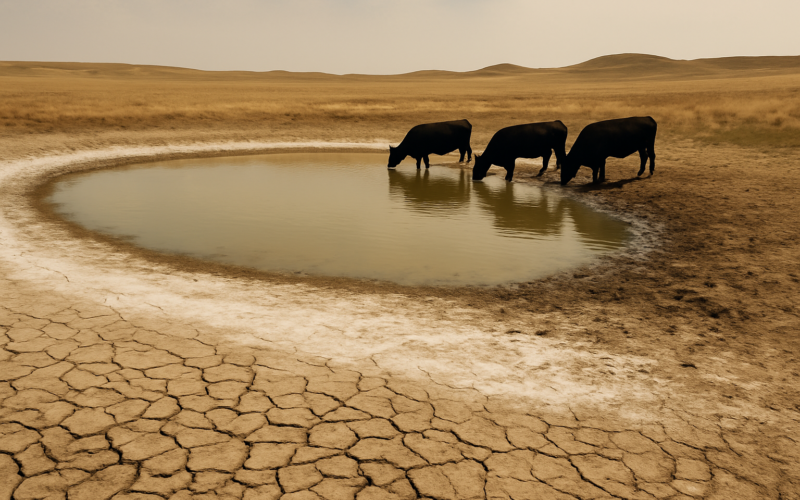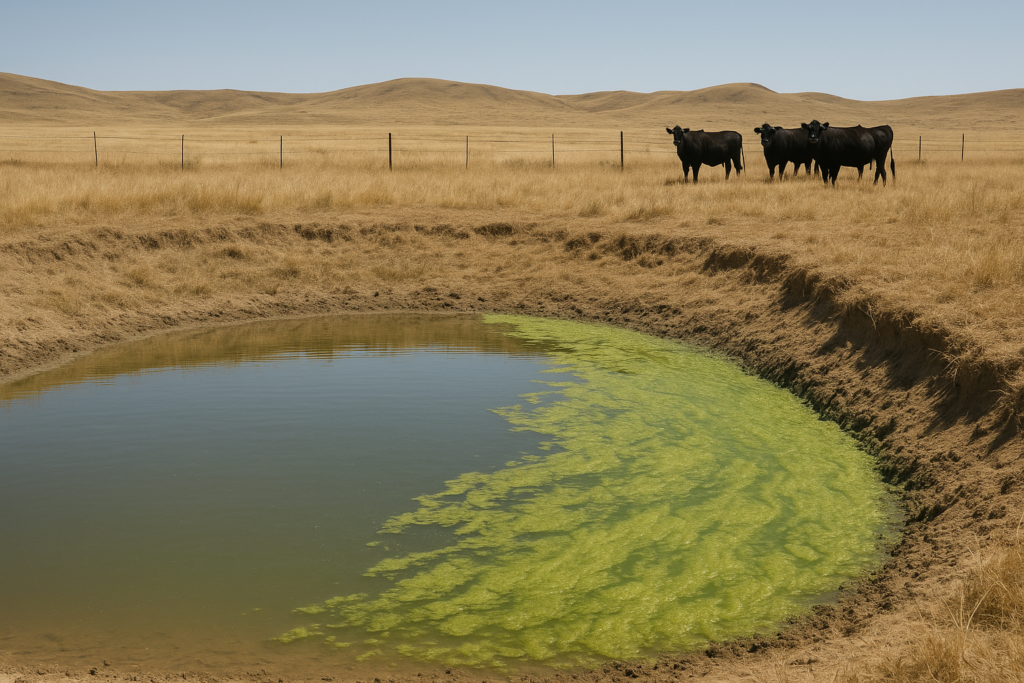
You can lose stock to a lot of things in July, but few of them are as quiet as a pond bloom. The cow drinks in the morning, walks off, and you find her dead by the fence that afternoon with no sign of a fight. If it happens near a dugout or a reservoir that’s turned a strange shade of green, blue-green algae belongs at the top of your list.
It isn’t really algae. Cyanobacteria are closer to bacteria than to pond weed, and some strains produce toxins that hit the liver or the nervous system hard enough to kill within minutes to a few hours. The trouble is you can’t tell a toxic bloom from a harmless one by looking. Two ponds a mile apart can bloom the same week and one of them puts out toxin while the other doesn’t.
When and where it shows up
Blooms need three things, and Montana summers hand them all over: warm water, still conditions, and nutrients. The nutrient part is where cattle set themselves up. A dugout that stock have been standing in and manuring around all season is loaded with phosphorus and nitrogen. Add a stretch of 90-degree days with no wind, and the water can go from clear to pea soup in under a week.
Watch the reservoirs and dugouts that sit low and warm — the ones with no inflow moving through them by midsummer. Running water in a creek or a spring-fed trough rarely blooms. It’s the standing, stagnant water that turns on you. Wind matters too. A steady breeze keeps the water mixed and pushes any scum around. When the wind lays down for a few days in a heat wave, that’s when a bloom concentrates.
The classic sign is a surface scum that looks like spilled paint or grass clippings floating on top, usually blue-green but sometimes bright green, brownish, or even reddish. It piles up thick on the downwind edge — which is exactly where cattle wade in and drink. A pond can look fine in the middle and have a toxic mat drifted against the bank where the stock stand.
What it looks like in dead and sick cattle
The nerve toxins kill fast. You’ll often find animals dead within sight of the water, sometimes with muscle tremors, staggering, or difficulty breathing in the ones still alive. The liver toxins take longer — hours to a day or two — and can show up as weakness, going off feed, or animals that just seem dull before they go down. Because it moves so quick, you frequently find the loss before you ever see a sick animal.
If you turn up dead stock near a bloomed pond, treat the water as guilty until you’ve fenced it off. There’s no good field treatment once an animal has taken in a lethal dose, so the whole game is keeping them out of it.
What to do
The moment you suspect a bloom is killing stock, get the cattle off that water and onto a clean source. Haul water, open a gate to a different pasture, or pump to a tank set well back from the pond. Don’t just move them to the far side of the same reservoir.
- Fence the bad water off if you can, or at least block the shoreline where the scum piles up. Even a temporary hot wire keeps them from wading into the worst of it.
- Call your vet if you’ve got dead or down animals. They can help confirm what killed them and tell you whether the rest of the herd is at risk. If you want the water tested, ask about where to send a sample before you dip one.
- Give a bloomed pond real time before you trust it again. A scum can break up and settle, then release toxin back into the water. Clearing on the surface doesn’t mean the water is safe that same day.
The long-term fix is keeping the nutrients down and the water moving. Fencing cattle out of the pond and pumping to a tank does more than protect them from a bloom — it keeps the manure and mud out of the water that feeds the bloom in the first place. A pond that stock aren’t standing in all summer is a lot less likely to turn on you.
None of this needs a lab to act on. If a still, warm dugout goes green and thick on the downwind bank in the middle of a heat wave, and you’ve got stock dying near it with no other explanation, you already know enough to shut the gate.