Turnout is done and the cattle are strung out across the summer country, so it’s easy to figure the fence held. It usually didn’t, not all of it. Snow load bent posts, runoff washed out a low crossing, an elk herd flattened a section on the way to the timber, and a wire that looked fine in April has a splice that let go. You just haven’t found it yet. The cattle will, and they’ll do it on a Sunday when the neighbor’s bull is on the wrong side.
June is the month to ride it. The grass is up and the cattle are settled enough that a downed wire hasn’t scattered them across three drainages. Wait until you get a phone call from the highway department and you’re not fixing fence anymore, you’re gathering strays off somebody else’s hay ground.
Where it goes down first
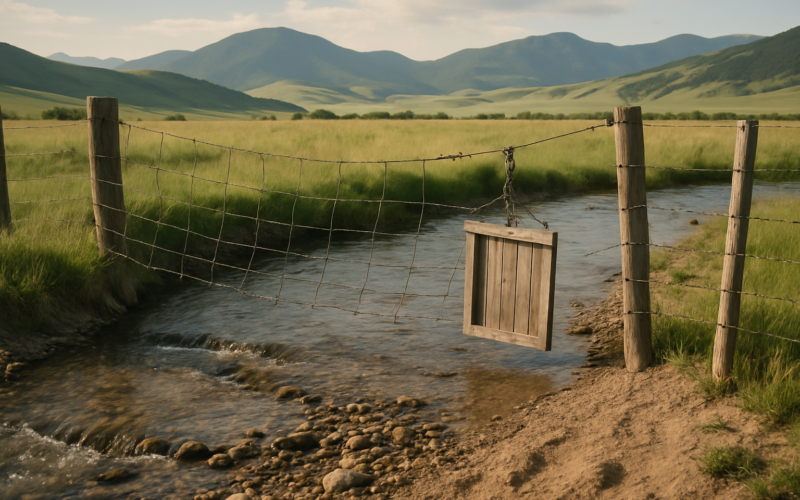
Low crossings take the worst of it. Anywhere a fence drops into a coulee or crosses a creek, spring water either buried the bottom wire in gravel or ripped the whole span out and left it hanging. Check those first. A floodgate that’s plugged with willow trash and beaver sticks is holding water it wasn’t built to hold, and it’ll tear loose the next time it rains hard upstream.
Sidehills where snow slid or drifted deep will have posts leaning downhill and staples pulled halfway out. On the timber edges, look for game trails. Elk and deer cross in the same places every year, and they’ll roll the top two wires down until a calf can step over. If you’ve got a stretch that runs through dark timber, deadfall from spring winds is probably lying across it somewhere.
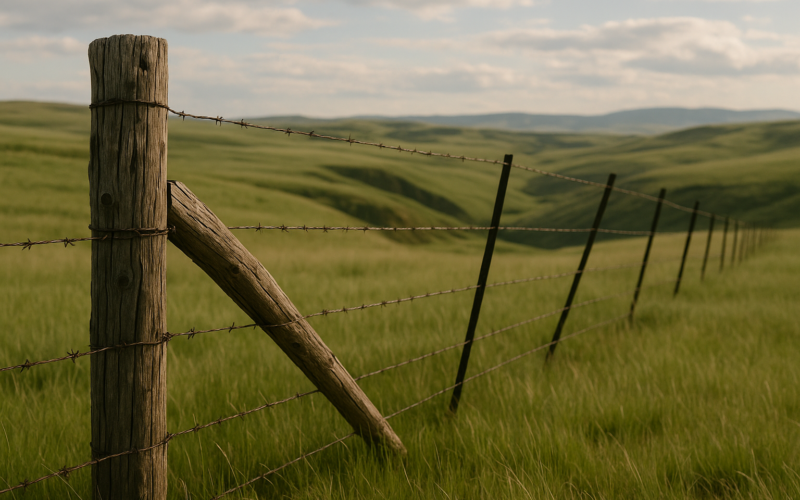
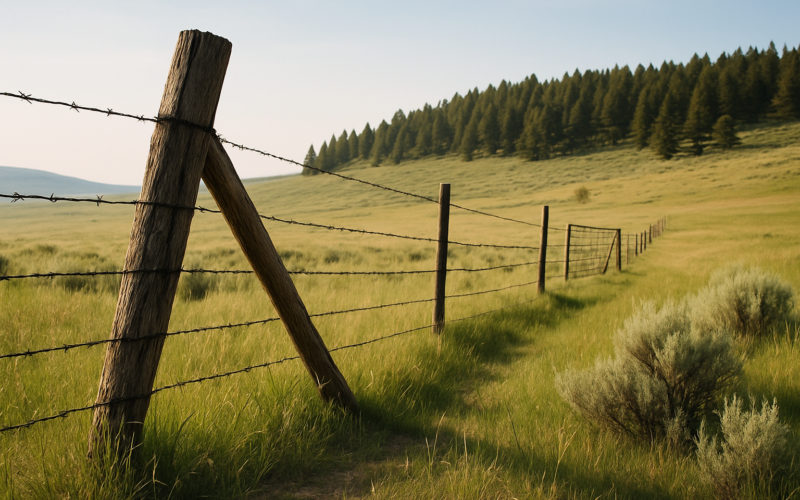
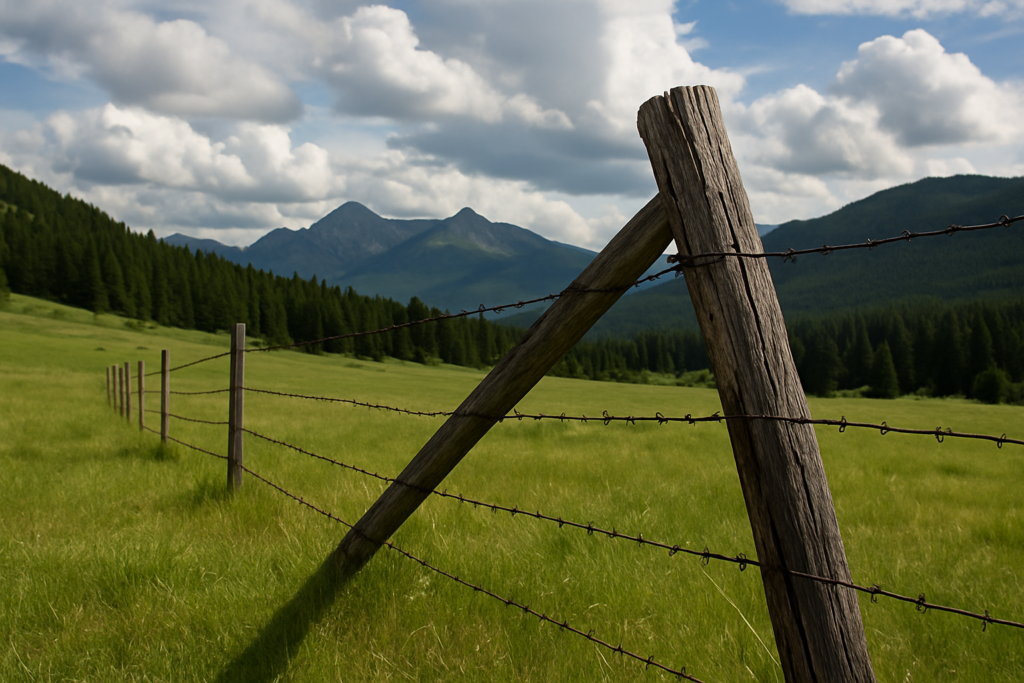
Corner braces are the ones people skip and the ones that matter most. A brace that’s heaved out of the ground or a broken brace wire means every span pulling off that corner is slack, and slack wire is what cattle learn to walk through.
What to carry and what to actually fix
You don’t need the whole shop. A come-along or fence stretcher, a claw hammer or fencing pliers, a bag of staples, a roll of smooth wire for splices, a few clips, and enough steel posts and a driver to replace the ones that snapped. Throw in a couple of wood posts if your country eats them. A chainsaw earns its keep along any fence in the trees.
Splice a broken wire with a proper wrap, not a quick twist you tell yourself you’ll come back to. A Western Union splice or a good crimp sleeve holds; a hand twist rusts through and lets go by August. Re-stretch the span while you’re there. Tightening one wire and leaving the rest loose just moves the weak spot down the line.
If you’re running electric to back up a barbwire line or to split a pasture, walk it with a fence tester and don’t guess. Grass and brush grew up under it and grounded half the charge out. A hot fence reading three thousand volts trains cattle. One reading four hundred teaches them the fence is a bluff, and once a cow figures that out you’ve lost the wire for the season.
Gates, cattle guards, and the boundary line
Gates are where the trouble usually starts, because that’s where people are. A gate that won’t close tight because a post heaved, or a chain somebody stretched to reach, gets left open by a hunter or a hiker or the propane guy. Fix the latch so it shuts easy. A gate that’s a fight to close is a gate that gets left open.
Cattle guards fill with dirt and gravel over a few seasons until they’ll walk a calf right across. If you can’t see daylight under the rails, it’s time to clean it out. And ride your outside boundary line before you ride the cross fences. The interior fence failing costs you a headache and a morning of sorting. The boundary fence failing puts your cattle on somebody else’s grass or the highway, and that’s a different kind of problem — the kind that shows up as a bill or a lawsuit.
Fence work is nobody’s favorite job. But an afternoon in June with a stretcher and a bag of staples is cheaper than the diesel and the daylight you’ll burn chasing cattle in July, and a lot cheaper than what runs down the road toward you at seventy miles an hour on a two-lane at dusk.