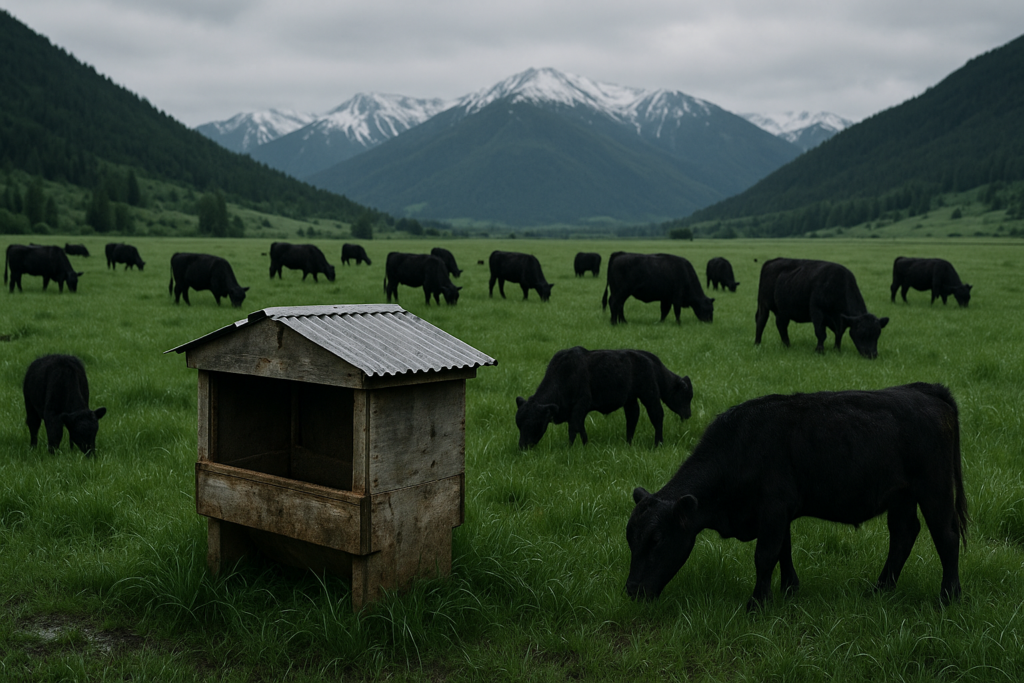
Most of the tetany talk happens in April, when the cool-season grass first jumps and everybody’s watching the older cows on green pasture. But a cold, wet spring pushes that lush growth right into June, especially up in the mountain valleys and on north slopes where the grass got a late start. If your grass is still that dark, fast, watery green heading into the middle of the month, the risk hasn’t left. It’s just moved down the calendar with the growth.
Grass tetany is a magnesium problem. Fast-growing, immature cool-season grass — brome, wheatgrass, the flush after a rain — runs low on magnesium and often high in potassium, and the potassium makes it harder for the cow to pull what little magnesium there is out of the feed. A cow can’t store much magnesium day to day. She lives off what she eats, and if the grass isn’t supplying it, she runs short fast.
It goes after your best cows
This is the part that stings. Tetany doesn’t pick off the culls. It takes the older cows milking hard on a good calf, because a lactating cow dumps magnesium into her milk every day and can’t spare it. The dry cows and the yearlings usually ride right through the same pasture with no trouble. So the cow you lose is the productive one you’d never have sold.
Early signs are easy to miss because the cow looks nervous before she looks sick. She’ll throw her head, walk stiff or high-stepping, get jumpy when you come near, maybe bawl and drift off from the bunch. From there it moves fast — staggering, going down, paddling on her side with her head thrown back, sometimes convulsions. A lot of producers never see the early stage at all. They find a dead cow with the ground torn up around her and figure it out from the tracks.
If you catch one down and still alive, this is a call-your-vet situation, not a wait-and-see one. Handling a tetany cow rough can kill her outright — the excitement of roping and dragging her can be the last straw. Treatment is getting magnesium and usually calcium into her, and it needs to be done carefully and quickly. Even then, a cow that’s been down a while may not come back.
The mineral has to be out before she needs it
You can’t fix tetany after the grass is already short. The cow needs magnesium in front of her the whole time she’s on that risky feed, because she’s using it up as fast as she takes it in.
That means a high-magnesium mineral — the ones usually sold as “hi-mag” — out and available before you turn onto the lush pasture, not the day after you find the first sick cow. The catch is that magnesium oxide tastes bitter, and cows don’t line up for it the way they do for a good loose mineral. A few things help them take it:
- Start the hi-mag mineral a couple weeks ahead of the green flush, while the cows are still cleaning up dry feed and more willing to eat it.
- Put it where they already go — near water, in the shade, on the trails they use — and keep it dry and fresh so it doesn’t cake up hard.
- Watch that they’re actually eating it. If a tub or feeder sits full for a week, they’re not getting the dose that keeps them covered. Some outfits mix it with a little dried molasses product or a palatable carrier to get intake up.
Feeding a little dry hay along with the lush grass helps too. It slows the gut down, adds some fiber and magnesium, and takes the edge off that all-watery-grass diet. Even a few pounds of hay a day on the worst pastures can make a difference on the older cows.
Know which pastures are the traps
Tetany isn’t random. It clusters on the same ground year after year — the fields that grow the fastest, cool-season stands, and especially pastures that got hit with nitrogen or sit on soils already high in potassium. Meadows coming back after being grazed hard, then hit by a warm rain, are classic. If you lost a cow on a particular field two springs ago, that field earns a second look this June.
The management version of this is simple to say and harder to do: get the hi-mag mineral out early, keep the old milking cows off the rankest green until it firms up a little, and don’t turn a hungry bunch straight onto a wet, fast-growing pasture first thing in the morning. A cow with something in her belly and magnesium in front of her is a cow that grazes that same grass and never gives you a problem. The one that dies is almost always the one that hit the flush hungry with nothing in the mineral feeder.
By the time the grass heads out and toughens up, the risk drops off on its own. Until then, in a year that stayed cool and wet, keep watching the good cows — they’re the ones with the most to lose.