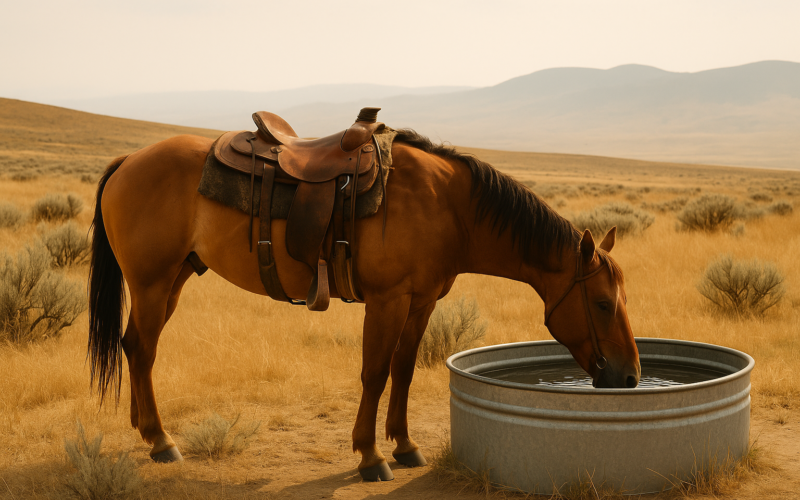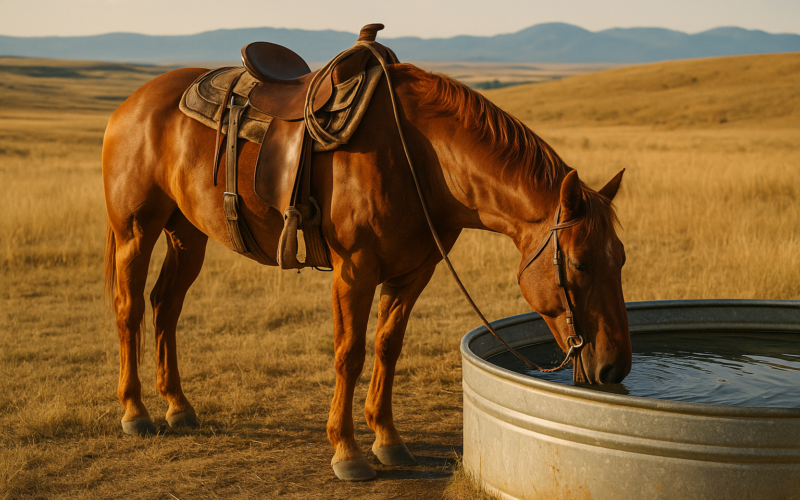
Branding’s wrapped up across most of the state. The horses that hauled you through May—dragging calves to the fire, holding herd in the wind—get turned out to coast for a while. And that’s the trap. A horse that was working every day and getting hay or a little grain suddenly stops working, hits a pasture full of fast-growing June grass, and stands there packing on weight. Two or three weeks later he’s sore-footed and rocked back on his heels, and you’re wondering what happened. What happened is laminitis, and grass founder is the version that catches ranch people off guard because it doesn’t come from an obvious mistake.
The grass in June is the problem. Cool nights and warm days push forage to stack up sugars—the same reason your cows gain so well on it. A horse’s gut isn’t built for a steady load of that. When the sugar overwhelms the hindgut, it sets off a chain reaction that ends at the feet, where the laminae that anchor the coffin bone inside the hoof start to fail. Once that bone starts to sink or rotate, you’re in real trouble, and a horse that founders bad enough may never be right again.
Who’s most likely to go down
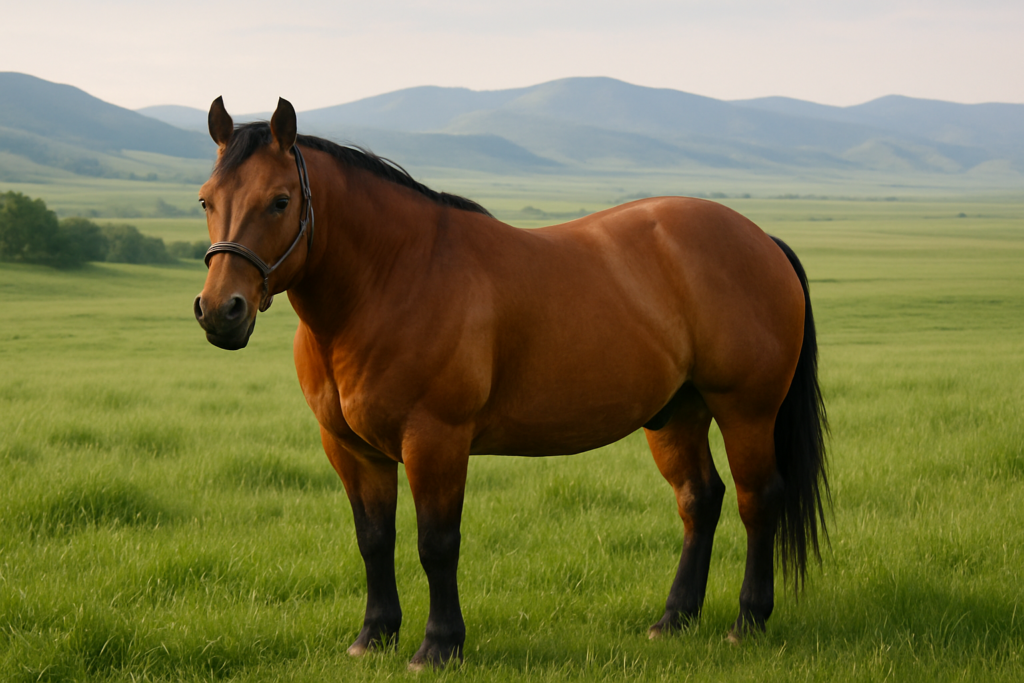
It’s rarely the hard-used, ribby horse. It’s the easy keeper—the stout gelding or the pony-built mare that holds flesh on air. Older horses carrying a cresty neck and fat pads over the tailhead are the classic candidates, and some of those are dealing with metabolic problems that make them even more sensitive to sugar. If you’ve got a horse that looks like he’s been living on the good end of the hay stack all winter, he’s the one to watch when he hits spring pasture.
The early signs are easy to miss if you’re not looking. A horse that’s normally forward acts a little stiff or short-strided, especially turning tight or on hard ground. He may stand shifting weight from one front foot to the other, or park out with his front feet ahead of him to take the load off the toes. Feel the front hooves—warmth in the wall and a pounding pulse at the back of the pastern are warning shots. By the time he’s laying down more than usual or won’t move, the damage is already underway.
Slow the grass down before it starts
The cheapest fix is not turning a soft, idle horse straight onto lush pasture and walking away. If a horse has been on hay all winter, bring him onto grass gradually—an hour or two a day at first, building up over a couple of weeks so his gut can adjust. A dry lot with hay, and turnout limited to part of the day, keeps the easy keepers honest.
Grazing muzzles look silly and horses hate them for about a day, then get over it. They cut intake way down while still letting a horse move around and be a horse, which beats locking him in a pen. Time of day matters too—sugars run highest in the afternoon and evening on a sunny day, and lowest in the early morning before the sun’s been on the grass a while. If you’re going to turn a risky horse out, early morning is safer than late afternoon.
Keep an eye on body condition through the summer, not just in spring. A horse that’s getting round in July is telling you he’s taking in more than he needs, and that fat is part of what keeps a metabolic horse on the edge of founder. Working him, even light riding a few times a week, does more than muzzle-and-diet alone.
If a horse does get sore, get him off the grass and onto a soft footing—deep bedding or sand—and call your vet before you start guessing. Founder moves fast, and the horses that come out of it best are the ones caught in the first day or two. Standing a foundering horse out on the same grass that caused it, hoping he walks out of it, is how a fixable problem turns into a horse you have to put down.
A good using horse is worth more than a pasture full of grass. The ones that carried you all spring deserve better than getting crippled standing idle in June.