Branding wraps up and the calendar doesn’t slow down. Now come the fence rides, the pasture moves, the mornings you leave the corral in the dark to beat the heat. The cows get all the attention in June, but the animal carrying you across the country is the one taking the beating, and most of the damage builds up slow enough that you don’t see it until he’s off.
A working horse in July is doing a job that asks a lot of his body all at once. Long miles, hot afternoons, rough footing, and a rider who’d rather push through than turn back. He’ll do it. That’s the problem. A good ranch horse will keep going past the point where he should have quit, and by the time he tells you something’s wrong, you’re already dealing with a layup instead of a warning.
Sweat takes more than water with it
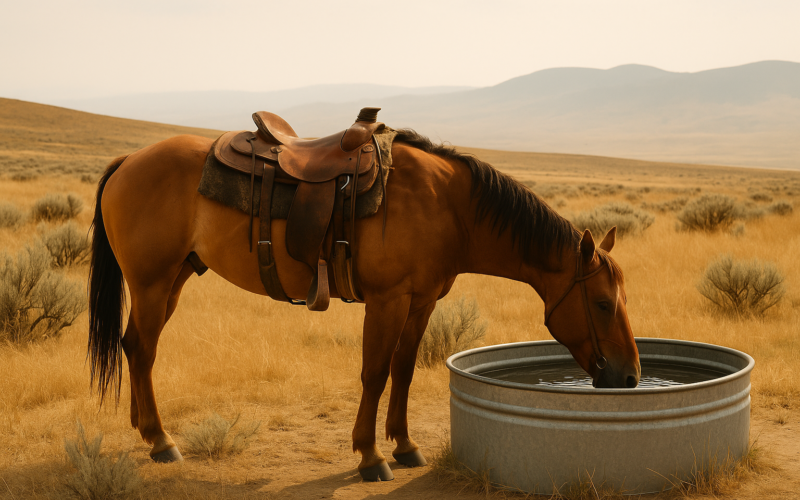
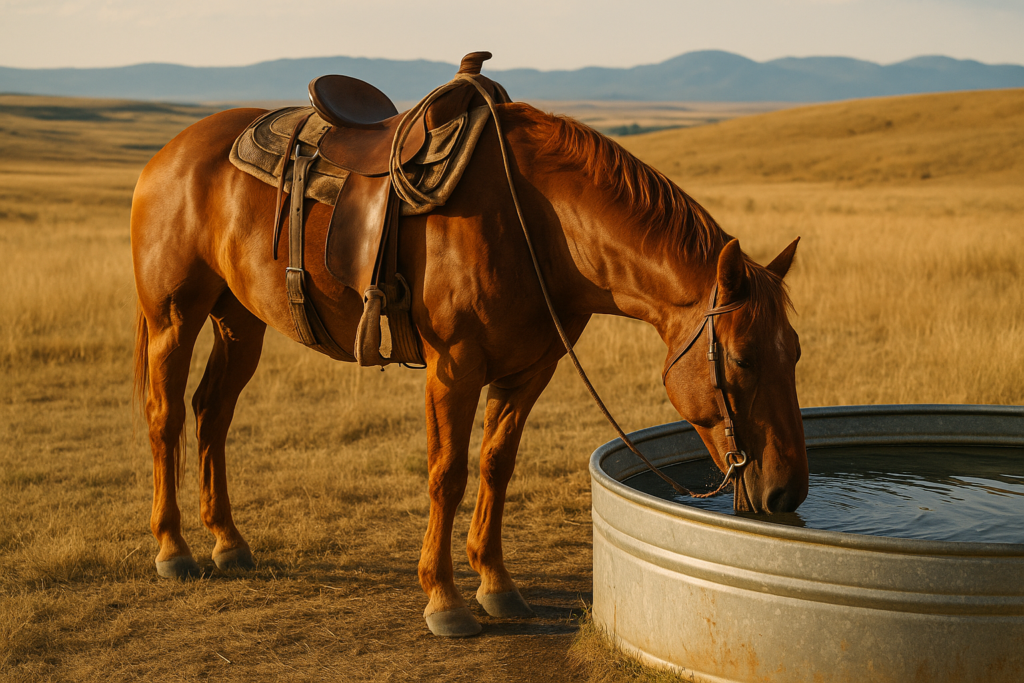
Horse sweat isn’t like ours. It carries a heavy load of salt and other electrolytes, and a horse working hard in the heat can lose real fluid volume over a long day without you noticing how much. The trouble is that a dehydrated horse often quits wanting to drink right when he needs it most. He’s lost so much salt that his body’s thirst signal gets scrambled, so he’ll stand at a full tank and walk away.
Keep loose stock salt or a salt block where he can get at it every day, not just when you remember. A horse that’s been topping off his sodium all week will drink better on the day you work him. If you’re pulling long, hot circles day after day, an electrolyte supplement is cheap insurance, but plain salt and clean water do most of the job for most outfits.
Learn to read him. Pinch the skin on the point of the shoulder and watch how fast it flattens back down. Press a thumb on the gum above a tooth and count how quick the color comes back. Tacky gums, a skin tent that hangs, a gut that’s gone quiet, urine dark as coffee, a flank that’s tucked up hard, or a horse that’s dull and off his feed after a big day all mean he’s short on fluid. Dehydration is also how you buy an impaction colic, so don’t shrug it off as tired.
The saddle and the feet are where the layups start
Most horses that go on the shelf in summer don’t do it dramatically. A cinch gall starts as a rub behind the elbow and turns into a raw, swollen sore that keeps him tied up for weeks. A saddle that bridges or a dirty pad grinds a pressure spot into his back that you won’t see until you pull the rig and find a white patch of hair growing in that fall. Brush the back and the girth area clean every time, let a wet pad dry between rides, and run a hand under the cinch after you tighten it to smooth the hair down.
Feet are the other quiet killer. A horse ridden hard in dry country wears hoof faster than one standing in a soft pen, and June is when the ground goes from spring mud to rock and hardpan. If he’s shod, stay ahead of the cycle instead of stretching it a week because you were busy. A thrown shoe two miles out on sharp shale can leave you leading him home and him tender for days. If he’s barefoot, keep an eye on how the wall’s holding up on your gravel and consider protection before he goes ouchy, not after.
Don’t cook him in the middle of the day
A horse builds heat the same way a cow does, and he’s the one running while you sit. Do the hard riding early. On a bad afternoon, walk the last stretch home instead of loping it, and give him a chance to blow. When you get back, let him cool out before you throw him in a hot pen with nothing to do.
Watch too for a horse that gets stiff, sweaty, and reluctant to move after you’ve had him standing on a full grain ration, then asked him to go hard. That’s the setup for tying up, a painful cramping of the big muscles that can put a good horse down and, in a bad case, damage his kidneys. Match the feed to the work. A horse getting light use doesn’t need a scoop of grain every day, and cutting it back on his off days is easier than treating him after.
None of this is complicated. It’s the kind of thing that gets skipped when you’re tired and the list is long. The horse that carries you all summer is worth ten minutes of attention at the end of the day, because the one you ride into the ground in June is the one you’re leading around the corral in July.