You notice it at the tail end of the bunch coming to water — one cow hanging back, head bobbing with every step, packing a hind foot. By the time she works down to the tank the rest have already drunk and drifted. That limp usually means foot rot, and June is when it starts showing up around here.
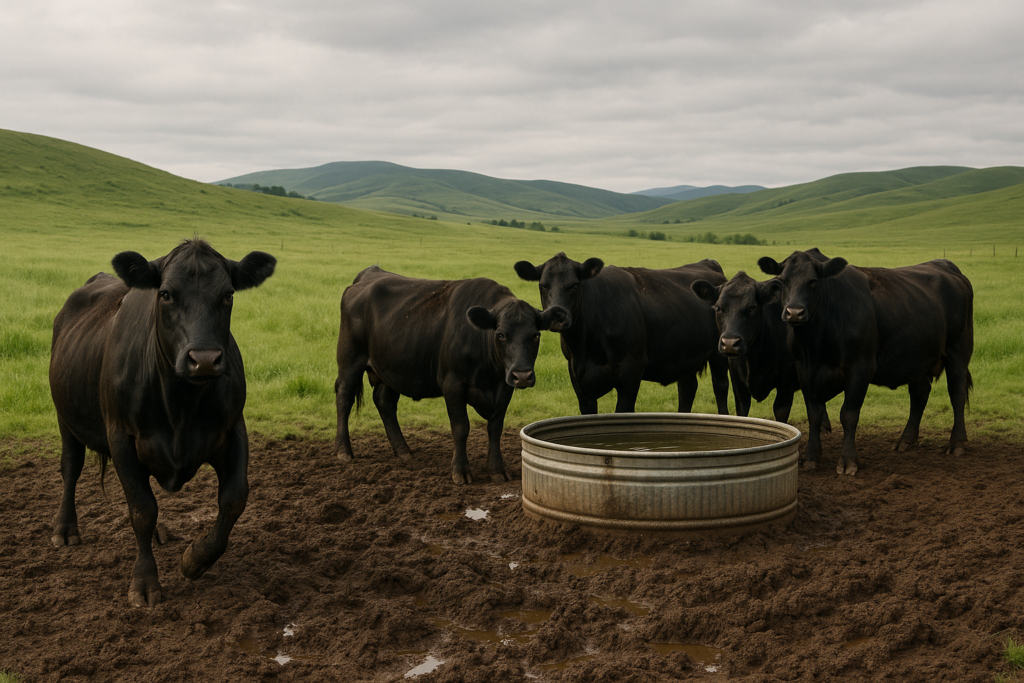
Foot rot is a bacterial infection that gets into the soft skin between the two claws. The bug lives in the soil and manure, and it needs a way in. Standing water, sharp gravel, cut stubble, frozen ground that thaws to mud — anything that softens or nicks the skin between the toes gives it the opening it needs. That’s why the wet spots take the blame: the churned-up ground around a tank, a gate the whole herd funnels through, a boggy creek crossing, the shady corner where cattle stand out the heat of the day.
Catch it before she quits walking
Early foot rot moves fast, and it’s a lot easier to fix on day one than day five. The first sign is a sudden lameness — not a gradual soreness, but a cow that was sound yesterday and is three-legged today. Look at the foot and you’ll see swelling that pushes the two claws apart, up above the hoof and into the pastern. The skin between the toes splits open and the smell is unmistakable once you’ve caught it a few times. It’s rotten, and it carries.
Foot rot responds to antibiotics, and it responds well when you hit it early. Work with your vet on the product and dose that fit your operation, and follow the label on withdrawal times so you don’t get crossways at shipping. The point worth making is timing: a cow treated the day she goes lame is usually back with the bunch in a few days. Let it ride a week and the infection works up into the joint, and now you’re dealing with a foot that may never come fully sound. That’s a cull cow instead of a treated cow.
Not every lame cow has foot rot. A rock bruise, a hairline crack, an abscess, or something lodged up between the claws will all make a cow limp. If you treat for foot rot and she’s not better in a couple of days, get the foot up where you can actually look at it. Guessing wrong just burns time she doesn’t have.
The mud is the real problem
You can treat cows all summer and still fight foot rot if the ground stays wet and cut up. The infection lives where cattle stand in muck, so the lasting fix is drier footing where they congregate.
- Haul gravel or rock to the worst tank aprons and gate approaches before they turn to soup. A firm pad where cattle stand and drink does more than any single shot.
- Move mineral, salt, and rubbing spots away from the water and the mud so the whole herd isn’t standing in the same churned ground for hours.
- Fence cattle back off the boggy creek edges and springs where you can, and give them a clean approach to water instead of letting them wallow in it.
- Watch the spots where irrigation runs cross a lane or a corner. Flood water and cattle traffic in the same place is a foot rot factory.
Some outfits run their herd through zinc or trace-mineral programs aimed at hoof health, and there’s a case for it on ground that fights foot rot year after year. Talk it over with your vet before you count on a mineral alone to carry the load — it helps, but it won’t drain a mud hole.
Handle the lame ones without making it worse
When you go to gather a foot rot cow, remember she’s in real pain on that foot. Push her too hard through rough country or brush and you’ll do more damage getting her in than the infection did. Bring her slow, work the cattle in the cool of the morning, and don’t run a three-legged cow a mile to the corral in the heat of the afternoon.
Keep an eye on how many you’re pulling. A cow here and there is normal in a wet June. If you’re treating one after another out of the same pasture, the ground is telling you something — the water lot, the crossing, or that one gate is soft and staying soft. Fix the footing and the treatment list gets a lot shorter.
Foot rot is one of the more fixable summer problems if you’re paying attention. The cost isn’t the medicine. It’s the cow you didn’t catch until she was down in the brush with a foot that won’t come back.