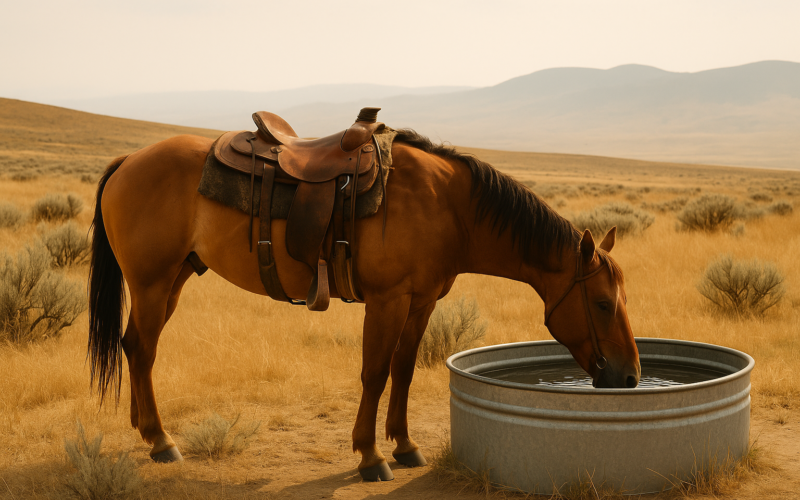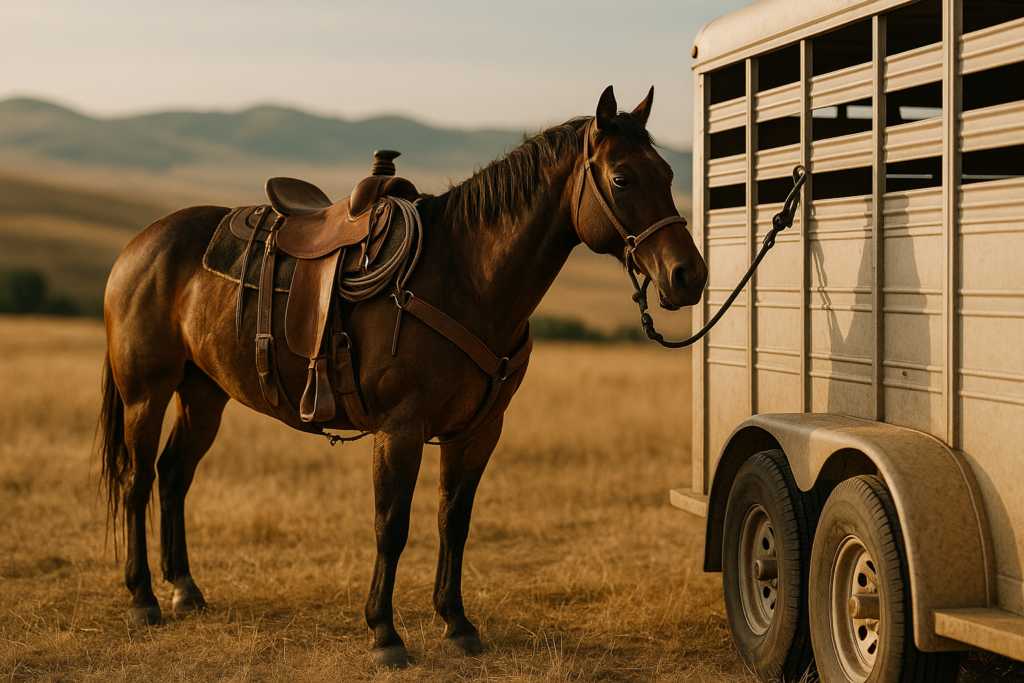
Branding wrapped up a couple weeks ago, the crew’s gone home, and the horses that carried you through it are still tied to the trailer at daylight. June is the month the ranch horse gets used hard and thought about least. There’s fence to ride, pairs to move to summer range, and doctoring on grass that means roping a calf in the open. The good horse just keeps showing up, so it’s easy to quit checking him over the way you did in April.
That’s usually where the trouble starts. The sore you don’t see in June is the horse standing three-legged at the trailer in August, right when you’ve got the most country to cover and the fewest horses to do it on.
Watch the back and the cinch before the sweat marks lie to you
A horse worked in the heat sweats and dries out under the pad three or four times a day. Salt cakes on the hair, the pad stiffens, and every trip up the trail grinds it into the same spots. White hairs behind the withers or a bald patch at the cinch aren’t a badge of a hard-working horse. They’re a saddle telling you where it doesn’t fit, or a pad you haven’t brushed the dried sweat out of.
Pull the saddle at noon and run your hand over the back. If he flinches at the loin or you feel heat and a soft spot behind the withers, that horse is telling you something before he starts humping up. Wash the salt off, let the pad dry all the way between rides instead of throwing it back on damp, and don’t cinch a sore horse tight and trot him five miles because it’s the only horse caught. A cinch sore that opens up in June takes a month to heal, and you don’t have a month.
Fit matters more the harder you use him. A saddle that sits fine for an hour of penning bridges or pinches on a full day in the hills. If one horse keeps coming up sore in the same place no matter the pad, the saddle’s wrong for him, not the other way around.
Feet go from mud to concrete in about two weeks
Spring corrals were wet and packed, and a lot of feet came out of that with soft heels and the start of thrush stinking up the frog. Then the ground dries hard and cracks, and the same foot that was too soft in May is now chipping and splitting on rocky range. That swing catches horses out every June.
If you shoe, get ahead of the country you’re about to ride. A barefoot horse that was fine in the meadow will get footsore hauling you across shale on a long move, and a footsore horse stumbles. Keep the farrier on a schedule instead of waiting until a shoe’s already sprung or a wall’s cracked to the quick. Pick the feet out before you saddle, every time. It takes thirty seconds to flip a rock out and a lot longer to fix an abscess.
Grass alone won’t carry a horse doing a day’s work
People turn horses out on good June grass and figure they’re set. Grass keeps a pasture horse round. It does not keep up with one that’s climbing ridges and dragging calves in the heat six days a week. A hard-used horse burns more than green grass replaces, and you’ll see it first as a horse that’s dropping weight and going flat by mid-afternoon.
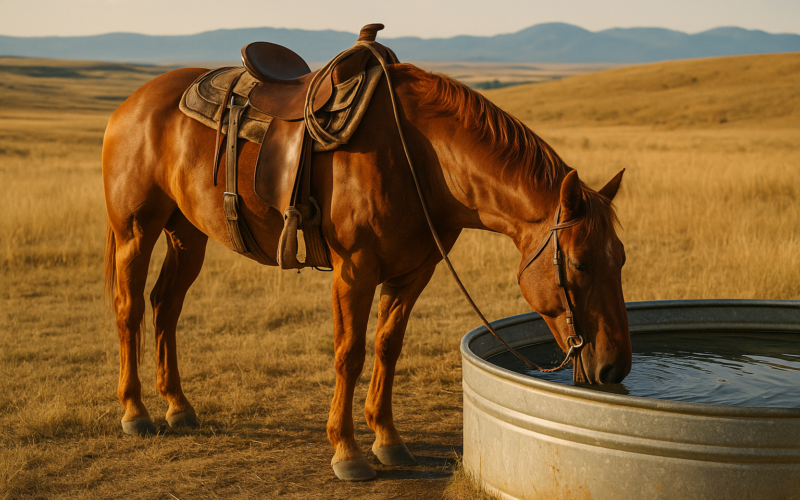
The bigger daily risk is water and salt. A horse sweats out a lot of both on a hot day, and a gut that gets dry is a gut that colics. Water him well before you load out and again when you get back, don’t wait until he’s cramped up after a hard trip to offer a bucket, and keep loose salt where the horses actually stand. On the long days, an electrolyte in the water or on the feed helps a horse that’s sweating hard drink and keep drinking. A horse that quits eating and starts pawing after a hot afternoon needs looking at, not hoping-at.
None of this is complicated. It’s the same care you’d give in April, done in June when you’re too busy to feel like doing it. Rotate horses so the good one gets a day off instead of every day. Rest and water him like you plan to still be riding him in September. The horse that carries you through fall gathering is made or broke by how you treat him now, in the weeks nobody’s watching.