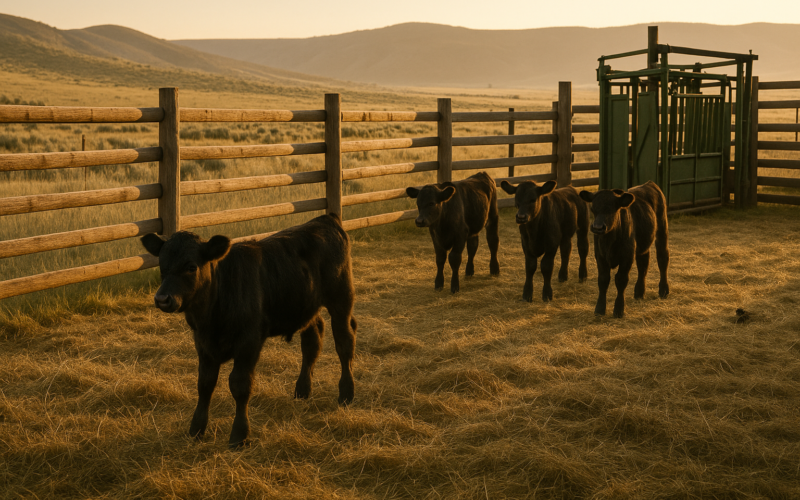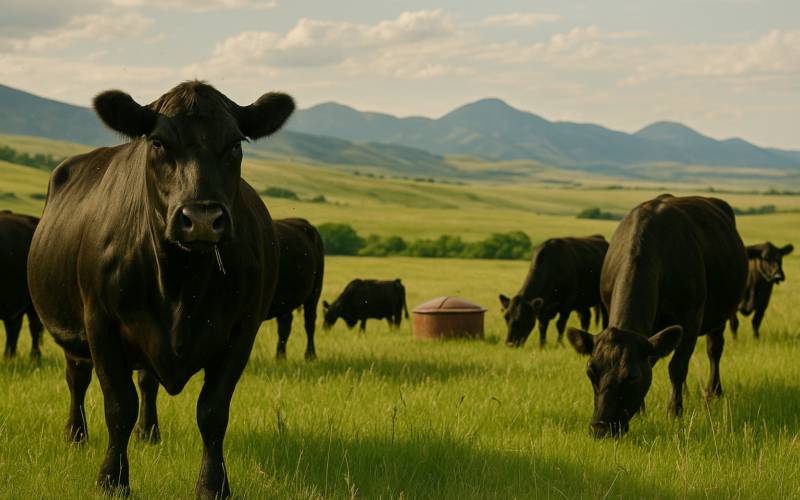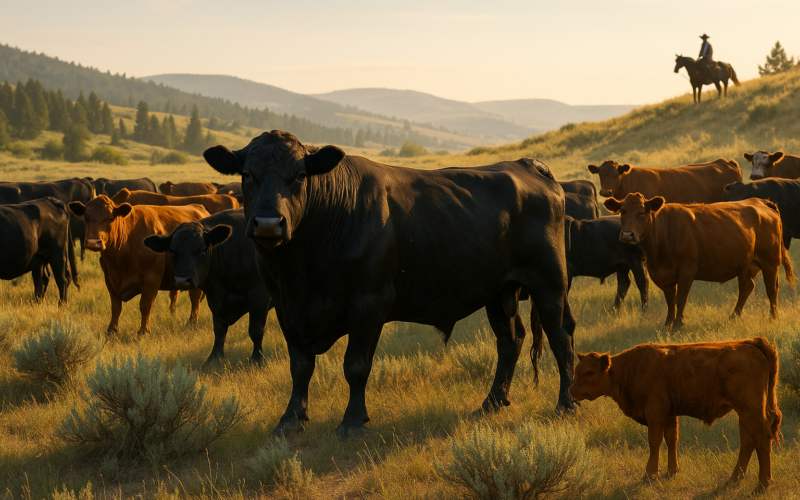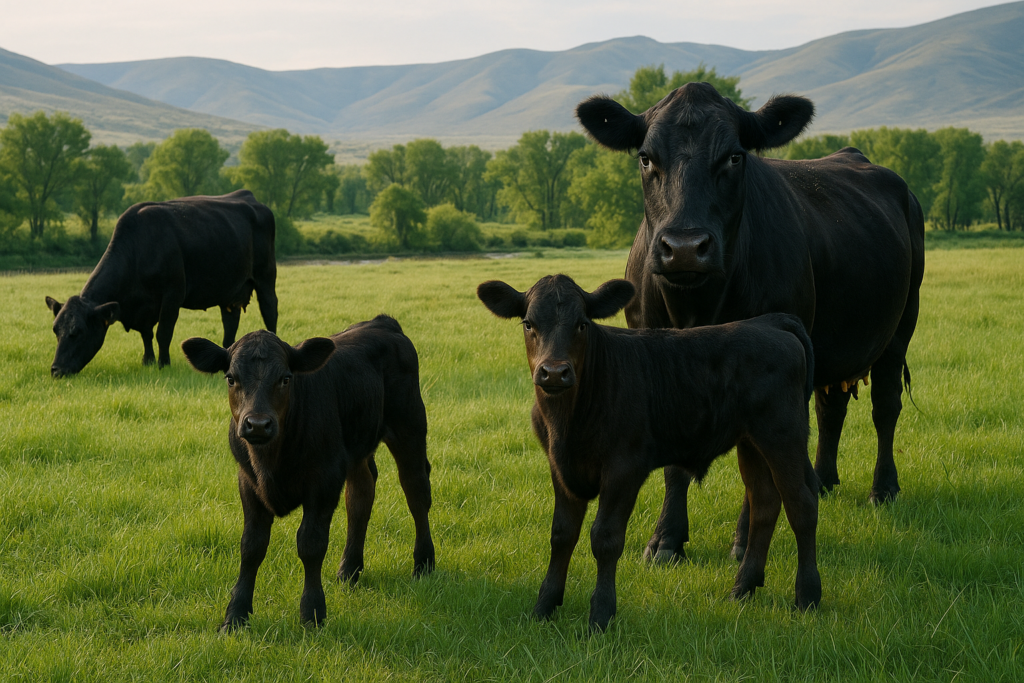
The calf you find stiff and bloated in the corner of the summer pasture is usually one of the good ones. Not a poor-doing tailender, not a sick calf you’d already flagged—a big, slick, fast-growing steer that was bucking and playing two days ago. That’s the signature of blackleg, and it’s why it stings so much. Clostridial disease doesn’t cull your weak calves. It takes the ones you were counting on.
These bugs sit in the ground on a lot of Montana range, especially in bottoms and old flood ground where the soil’s been disturbed. The spores can lie dormant for years. You can graze a pasture clean for a decade and then lose calves on it after a wet spring stirs things up or the herd tromps a spring-fed draw into mud. It isn’t something you catch from a sick animal—it’s already in the dirt, waiting.
Why lush June grass is the setup
Blackleg is caused by Clostridium chauvoei, and it runs with a whole family of related clostridial diseases—malignant edema, black disease, redwater, enterotoxemia. Most of them work the same rough way: spores get into the animal, usually swallowed with grass or dirt, and sit quietly in the muscle or gut until conditions let them bloom. Fast growth on rich feed is exactly the condition they like. A calf packing on weight in June, muscle full of energy, is prime ground for the bug to take off.
Once it does, it moves fast. The toxin destroys muscle and puts the animal into shock. By the time you’d notice anything—a stiff calf, one hanging back, swelling over the hip or shoulder that crackles when you press it—you’re usually already too late to save that one. Most producers never see the symptoms at all. They see the carcass. And because a good grass calf can be dead within hours of looking normal, it rarely lands on a day you happen to be riding through.
That’s the trap. You check the pairs on Sunday, everything’s fine, you check again Thursday and there’s one dead with the classic gas under the skin. Four days is plenty of time for blackleg to start and finish.
The vaccine is cheap and it actually works
Here’s the part that ought to make this an easy decision: clostridial vaccine is about the cheapest, most reliable shot you’ll ever give. A 7-way or 8-way covers blackleg plus the other common clostridials, and a dose runs you pocket change per head. There aren’t many things in this business where a few cents of prevention stops a total loss, but this is one.
The catch most people miss is that it’s a two-shot deal on calves. One dose primes the immune system; the second, given a few weeks later, is what builds real protection. A single shot at branding is better than nothing, but a calf that only got one round can still go down. If you branded early and gave the first dose then, the booster needs to happen before those calves are cruising on peak summer grass—which means now, or close to it, not at fall works.
A few things worth keeping straight:
- Follow the label on the booster interval. If the bottle calls for a second dose in three to four weeks, a calf that got one shot in April is running unprotected by June.
- Store and handle the vaccine right. Clostridial products are tough, but heat and sun on the flatbed cook them. Keep them in a cooler at the chute.
- Don’t assume the cows carry the calf. Mama’s colostrum gives some early cover, but that fades, and it fades right about the time the calf hits fast growth on green feed.
- Give it in the neck, keep the injection sites clean, and don’t crowd it in with a dozen other shots in dirty mud—clostridial spores can enter through a dirty needle or wound too.
If you find a dead one, treat it as a warning
A blackleg death is a message about the whole group. If the calves weren’t vaccinated, or only got one round, get the rest gathered and shot as soon as you can—don’t wait for a second loss to make up your mind. Some producers dealing with a hot pasture will move the remaining calves off it if that’s practical, though the spores are widespread enough that vaccinating is the real fix.
Handle the carcass carefully. A blackleg animal is loaded with spores, and a bloated one that gets opened up or scavenged seeds the ground for the next go-round. Deep burial or removal beats leaving it to spread the problem across the same pasture your calves are still grazing.
None of this is exotic. It’s one of the oldest and best-understood cattle diseases there is, and the reason it still kills calves in Montana every summer is that the shot’s so cheap and routine it’s easy to shortcut. Get the second round in before the grass does its work, and you’ll never have to learn what a blackleg calf looks like in the corner of the pasture.