You notice one cow hanging back at the water gap, favoring a hind foot, and the next morning she’s parked in the shade not eating. That’s foot rot, and mid-June is when it starts showing up across a lot of Montana. The ground is soft in the bottoms, the meadows are still holding moisture, and cattle are walking through mud, cut stubble, and rock that scuffs up the skin between the claws. Once the bug gets in, it doesn’t wait around.
Foot rot is a bacterial infection that gets started in the soft tissue between the toes. Something has to break the skin first — a sharp rock, coarse stubble, a bruise from crossing gravel, or just skin that’s been wet and softened for days. The bacteria live in the soil and in manure, so the break doesn’t have to be much. Warm, wet, tramped-up ground around tanks, gates, and creek crossings is where it takes hold.
What it looks like, and what it doesn’t
The tell is sudden, obvious lameness in one foot, usually a hind one. Real foot rot swells the whole foot evenly — both claws spread apart, and the swelling runs up above the hoof toward the dewclaws. The skin between the toes cracks open, and there’s a foul smell you’ll recognize once you’ve had it. Fever comes with it, so the animal goes off feed and stands off by herself.
Before you reach for the antibiotic, look closer, because plenty of lame cattle in June don’t have foot rot. A hairline crack or an abscess only swells one claw, not the whole foot. A sole abscess or a bruise from rock hurts but doesn’t stink. A rock or a grass awn wedged up between the toes can mimic the whole thing until you clean the foot out and find it. If the swelling is up in the joint and the leg is stiff and hot, you may already be past simple foot rot and into something that’s settled into the joint — and that changes the odds. The point is to get the foot in your hands and actually look before you decide.
Treat it early, treat it hard
Caught in the first day or two, foot rot responds well to antibiotics — this is one of the treatable ones if you don’t dawdle. Work with your vet on the product and dose, and follow the label, because withdrawal times matter and a cow you treat in June can end up in the market chute in the fall. Get the whole dose in. Underdosing is how you turn a three-day problem into a three-week one.
Clean the foot and get a good look while you’ve got her caught. Sometimes you’ll find a rock or a piece of wire and the “foot rot” walks off once it’s out. If the skin’s cracked open, some outfits scrub it and use a topical, but the antibiotic is doing the real work. The thing that’ll cost you is waiting. A cow that gets missed for a week can develop an infection that runs up into the joint, and at that point antibiotics quit working and you’re looking at a chronic cripple or a hard decision.
That’s the argument for riding through the herd often enough to catch the early ones. On big summer country it’s easy to go a week between real looks, and a lame cow in the far corner isn’t traveling to water like she should. Watch the water gaps and the shade — the sick ones sort themselves there.
Keep the ground from doing it to you
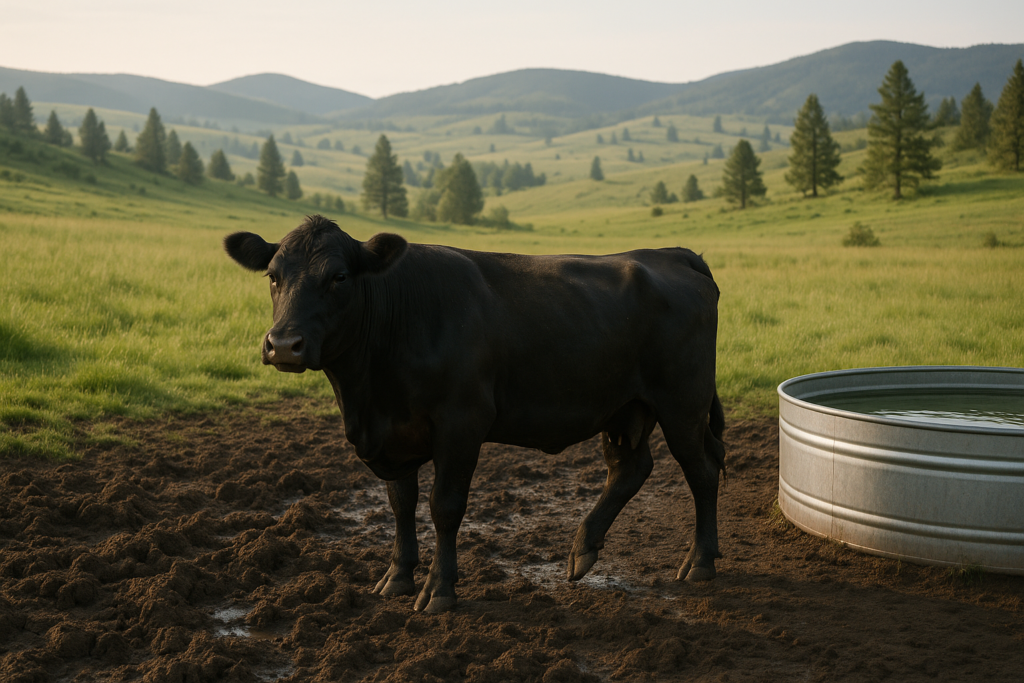
You can’t dry out a wet June, but you can cut down the beating cattle’s feet take in the worst spots. The mud holes around tanks and gates do a lot of the damage, so gravel or rock around a heavy-use tank pays for itself in feet you don’t have to doctor. Rotating off ground that’s chewed to soup gives feet a chance and gives the grass a break at the same time. If you’re running through gates and lanes that are cut down to mud, a load of rock in the worst two or three spots goes a long way.
Some operations that fight foot rot every year run a zinc mineral or add it to the loose mineral to toughen up hoof and skin. It’s not a fix by itself, and it won’t undo a rock cut, but on outfits with a chronic problem it’s worth a conversation with your vet. Zinc only helps if the cattle are actually eating the mineral, which loops back to keeping tubs full and moving them where the cattle will use them.
The main thing is speed. Foot rot is one of the few summer problems where catching it a day early and getting a full dose in usually ends it clean. Let it ride and it gets into the joint, and then you’re not treating anymore — you’re culling.