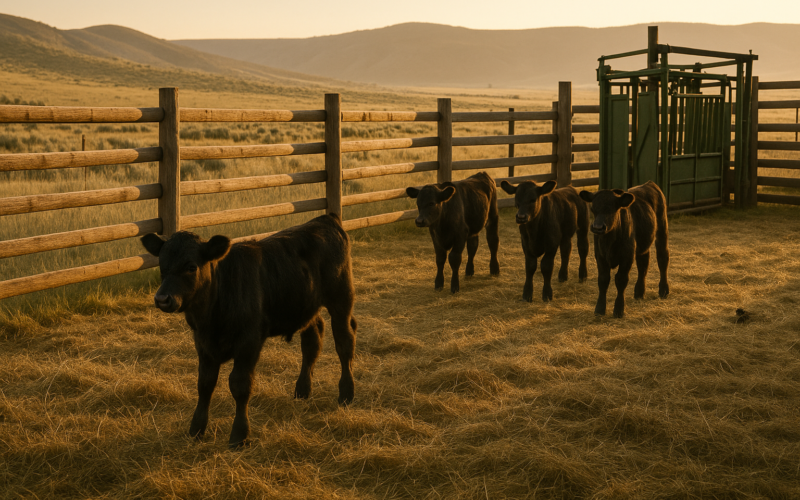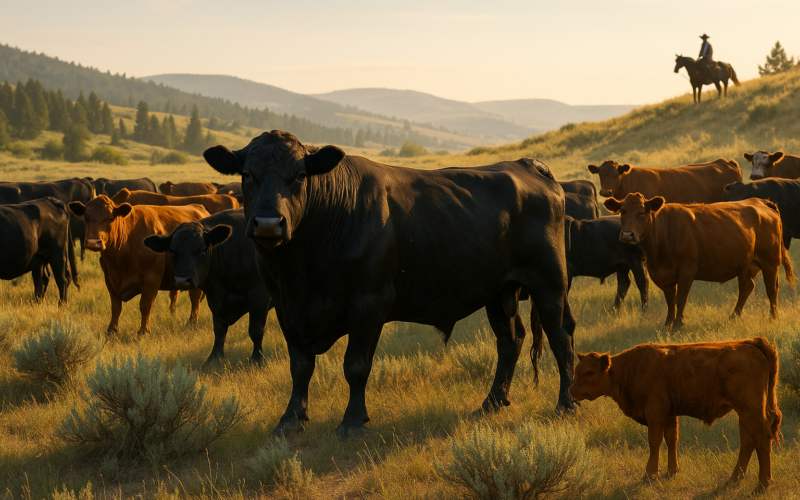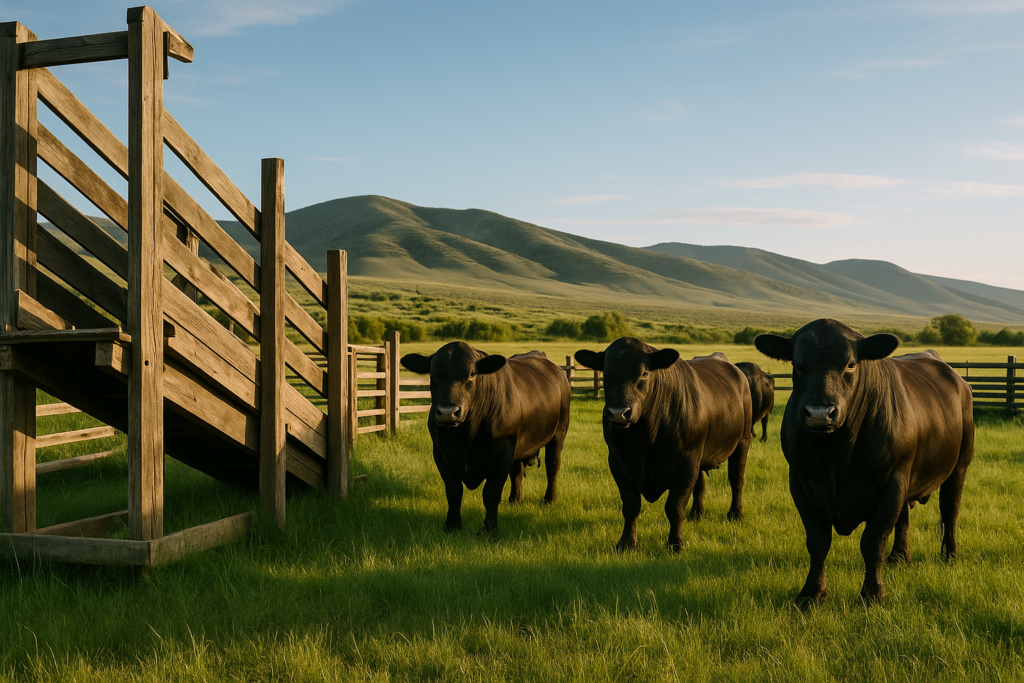
You can lose a whole year on a disease you never see. Trichomoniasis—trich, most people call it—doesn’t make a cow cough, run a fever, or go off feed. It works quietly through the breeding herd, breaks early pregnancies, and the first hard evidence you get is a preg-check sheet full of opens and late cows. By then the bull that carried it has been out with your cows for two, three months, and the damage is done.
It’s a bad one to catch because everything about it hides. The bug is a single-celled organism that lives in the folds of a bull’s sheath and in the cow’s reproductive tract. It gets moved from cow to cow, and cow to bull, at the only time cattle are set up to trade it—during breeding. A cow will usually clear the infection on her own over a couple of heat cycles, but not before she’s lost that pregnancy and cycled back. Meanwhile an older bull that picks it up tends to carry it for the rest of his life. He looks fine. He settles cows. He just spreads it while he does.
What it costs you next spring
The tell is timing. A herd with trich doesn’t come up wide-open across the board—it comes up strung out. Cows that should have bred in the first cycle abort early and rebreed later, so your tight calving window turns into a long, ragged one. Some cows finally hold; some end up open. You feed the opens all winter for nothing and you calve the stragglers in mud and heat instead of in a bunch you can watch.
Put a pencil to a normal 90-day breeding season. Every cow that slides from a first-cycle calf to a third-cycle calf is 40-some pounds lighter at weaning. Every cow that comes up empty is a cull you paid to keep. The disease doesn’t kill anything. It just quietly reaches into the one thing that pays the bills—cows bred early and calving in a bunch.
Test the bulls, and mean it
There’s no practical treatment for an infected bull. You find him and you get rid of him. That’s why the whole game is testing before turnout, not chasing it after.
Your vet scrapes the sheath and either cultures it or runs a PCR test on the sample. The test isn’t perfect off a single pull—the organism can be low enough to slip through—so older bulls or any bull you have real reason to worry about may need to be tested more than once, with the bulls held apart from cows between pulls. Young virgin bulls that have never bred are essentially clean by definition, which is one more argument for buying and turning out younger bulls when you can.
Montana takes this seriously for a reason, and there are rules on the books about testing bulls that change hands and cross the fence between operations. Before you buy a bull, sell one, or lease grass where somebody else’s bulls might mingle with yours, get current on what the state requires and get the paperwork done right. A cheap sale-barn bull with no test history is exactly how trich walks onto a clean place.
Shut the gate the disease walks through
Testing catches it. Management keeps it out in the first place. The disease travels on bulls and on open cows that carry it into a new herd, so the weak spots are obvious once you look for them.
- Fix the fence and the water gaps before turnout so your bulls and the neighbor’s don’t share cows across a downed wire.
- Keep the breeding season tight and cull hard on opens. A long, sloppy season gives an infected herd more time to spread and hides the pattern that would tip you off.
- Be careful buying open or short-bred cows and heifers of unknown history—an open cow can carry the bug in without ever showing you a thing.
- Run a defined turnout and pull-out date so you know how old every calf ought to be, and so a strung-out calving next year actually means something.
None of this is glamorous work. It’s a sheath scrape in a chute in June and a phone call to your vet about what the state wants on the bulls you’re moving. But a producer who tests every bull every year and culls opens without sentiment almost never gets bit by this. The ones who get cleaned out are usually the ones who turned out an untested bull because he looked good and the grass was ready. Grass will wait a day. A blown calf crop won’t come back.