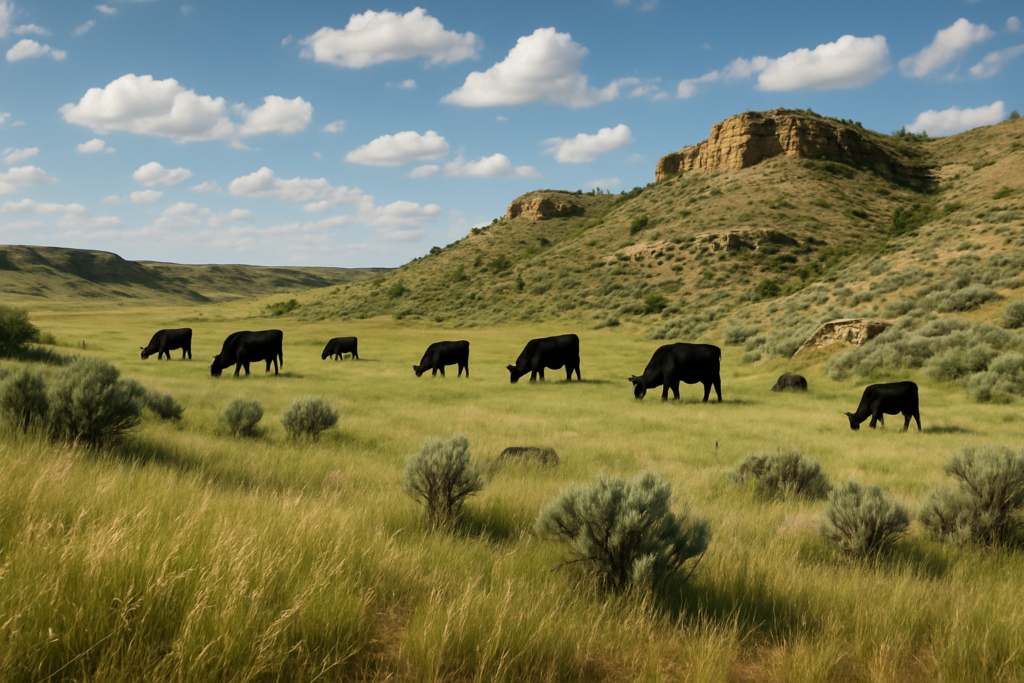
By the middle of June the prairie rattlers are done denning up and spread out across the breaks, the coulee sides, and the rock outcrops where the ground warms early. A cow grazing head-down through the sage and short grass doesn’t see the snake until she’s on top of it. Most of the bites you’ll deal with all summer land on the nose, the muzzle, or the lower jaw, because that’s the part of the animal that gets there first.
Cattle and horses aren’t usually the target. A rattler that size isn’t hunting a thousand-pound animal. It strikes because it got stepped on or crowded, and it’s defending itself. That’s why curious young stock and horses that drop their nose to investigate get tagged as often as anything. A dry bite with no venom happens too, but you can’t count on it, and you won’t know until you watch how the animal responds.
The swelling is what kills, not the venom
People picture snakebite as a poisoning problem. On the nose of a cow, it’s mostly a plumbing problem. The venom breaks down tissue and touches off massive swelling right where the animal breathes. Cattle and horses breathe through their nostrils, and a muzzle that swells shut over a few hours can suffocate an animal that the venom itself never would have killed. The bite two inches inside a nostril is worse than a bite on the leg for exactly this reason.
You’ll usually find the animal before you find the snake. Look for a swollen, drooping muzzle, two puncture marks that may already be oozing, drooling, and an animal that’s dull and standing off by itself. On a leg you’ll see swelling and lameness, which is uglier to look at but far less likely to be fatal. On the face, the clock starts running as soon as the nostrils start to close.
The old tricks do more harm than good. Don’t cut and suck. Don’t put a tourniquet on a leg. Don’t dose the animal with anything out of the truck and hope. Cutting opens the door to infection in already-damaged tissue, and a tourniquet just concentrates the tissue damage where you’ve cut off the blood.
What actually helps out in the pasture
The one thing that saves a nose-bit animal more than anything else is keeping an airway open. If you can get to her early, a short length of clean garden hose or a couple of large syringe cases run up each nostril and taped or tied in place will hold the passages open while the swelling peaks. It looks crude. It also keeps a cow breathing through the worst 24 to 48 hours, which is often all she needs. Some producers who run rough country keep a piece of hose in the pickup for exactly this from June through September.
Keep the animal calm and moving as little as possible. A stressed, running cow pumps venom through her system faster. If she’s close enough to bring in slow, do it. If she’s out on the far country and already swelling hard, sometimes the kindest thing is to keep her quiet where she is, get the airway open, and get your vet on the phone.
Call the veterinarian either way. Antivenin exists but it’s expensive and time-sensitive, and on a mature range cow the math often doesn’t pencil out. What the vet can offer that matters more day to day is help with the swelling, pain, and the secondary infection that follows in the dead tissue a week down the road. That infection is what pulls a lot of animals down after they’ve already survived the bite itself. Tetanus is a real risk too, especially in horses.
Living with it on summer range
You can’t snake-proof a pasture, but you can pay attention to where the trouble is. Rattlers stack up around rock piles, old buildings, prairie dog towns, and south-facing coulee slopes that hold heat. If you’re salting or setting a mineral tub, don’t set it against a rock outcrop that’s a known snake haven and pull your cattle into it. Horses turned out on rough summer country get bit right along with the cattle, and a nose-bit saddle horse deserves the same fast airway attention.
Most bites aren’t the emergency they look like the first hour. A leg bite on a mature cow, ugly as it swells, usually heals with time and a little help. The one that puts an animal in the ground is the nose bite you don’t find until the muzzle’s already closed. On rough summer country, riding the herd and finding a dull, swollen-faced animal early is worth more than anything in the truck.