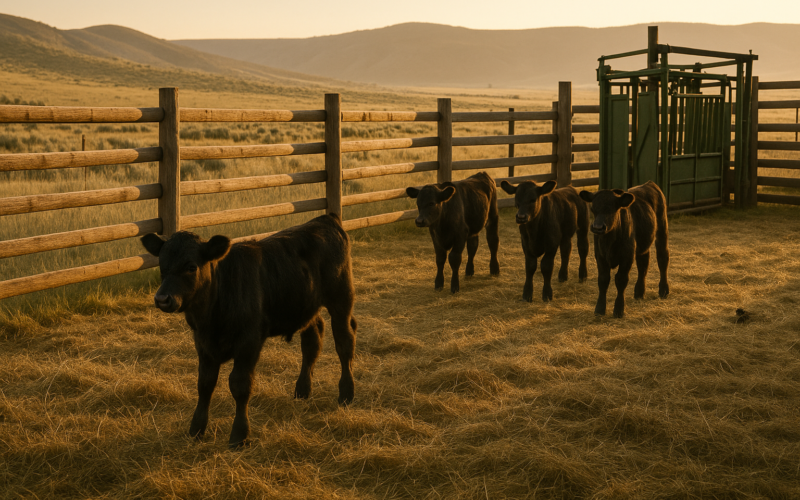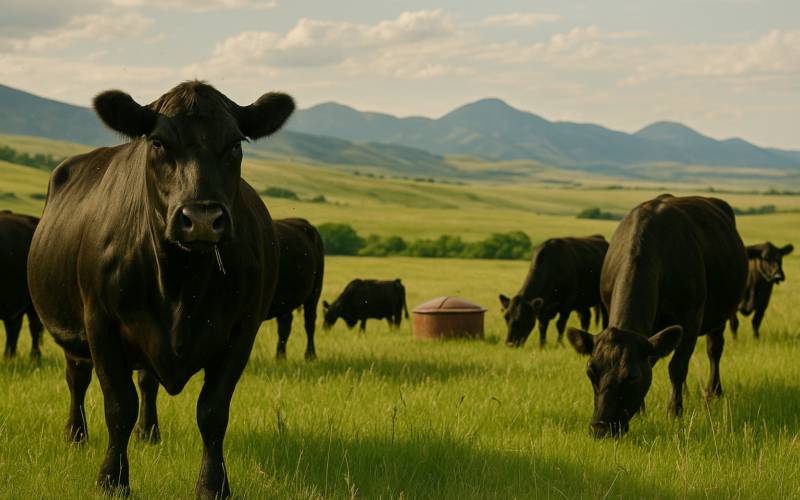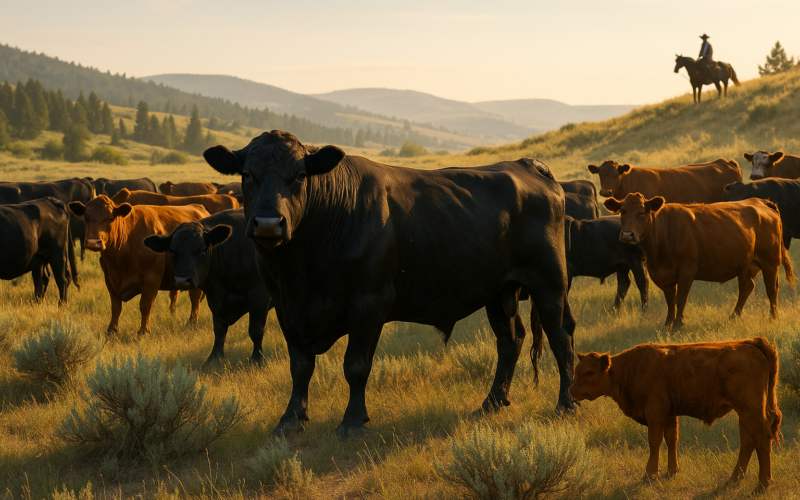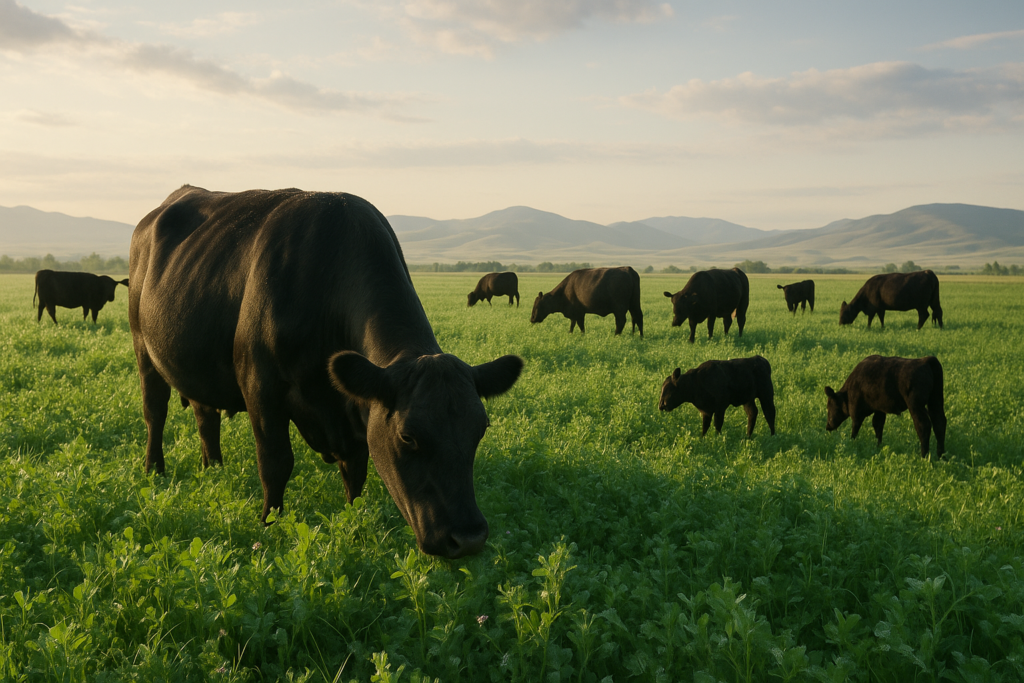
Most of the trouble comes on a good year. You get spring moisture, the irrigated pivot corners green up thick with alfalfa and white clover, and the cows dive in like they haven’t eaten in a week. By mid-morning one of them is standing off by herself, left side swelled up round as a barrel, breathing through her mouth. That’s frothy bloat, and on a fast-growing legume stand it can put a cow on the ground in under an hour.
It doesn’t take a poison plant or a fence-out. It takes healthy cattle on healthy feed doing exactly what they’re supposed to do. That’s what makes it easy to get caught by.
Why lush legumes do it
Bloat is a gas problem. A cow makes gas in the rumen all day long and belches it out without thinking about it. Legumes like alfalfa, red clover, and white clover break down fast and release proteins that trap that gas in a stable foam. The cow can’t belch out foam the way she belches out a bubble, so it keeps building. The rumen swells against the diaphragm, she can’t breathe, and she goes down.
The worst setups are predictable. Immature, fast-growing legume stands are riskier than stemmy, mature ones. Regrowth after a first cutting or after a hard graze is loaded with the young, leafy material that ferments quick. A heavy dew or a light frost seems to make it worse. And a hungry cow turned onto that feed on an empty stomach will gorge before her rumen knows what hit it.
Straight grass pastures don’t cause this. It’s the legume-heavy ground — those pivot corners, the old alfalfa fields, the wet meadows where clover has taken over — that you have to watch. A pasture that’s half grass and half legume is a lot safer than a pure stand.
Keeping the wreck from happening
The single best thing you can do is fill a cow up before she ever hits the legume. Put out grass hay in the morning and let them eat before you open the gate to lush ground. A full cow eats slower and takes in less of the fast-fermenting stuff. Never turn hungry cattle onto a lush legume stand first thing — especially not after they’ve been hauled, worked, or held off feed and water.
Turn out later in the day once the dew has burned off. Wet, dewy legume in the early morning is the classic bloat combination. Give the plants a chance to dry.
Introduce the feed gradually. Let cattle graze a legume stand for an hour or two the first few days and then pull them, rather than turning them out to it full time and walking away. Their rumen microbes adjust over about a week, and the risk drops once they’re used to the feed. The dangerous window is the first several days.
Where you’re grazing risky ground hard, a bloat-preventing additive fed through the mineral or water — the products built around poloxalene — breaks up the foam and works well, but only if every cow gets a dose every day. The boss cows will hog the tub and the timid ones get none. Watch that intake.
Leaving some grass in the mix matters more than people give it credit for. If you’re seeding or renovating a pasture that cattle will graze, a grass component in the stand takes a lot of the danger out of it. Fully bloomed, mature alfalfa is far safer than the leafy regrowth, so grazing a legume field a little later in its maturity helps too.
When you find one already blown up
A mildly bloated cow that’s still up, still belching, and moving around will often work it off if you walk her slow and keep her moving. Get her off the legume and onto grass or dry hay. Don’t run her.
A cow that’s down, going down, or breathing with her neck stretched out and her mouth open is an emergency, and she may only have minutes. This is where a stomach tube can save her by letting the gas out — if you can get it past the foam. In a true down-and-dying case, some old hands will use a trocar to stick the rumen on the left side. That’s a last resort that saves a life and creates a mess and a vet bill, but a dead cow costs more. If you run cattle on legume ground, it’s worth knowing how before you need it, and worth a call to your vet to walk through it ahead of time.
Check the cattle often the first few days on new legume pasture. Late morning is when they tip over. The cow you catch standing off by herself, you can still help. The one you find on her side at daylight, you can’t.