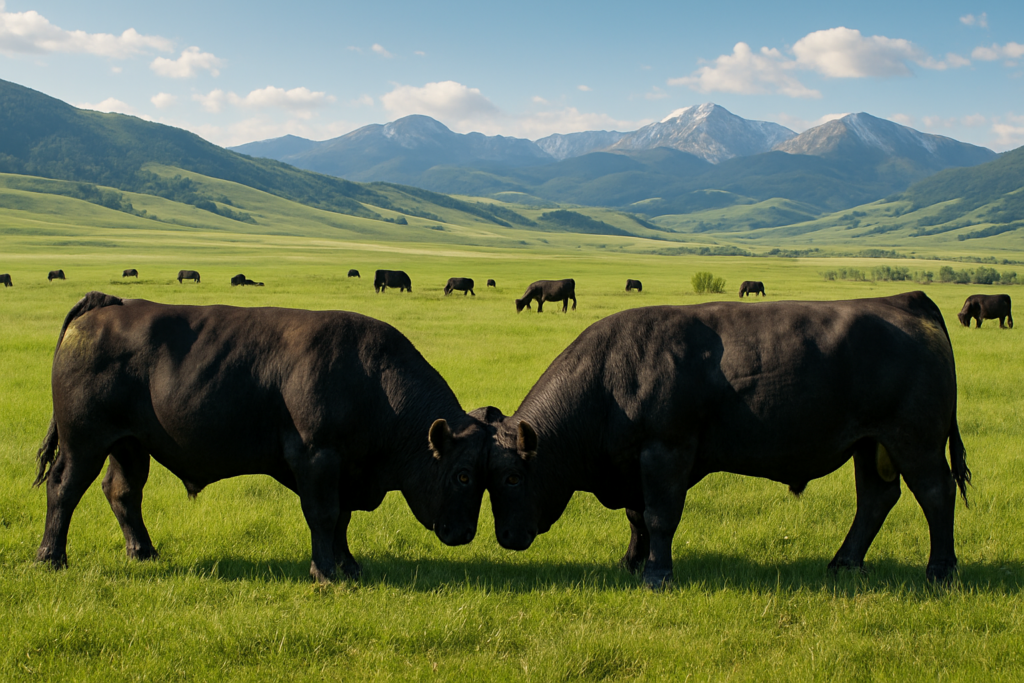
You spend money on a soundness exam, you feed a bull through winter, you haul him to the pasture in June, and the first thing he does is find another bull and try to kill him. That’s not a defect. That’s just what bulls do when you put strangers together and hand them a hundred cows to argue over. The trouble is the fight doesn’t stay a fight. A yearling that gets hooked in the flank, an older bull that comes up lame after a shoving match on a rocky sidehill, a swelled sheath from a bad hit — any of those turns a paid-for breeding animal into a passenger for the rest of the season, and you don’t find out until you preg-check in the fall and a chunk of the cows come up open or bred late.
June is when it happens because that’s when we turn out. The dominance sorting is worst in the first week to ten days, before the order settles and they get down to the business of covering cows.
Most of the wrecks trace back to turnout day
Bulls that ran together all winter already know who’s boss. Bulls that come from two different pens, or two different ranches, don’t, and they’ll settle it whether you want them to or not. If you’re running a multi-sire pasture, the least you can do is put the bulls together in a corral or a small trap for a few days before they hit the cows, so they get the shoving done on flat ground you can watch instead of in a coulee two miles out.
Age spread makes it worse. Turn a big mature bull out with a couple of yearlings and the young ones spend more time getting run off than breeding. If you’re mixing ages, more room helps — a wide-open pasture lets a whipped bull get away instead of getting cornered against a fence and hooked. Tight little traps are where the injuries pile up.
Watch the ground, too. Bulls fighting on a wet clay sidehill or a rocky bench pull muscles and split feet doing it. If you’ve got a choice, don’t dump fresh-mixed bulls into your roughest country the same day they’re figuring out the order.
The injuries that end a bull’s summer
The one that ends a breeding season quietly is a penis or sheath injury. A bull takes a hit or misses a mount and bruises or bends the works, and he’ll refuse to breed even though he walks fine and eats fine. Nothing looks wrong from the pickup. That’s the frustrating part — a lame bull you’ll catch, but a bull with a sore pizzle just quits working and you can’t see it.
Lameness is the visible one. A bull carrying a bad foot or a stifle after a fight will ride fence, hang at water, and let the cows walk past him. Cows don’t wait around. If he’s not covering them when they cycle, they cycle again in three weeks and calve that much later — or they come up open.
Ride through your bulls the first couple weeks like you mean it. You’re looking for a bull standing off by himself, one favoring a leg, a swelled sheath, or just a bull who isn’t where the action is. A cow that stands to be ridden and gets ignored day after day tells you something’s wrong with the bull, not the cow.
Ratio and a spare buy you room to lose one
Everybody’s got their own bull-to-cow ratio, and country and terrain move it around — bulls cover fewer cows spread across big rough range than they do in a tight irrigated pasture. Whatever number you run, the point is this: if a bull goes down in June and you’ve got no cushion, those cows have nobody. A little slack in the ratio, or a spare bull you can slip in, is cheap insurance against the wreck you can’t predict.
Keep an eye on condition, too. A bull comes out of the breeding season having lost a pile of weight, and a thin one to start with runs out of gas by July. He’ll breed hard the first few weeks and then quit, and the cows he was supposed to catch in the back half of the season slide late.
None of this makes bulls stop fighting. It just keeps the fighting from costing you a calf crop. Ride through them, give mixed bulls room and time to sort out, and count on losing one — so that when you do, it’s an inconvenience in June instead of a wall of open cows in the fall.