A stock pond that watered your cows fine all spring can turn deadly in the space of a hot, still week. Blue-green algae — cyanobacteria, technically, not true algae — builds up when water gets warm, sits without wind, and has nutrients to feed on. Late June and July on the Hi-Line and across the eastern plains give it everything it wants: heat, low runoff, and ponds dropping toward the mud. The bloom can go from a faint green tint to a paint-thick scum in a couple of days.
The part that catches people is how fast it kills. Some of these toxins hit the nervous system, and a cow that drank a good slug of contaminated water can be down before you finish morning chores. Others work slower on the liver, and you find the damage weeks later in a cow that quits gaining or comes up jaundiced. Either way, the trouble started at the water, and by the time you notice, the animal already drank it.
What it looks like, and where it hides
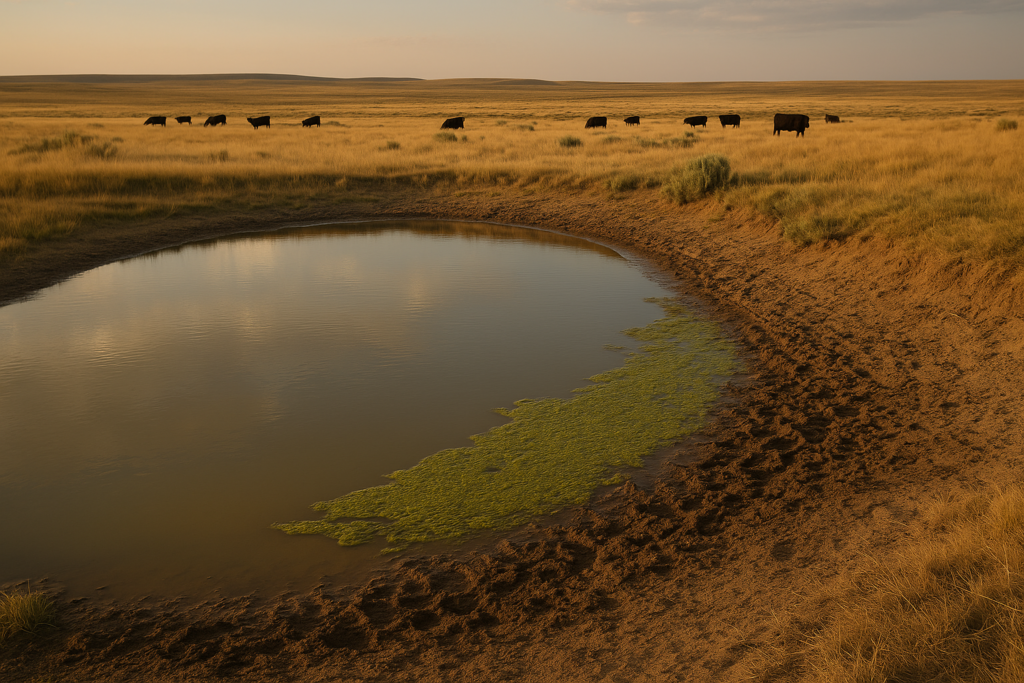
Not every green pond is dangerous. A lot of harmless algae grows in filaments you can lift on a stick like wet hair. The stuff to worry about looks more like spilled paint, pea soup, or grass clippings floating on the surface. Blue-green, bright green, sometimes a turquoise or reddish sheen. It doesn’t string together — it stays suspended or forms a scum you can’t pick up cleanly.
Wind is what makes it lethal. A bloom spread thin across a whole pond is diluted. Let a steady southwest wind blow for a day and it rafts the scum into one downwind corner, concentrating the toxin right where the bank is easy and the cows like to stand. That’s the corner where you find the dead one. If you’ve got a prevailing wind pushing scum toward the shallow, walkable end of a pond, that’s your problem spot.
Ponds that are dropping and getting a manure load from cattle loafing at the water’s edge are the worst. Warm, still, shallow, and fertilized by the herd itself. A spring-fed tank or a well-supplied trough with turnover rarely blooms. It’s the earthen dugout and the fenced-off pond you’re relying on late in the season that go bad.
What to do when you see it
First move is to keep cattle off it. Fence the pond, shut the gate to that pasture, or haul water until you know what you’re dealing with. There’s no antidote worth counting on once a cow is showing signs, so this is a prevention game — you win it at the fence, not at the chute.
Signs come quick with the nerve toxins: staggering, muscle tremors, going down, labored breathing, sometimes a cow found dead near the water with no struggle around her. The liver type shows as weakness, going off feed, photosensitization on white skin, and dark or bloody manure over the following days. If you find one dead at the edge and the water’s got that scum, treat the pond as guilty until proven otherwise.
You can’t judge safety by looking. A bloom that’s toxic today might not be next week, and vice versa, because these organisms produce toxin unpredictably. If you need a real answer, some state and university labs will test a water sample — call your vet and ask how they want it collected and shipped, because it usually has to be kept cold and moving fast.
Cutting the odds before August
The cheapest fix is water that moves. A pond with a solar pump feeding a tank downhill, fenced so cattle drink from the trough instead of standing in the pond, gets you cleaner water and keeps the manure out of the source. Keeping some grass buffer around a pond instead of a churned mud ring slows the nutrient load that feeds a bloom.
Where you can’t fence it off, at least know your downwind corner and check it when the weather turns hot and dead-calm for several days running. That’s the setup that grows a bloom. If the water skims green and the wind’s been packing it into one end, don’t wait to see whether the cows tolerate it. Move them, and sort out the pond after.
A dead cow at the water’s edge in July almost always drank something. On a hot, still summer, the green scum in the downwind corner is a suspect worth taking seriously.