Most people file pneumonia under weaning. Bawling calves in a dusty corral, cold nights, snotty noses in October. But a fair number of calves get sick and die out on grass in the middle of summer, still on the cow, never touched by a person. It sneaks up because nobody’s looking for it. The calf that’s dead by the water gap in July was nursing and shiny two weeks earlier.
It shows up in calves somewhere between two and four months old, give or take. Old enough that the antibodies they soaked up from the cow’s first milk are fading, young enough that their own immune system hasn’t fully taken over. That gap is the window. Add a little stress, a virus moving through the bunch, and a bacterial infection riding in behind it, and you’ve got sick calves on green feed in the best part of the year.
Why It Hits in the Middle of a Good Summer
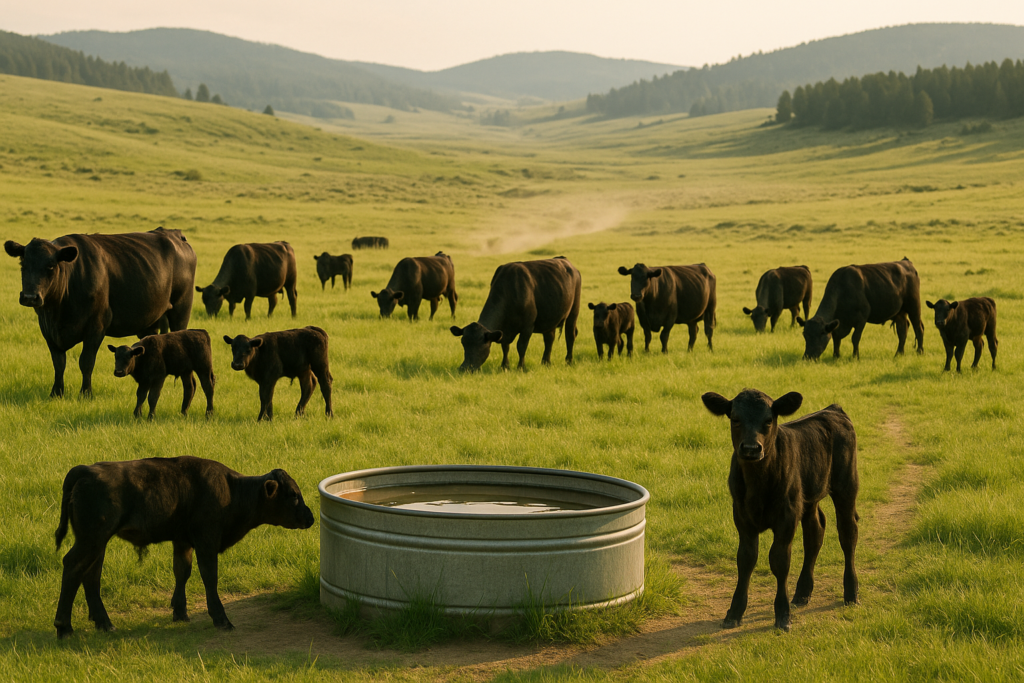
Nothing about summer pneumonia is mysterious once you watch for the setup. Big temperature swings do it—a hot afternoon that drops thirty degrees after dark, a cold rain that soaks a calf lying in the open. Dust is another one. Cattle trailing to water on a bare, powdered trail in a dry June kick up more than you’d think, and it settles in young lungs. Crowding at a single tank or a shrinking pond puts calves nose to nose right where the bugs pass around.
The pathogens are the same crew that causes trouble at weaning—a handful of viruses that soften the lungs up, then bacteria that finish the job. On summer range those bugs are already in the herd. They don’t need to be trucked in on a sale-barn calf. All they need is a calf whose defenses have slipped and a little stress to open the door.
Bigger, faster-growing calves off heavy-milking cows sometimes get hit hardest, which catches people off guard. The good ones aren’t immune. If anything, a calf packing on weight is a calf whose lungs are working hard to keep up.
Catching It Before Sundown
The hard part is that a calf on the cow hides sickness longer than a weaned calf in a pen. Out on a section of summer grass, you’re seeing them at a distance, if at all, and a calf that’s a little off blends into the bunch. By the time it’s obvious, the lung damage is already done.
Ride through slow and look at the ones lagging. A sick calf hangs back when the bunch moves to water, stands with its head dropped and ears low, and breathes with its whole flank—a heave you can see from the four-wheeler. Snotty nose, watery eyes, a soft cough when it gets up. Any calf that won’t get up and stretch when you push the bunch is worth a closer look. A rectal temperature well above normal on a hot day is a red flag, though a calf that’s been running from you will read high anyway, so judge it against how the calf acts.
- Lagging behind when the herd moves, especially heading to water
- Fast, hard, flank-heaving breathing while standing still
- Head down, ears drooped, dull and not nursing
- Nasal discharge and a cough, sometimes a snotty crust on the muzzle
When you find one, treat it and treat it early. A calf caught the day it goes off responds to antibiotics far better than one you find on the third day gasping. Pull it, dope it with a labeled product, and write down the tag and the date. Talk to your vet before turnout about which antibiotics to keep on hand and how to use them, because getting the drug in early beats getting the perfect drug in late. And check the ones standing near it—summer pneumonia rarely shows up as a single calf.
Cutting the Odds Before It Starts
You can’t wrap a calf in cotton on open range, but you can take the edges off. Clean, spread-out water matters more than most things—one crowded, muddy tank is a mixing bowl. If you’re hauling water or rotating tanks, that helps. So does not working calves in the heat of the day and not adding stress on top of a weather swing.
Vaccination is the other lever, and it’s one to plan with your vet rather than guess at. Some outfits build the cow herd’s program so calves get better protection through the colostrum, and some vaccinate calves at branding or before turnout to cover the summer stretch. What fits depends on your timing, your labor, and what’s moved through your calves in past years. The point is to have that conversation in the spring, not in July when you’re already pulling dead ones out of the willows.
Keep an eye on the calf bunch the same way you watch your grass and your water. The ones you catch breathing hard at daylight are the ones you save. The ones you notice at sundown, you’re usually just burying.